
By Institutional Communications
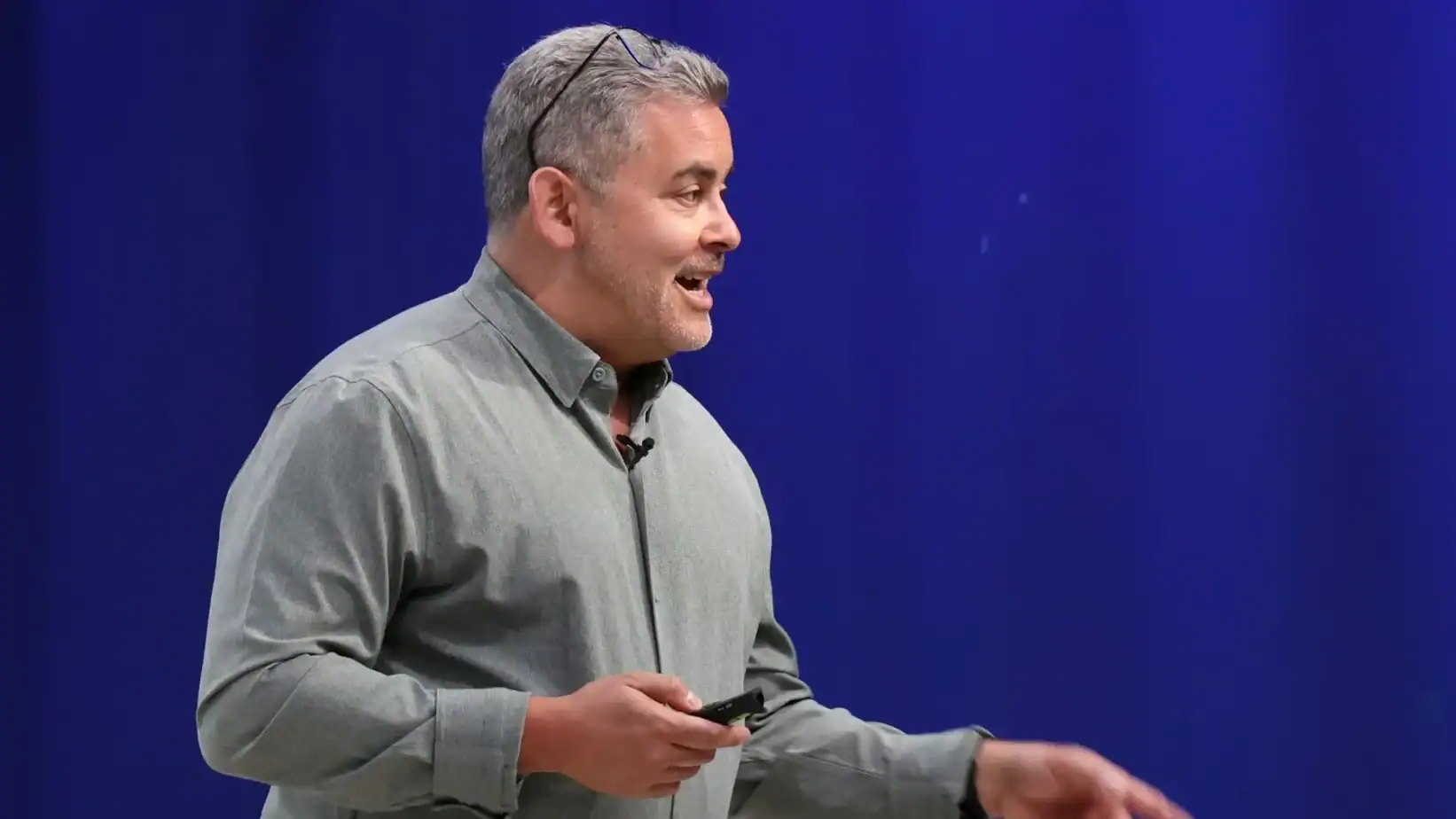
The Ferré Rangel School of Communication kicked off Communication Month with the keynote lecture “Ethical AI for Journalism Innovation,” delivered by Daniel Román Pacheco, a journalism professor at Syracuse University. The event opened the month of March with the goal of encouraging future communicators to reflect, inquire, and learn about the ethical use of technological tools that impact their professional field.
The conference provided an overview of how artificial intelligence (AI) is currently being integrated into newsroom workflows in the United States. The processes range from training employees on appropriate situations for using these tools to tasks such as headline generation and search engine optimization (SEO).
However, Román Pacheco emphasized that he does not see AI as a technology that will replace journalists, but rather as a tool that can streamline time-consuming tasks and make room for “real journalism.”
“AI lacks the soul of the work,” the journalist stated.
As key examples of responsible AI use in journalism, the professor highlighted its integration into workflows, the use of the technology to summarize lengthy information, and the transcription of meetings and interviews. At the same time, he noted that its use should be avoided when cultivating sources or working on complex investigations and stories that require a deep understanding of the communities affected.
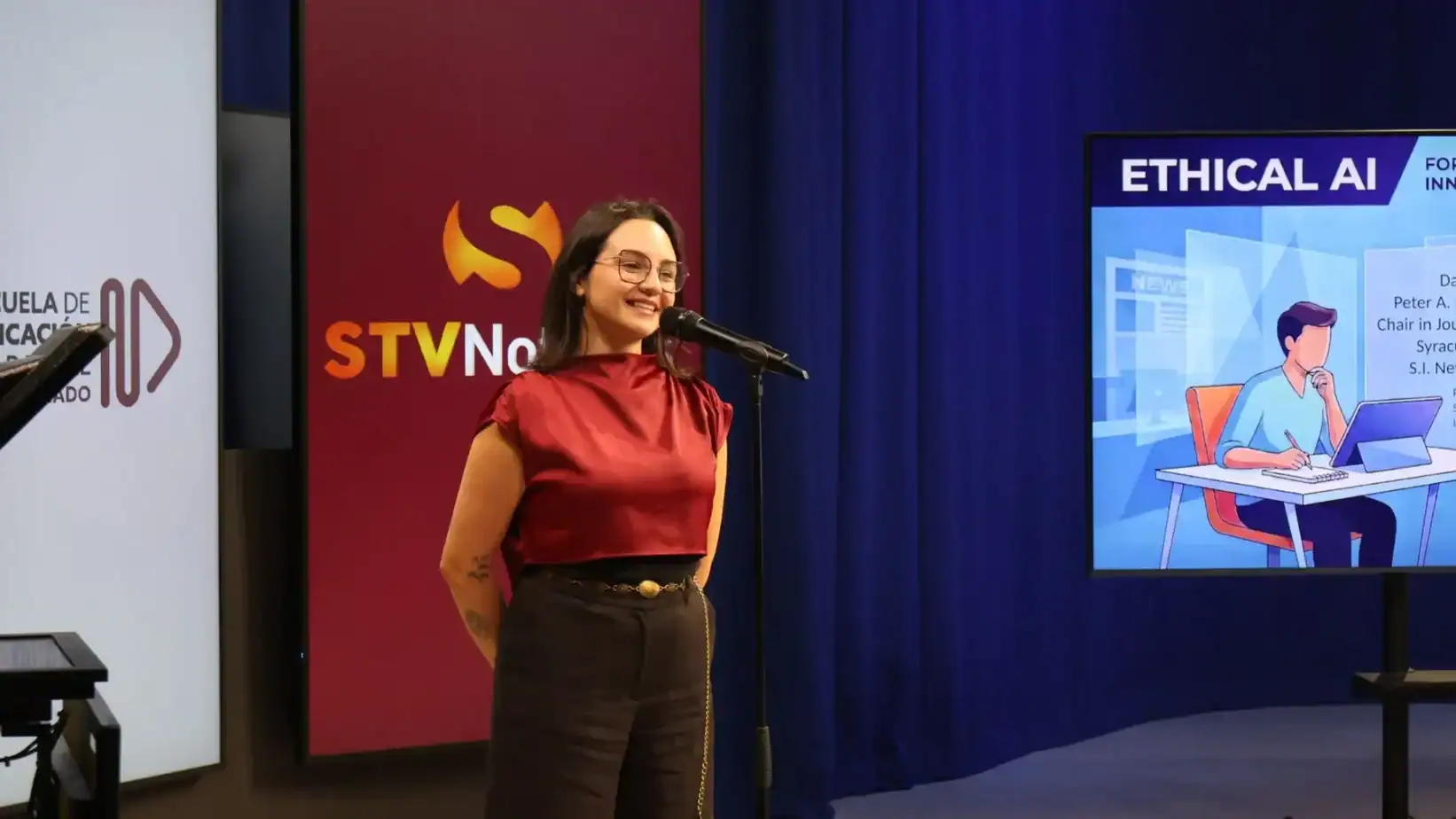

Student of Audiovisual Production and Film

The speaker also presented case studies on the various ways newsrooms have integrated AI into their operations, including The Texas Tribune, The Associated Press, The Seattle Times, and Cleveland.com. Some of the uses they have adopted include transcribing podcasts to adapt them into other formats, creating weekly news quizzes, chatbots, and artificial voice narration.
Despite the resistance some audiences may feel toward these tools, the speaker underscored the importance of learning about available technologies in order to remain competitive in the field. “Never assume that a degree guarantees a job in the field. If you want to thrive in journalism, you need to use AI in a smart way so you are not easily replaceable. You don’t need to be an expert—you just need to show that you are capable of using the tools that news organizations present to you,” he explained.
For her part, Dr. María Vera Hernández, dean of the Ferré Rangel School of Communication, highlighted the institution’s commitment to cultivating journalistic skills, now alongside instruction on the technological tools shaping the profession. “This year, Universidad del Sagrado Corazón set out to establish guidelines for the appropriate use of artificial intelligence by program. All programs now have guidelines that determine which technologies can be used and the scenarios in which their use is appropriate,” she explained.
In line with Sagrado’s institutional commitment to training future professionals, the conference concluded by reaffirming that there is a place for artificial intelligence in journalism education—one that must be grounded in ethics to promote transparency in its use, uphold quality standards, and support the continuous development of core professional skills.