
By Gabriel Paizy Damiani, Ph.D.
Professor at the Ferré Rangel School of Communication
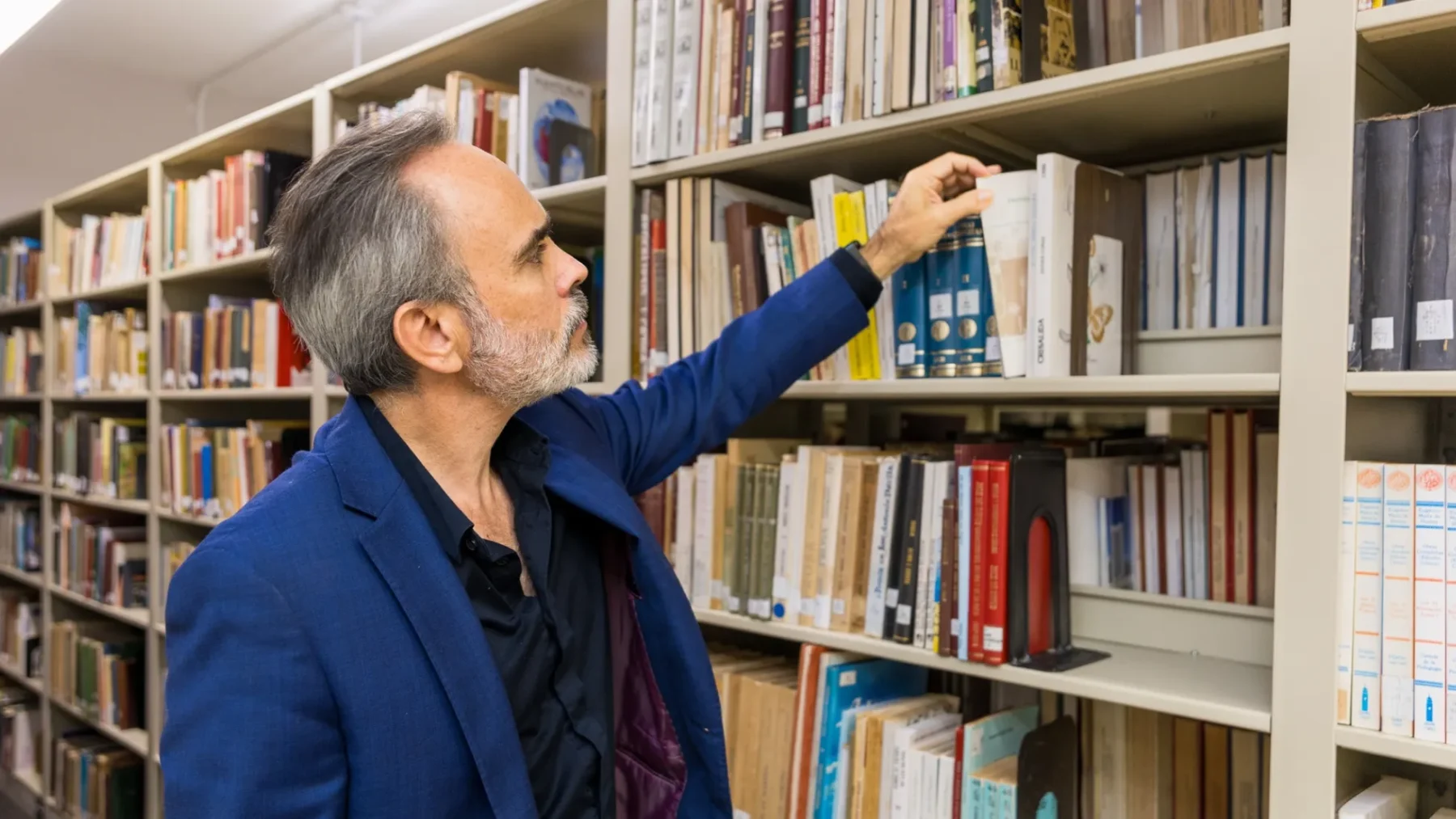
I confess that when I began opening the first boxes from the Sagrado Historical Archive, I didn’t know what I was getting into. Amid yellowed documents, old photographs, and notebooks written by Mother María Teresa Guevara—the nun after whom our library is named—I began to uncover previously unknown details about the institution where I have spent more than half my life. There is something simply fascinating about reading documents written more than a century ago and coming across the thoughts of people who never imagined that, decades later, a curious researcher would read their words to piece together their story.
That is precisely what has happened to me over the past few weeks at the Sagrado Historical Archive. As part of my impact project, I have set out to research the origins and evolution of an educational project that began in Puerto Rico in 1880 and that, in just four years, will celebrate a century and a half of existence.
I’m interested in telling our story in a different way. I don’t want to limit myself to simply compiling dates, names, and events. I’m interested in understanding the decisions, the circumstances, and, above all, the intriguing details hidden behind them. Rather than knowing what happened, I want to discover why it happened.
And right off the bat, I’ve come across some facts and events that have surprised me. For example, among the documents I’ve examined is a map dated June 15, 1903, drawn up by surveyor José Escudé y Molas. The land where Sagrado stands today was part of a vast estate owned by Don Pablo Ubarri, Count of Santurce, known as the San José Estate. It covered approximately 46 hectares, an area almost equivalent to that of Luis Muñoz Marín Park in San Juan. The current campus occupies about 14 hectares, just under one-third of the size of that estate. What happened to the rest? Beginning in 1917, lots from the former property began to be subdivided and sold, and part of that land became the streets and neighborhoods that are now part of Santurce.
Another finding that caught my attention is the speech delivered by Juan Hernández López on March 19, 1906, during the laying of the cornerstone of our old building. Hernández López was no ordinary figure: he was a prominent Puerto Rican lawyer and politician who had served on the Autonomous Cabinet of 1898 under Spanish rule and who, years later, would go on to serve as vice president of the Puerto Rican Senate.
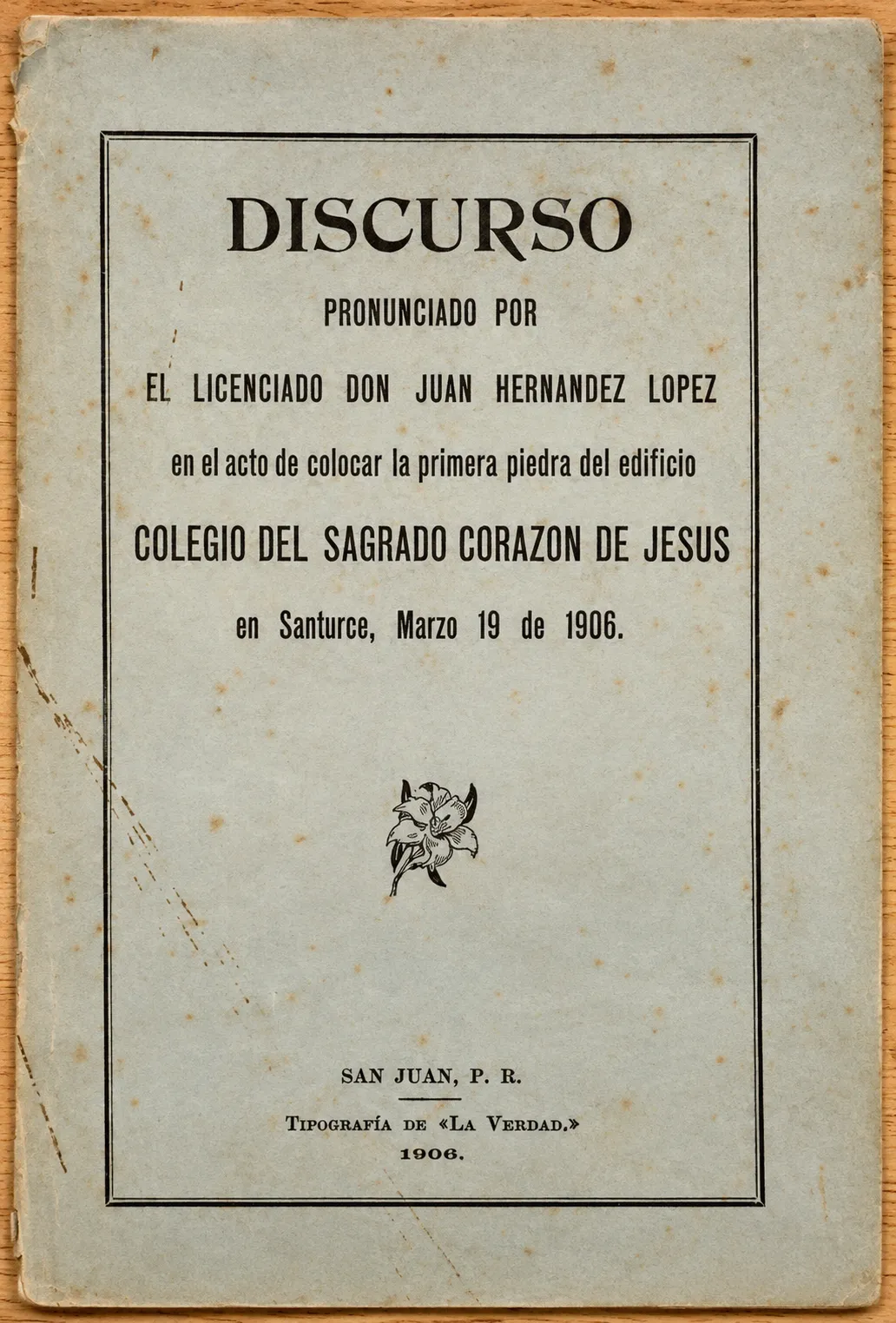
Reading that speech, 120 years later, is like opening a window onto a society very different from our own. Hernández López defended the importance of educating women, but he did so from a perspective in which their social role was closely tied to the family. In one passage, he stated:
“The intellectual and social education of women must address three broad categories: women in general; women as wives; and women as mothers.”
How revealing it is to read these words from our current perspective! Our conception of women’s roles has changed radically. That is precisely one of the challenges of this research: to look at the past from the present, without losing sight of the circumstances and ideas of those who lived through it.
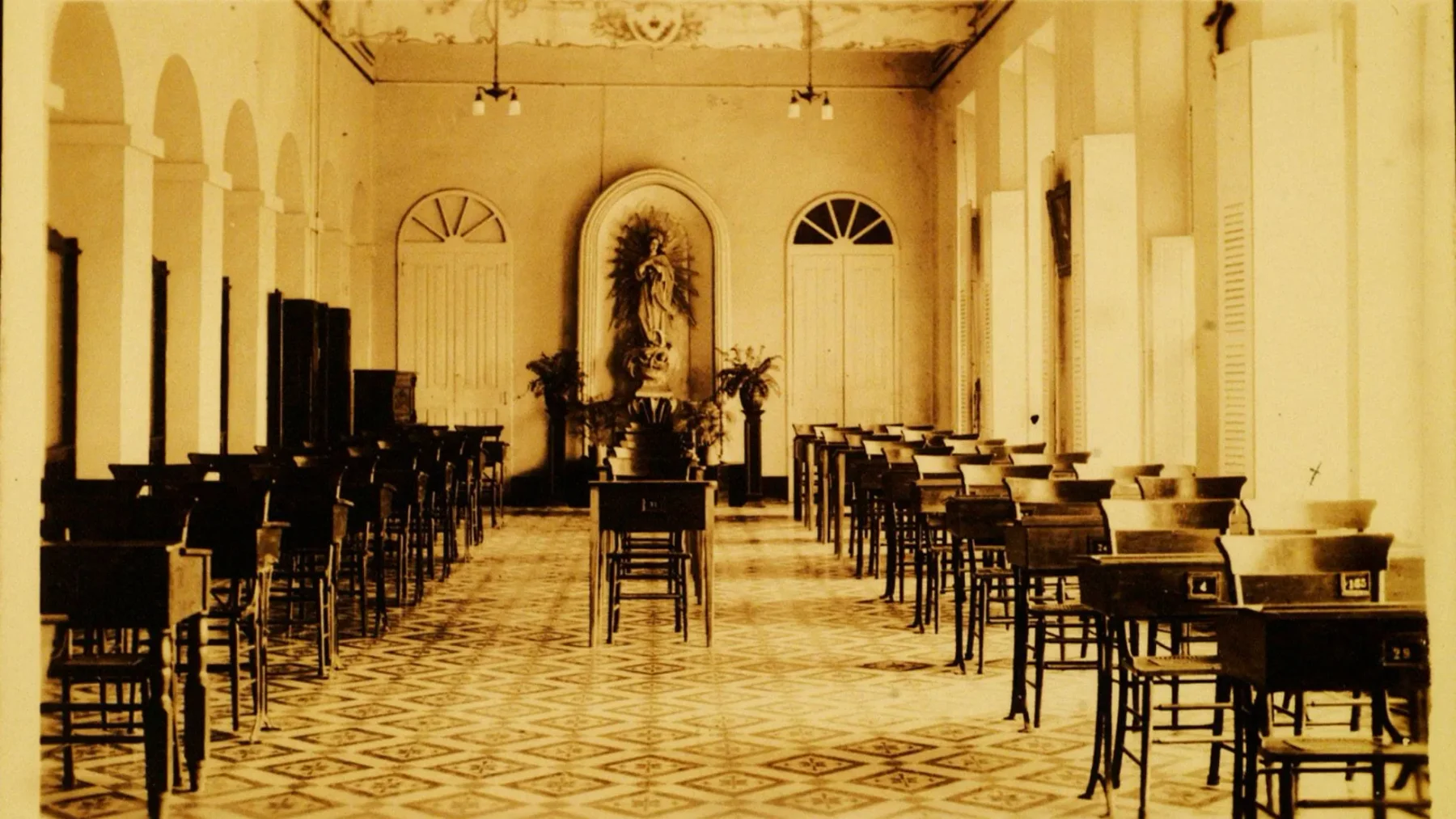
I have also found handwritten notebooks containing memories and anecdotes from the old school’s history. One of them bears a particularly evocative title: “Notes and Memories That May Be Useful for the History of the College.” I like to think that, many decades later, I am doing exactly what someone had in mind when they preserved those notes.
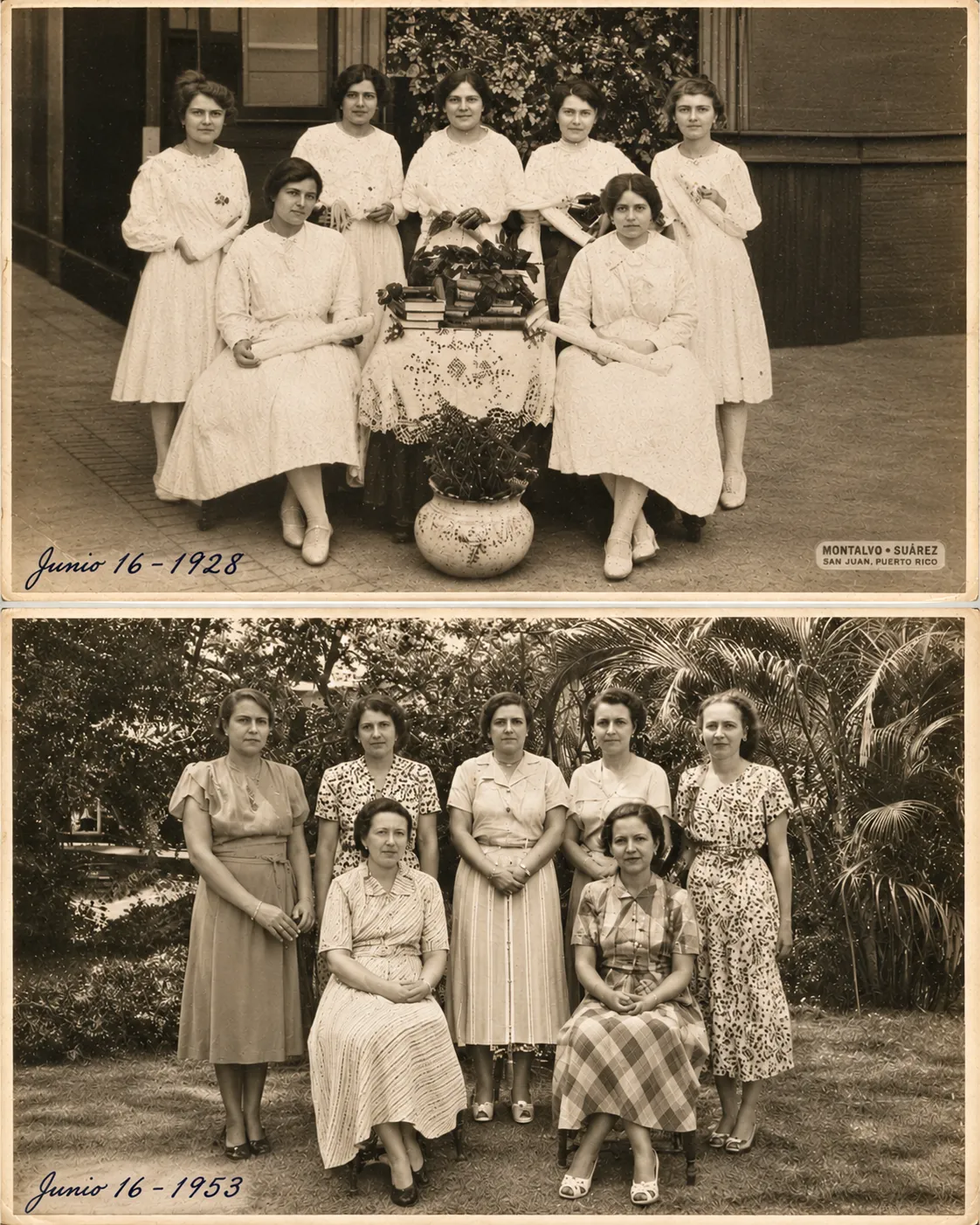
But this research will not end in the archives. The result will be an interactive book that combines documents, photographs, and testimonies from people connected to different periods in the institution’s history. Through QR codes, readers will be able to access audiovisual interviews that will complement the historical narrative. I envision a beautifully designed coffee-table book, rich with photographs, historical documents, and curiosities that invite readers to keep turning the pages.
By 2030, the book will be ready. That’s my goal. In the meantime, I’ll keep opening boxes, reading notebooks, examining documents, and interviewing those who still have so much to share.
I’ll keep you all updated on what I discover…
About Gabriel Paizy Damiani
Gabriel Paizy Damiani, Ph.D., is a professor at the Ferré Rangel School of Communication at Universidad del Sagrado Corazón. He earned a bachelor’s degree in Advertising with a minor in Literature from Syracuse University, a master’s degree in Public Relations from Sagrado, and a Ph.D. in the History of Puerto Rico and the Caribbean from the Center for Advanced Studies on Puerto Rico and the Caribbean.
Since 1996, Dr. Paizy Damiani has taught graduate and undergraduate courses in various fields of communication, including advertising, public relations, strategic communication, and communication theory. In addition to his teaching duties, he has served as coordinator of the Graduate Program in Communication (2007–2017) and dean of the Ferré Rangel School of Communication (2017–2024). In 2026, he was promoted to full professor at Sagrado.
More about Sagrado’s History
“El College”: The Beginning of Sagrado’s University Project
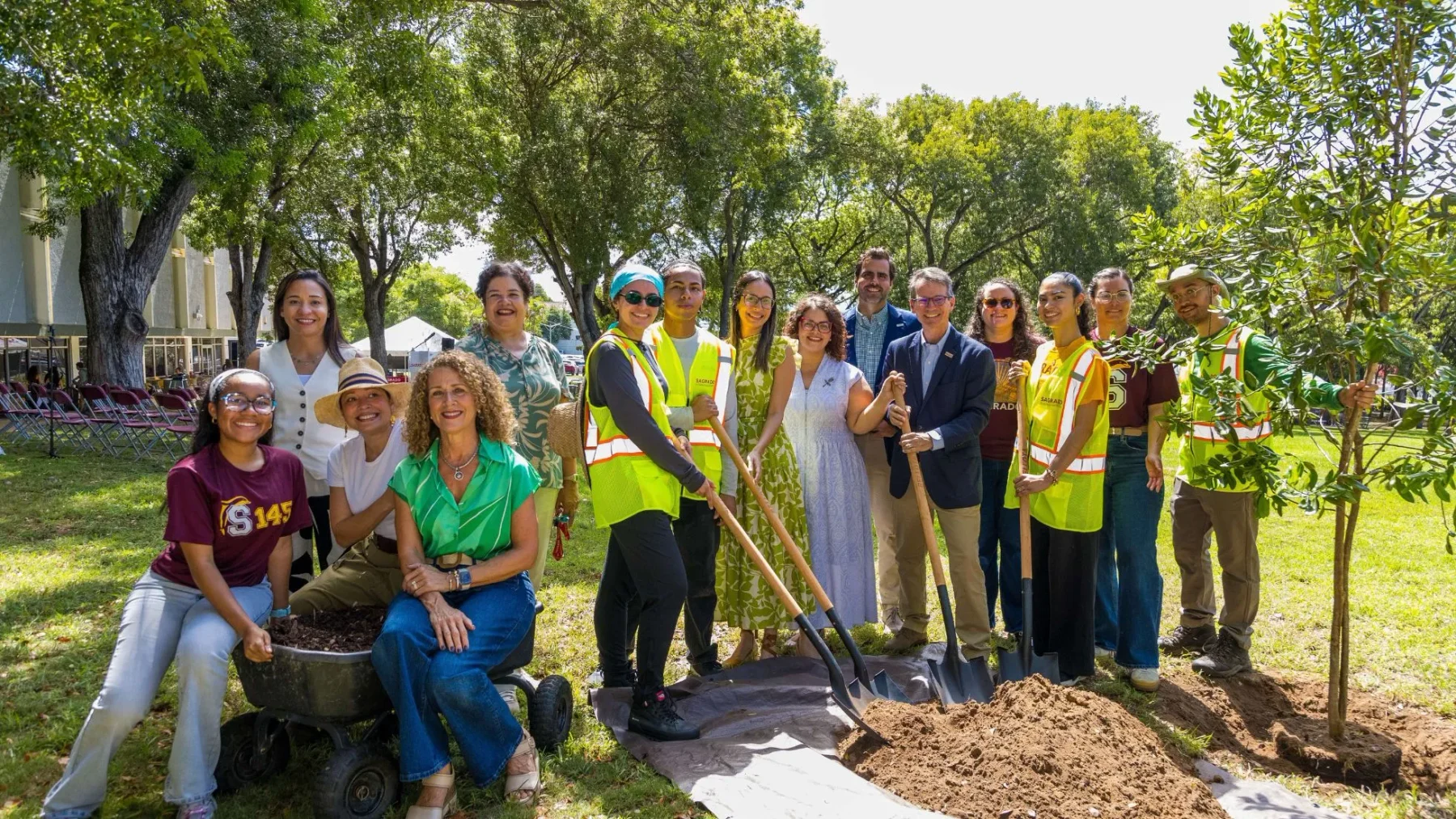
Embracing Sustainability and Community Well-Being from Santurce’s “Green Lung”

Saint Madeleine Sophie Barat: A Legacy of the Transformative Power of Education