
The Ferré Rangel School of Communication held the event as part of its Communication Month agenda.
By Institutional Communications
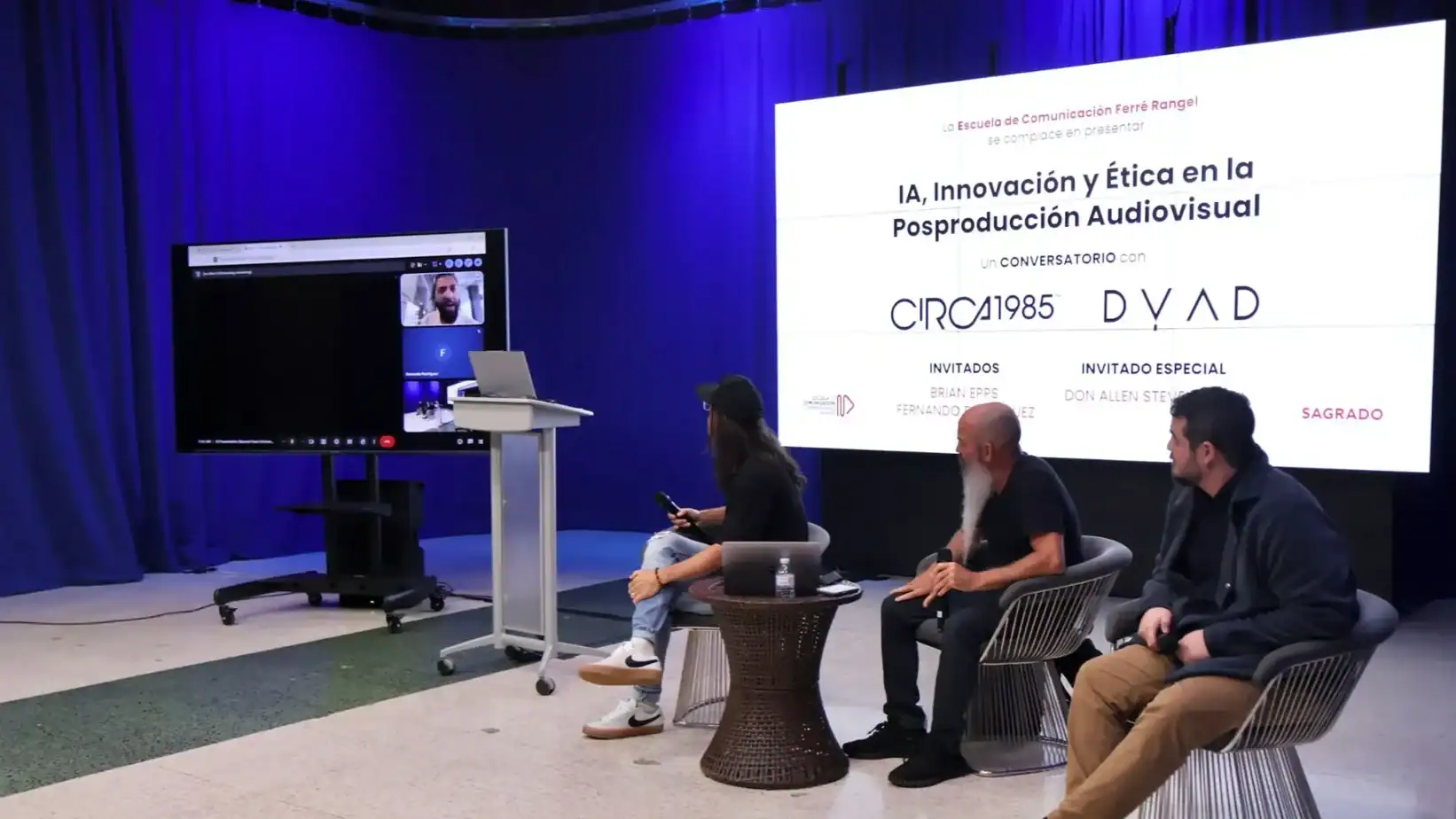
The Audiovisual Production and Film Program at the Ferré Rangel School of Communication held the panel discussion “AI, Innovation, and Ethics in Audiovisual Postproduction,” bringing together founders of film studios and postproduction houses based in Puerto Rico.
The event featured Brian Epps and Fernando Rodríguez, co-founders of the postproduction company DYAD and Circa 1985, a film and AI animation studio. Special guest Don Allen Stevenson III also joined the discussion; he is an author, consultant, and Creative AI Pipeline Director at Asteria, a film company that promotes the ethical use of AI in production.
Amid the stir caused by generative AI in the film industry, panel participants opened a dialogue on how this technology can be integrated into the postproduction process without sacrificing the humanity of the stories being told. In his role at Asteria, Allen Stevenson III has focused on implementing AI as part of the visual effects creation process—not as a replacement for industry professionals.
“Our philosophy is to empower humans, not erase them,” he said during his remarks. His “gold standard” for using these tools in postproduction includes compensating artists who authorize content generation based on their work, combining traditional and modern production processes, allowing the use of AI tools for inspiration boards, and prioritizing human collaboration.
“We need real human artistry, human stories and human intention with the use of these tools.”
– Don Allen Stevenson III
However, replacing human talent in audiovisual production was not the only concern raised during the event. Students expressed worries about the environmental impact of the data centers that power AI models—a problem Allen Stevenson III acknowledged, while also pointing to positive alternatives emerging in the industry. He cited the use of “distilled models,” which are derived from large language models (LLMs) but consume fewer resources. It was also noted that many data centers are currently exploring new approaches to temperature control.
In light of the changes AI is bringing to the film production sector, panelists emphasized that students’ main responsibility is to strengthen their knowledge and command of their chosen art or discipline, so that the use of AI models remains truly guided by artistic intent.
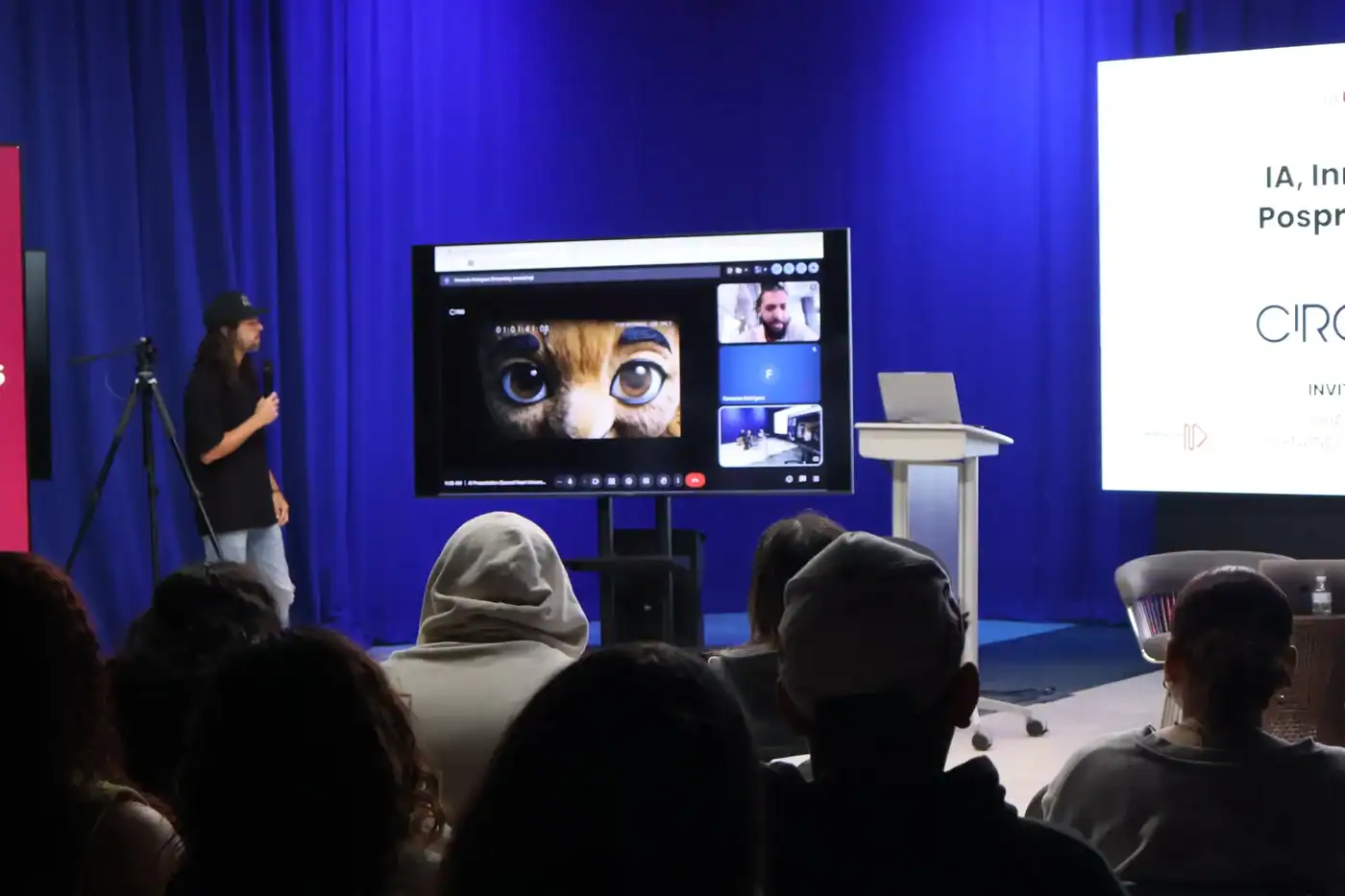
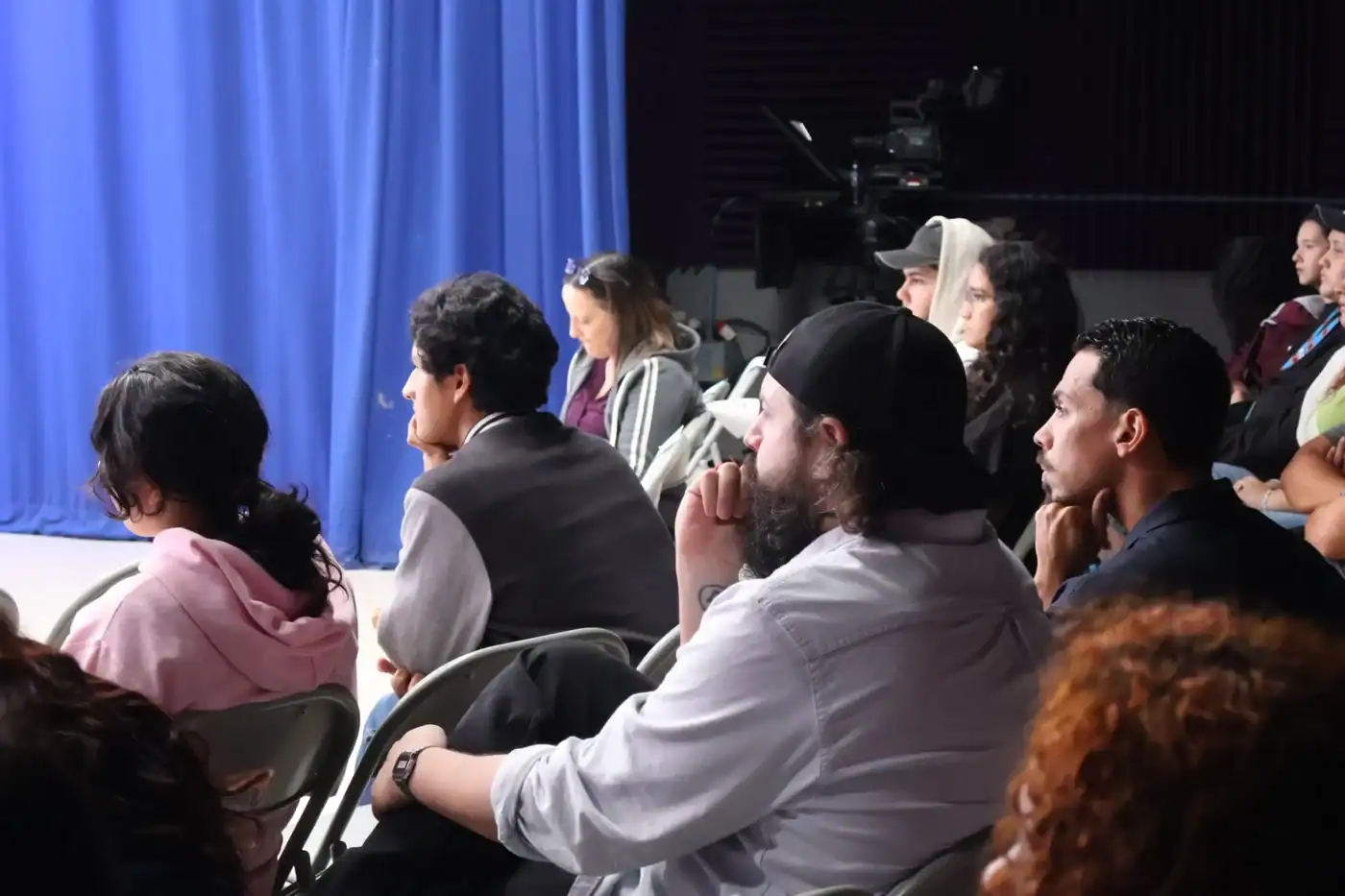
“This technology is a bridge that will unite the new school and the ‘school of experience’ into a new learning dynamic, and it is important that we as human beings lead this change,” Epps said during the discussion.
Within the context of Communication Month, Dr. María Vera Hernández, Dean of the Ferré Rangel School of Communication, highlighted the cross-disciplinary nature of artificial intelligence as a reason to create spaces for questioning and learning about its ethical use across all communication fields.
As an institution committed to developing leaders in communication, Sagrado will continue fostering spaces to build professional skills aligned with the realities of the industry.