
The student is part of a cohort of 142 projects to be carried out in 59 countries around the world.
By Almaries Datil Calderón
Student of Creative Writing and Literature
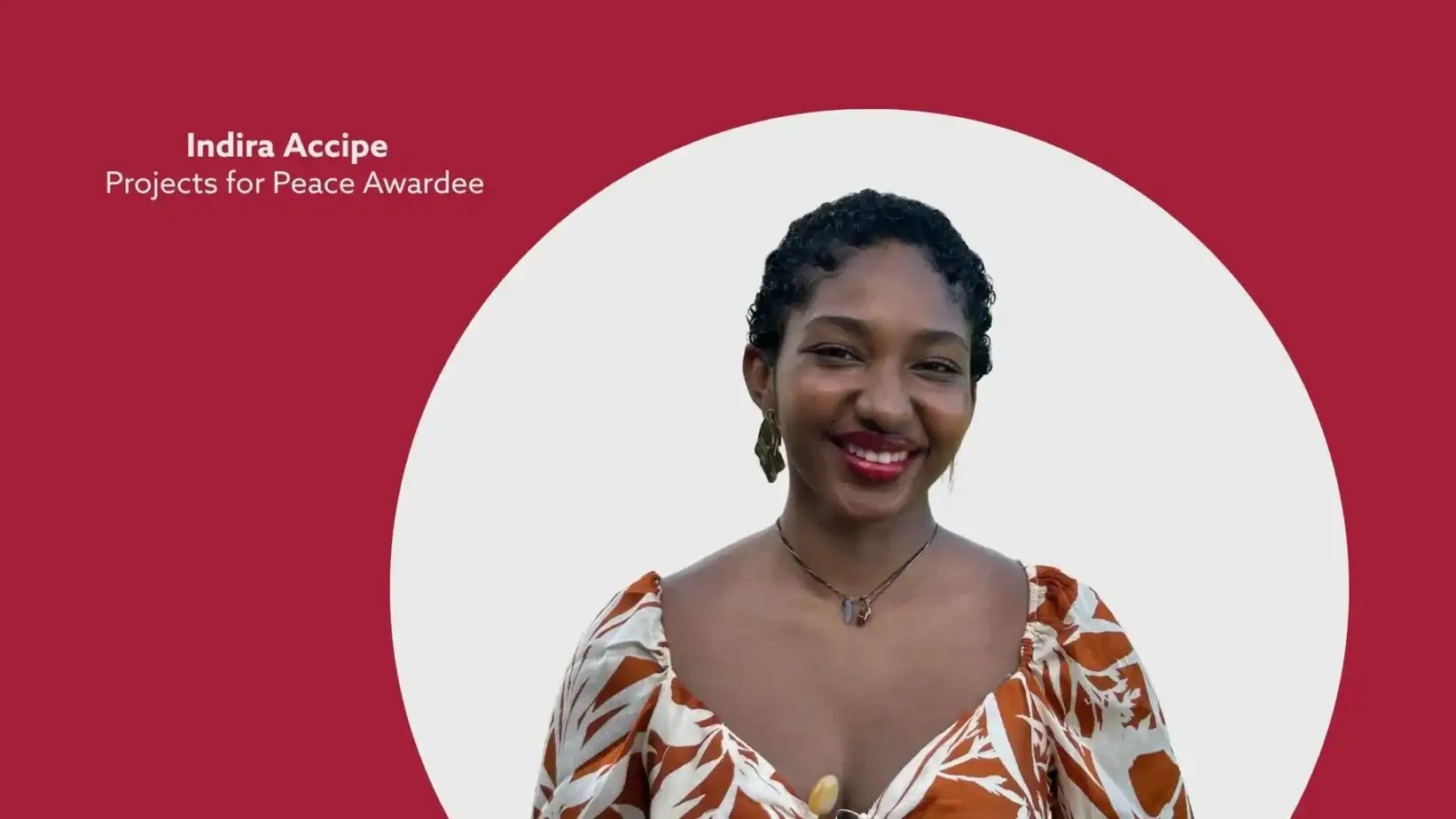
Student Indira Accipe, from the Strategic Communication program at the Ferré Rangel School of Communication (ECFR, per its Spanish acronym), was awarded a $10,000 Projects for Peace grant on April 1 for her project Aguascidia. The initiative proposes the development of a rainwater collection and reuse system for a community center in Barrio Obrero, contributing to flood reduction and facilitating access to drinking water for the entire community during times of emergency.
Sagrado is the only university in Puerto Rico to establish a partnership with the Projects for Peace program and Middlebury College. This program seeks to promote peace through student-led projects that address a range of community challenges. Throughout the process, student leaders expand their knowledge, strengthen their skills, and shape their identity as peacebuilders and agents of change. Following the launch of the program at Sagrado in September 2025, students were invited to submit proposals to compete internally. This is Sagrado’s first participation in the program, during which five proposals were received, and one finalist project and one alternate were selected to compete at the international level.
“Receiving this award represents a great honor for me, but above all, it proves that an idea born from an everyday reality can have a concrete impact. It is a motivation to continue developing this useful and sustainable solution,” Accipe expressed to inSagrado. The idea for the Aguascidia project arose in January 2024 during her first entrepreneurship course with Professor Elías Moreno. The student, originally from Guadeloupe, had experienced heavy rains and flash flooding in her home country and, while traveling, noticed that the same problem affects other Caribbean islands.
The need that led to her idea was identified after observing two particular experiences: how water levels rose to the point of interrupting classes during a rainy day at the university, and how access to water was interrupted during a stormy morning in Bayamón. “The contrast between abundance and scarcity caught my attention. Seeing all that water go to waste when it could be used was the trigger for the project,” the student stated.
The 2026 cohort consists of 142 projects nominated by 98 partner institutions. The projects will be carried out in 59 countries around the world and in seven U.S. states.
The Projects for Peace program is housed within the Center for Professional and International Experiences (CEPI), and students receive support from its director, Lorena Franco, as well as mentorship from Dr. Carlos Muñiz, professor of Education and Research at the School of General Education.
Between May and August 2026, Indira will implement the project, which will translate into a positive contribution to the Barrio Obrero community. Congratulations on this achievement, and we wish great success to AGUASCIDIA!