
By Paola N. Maldonado Cruz
Journalism Student
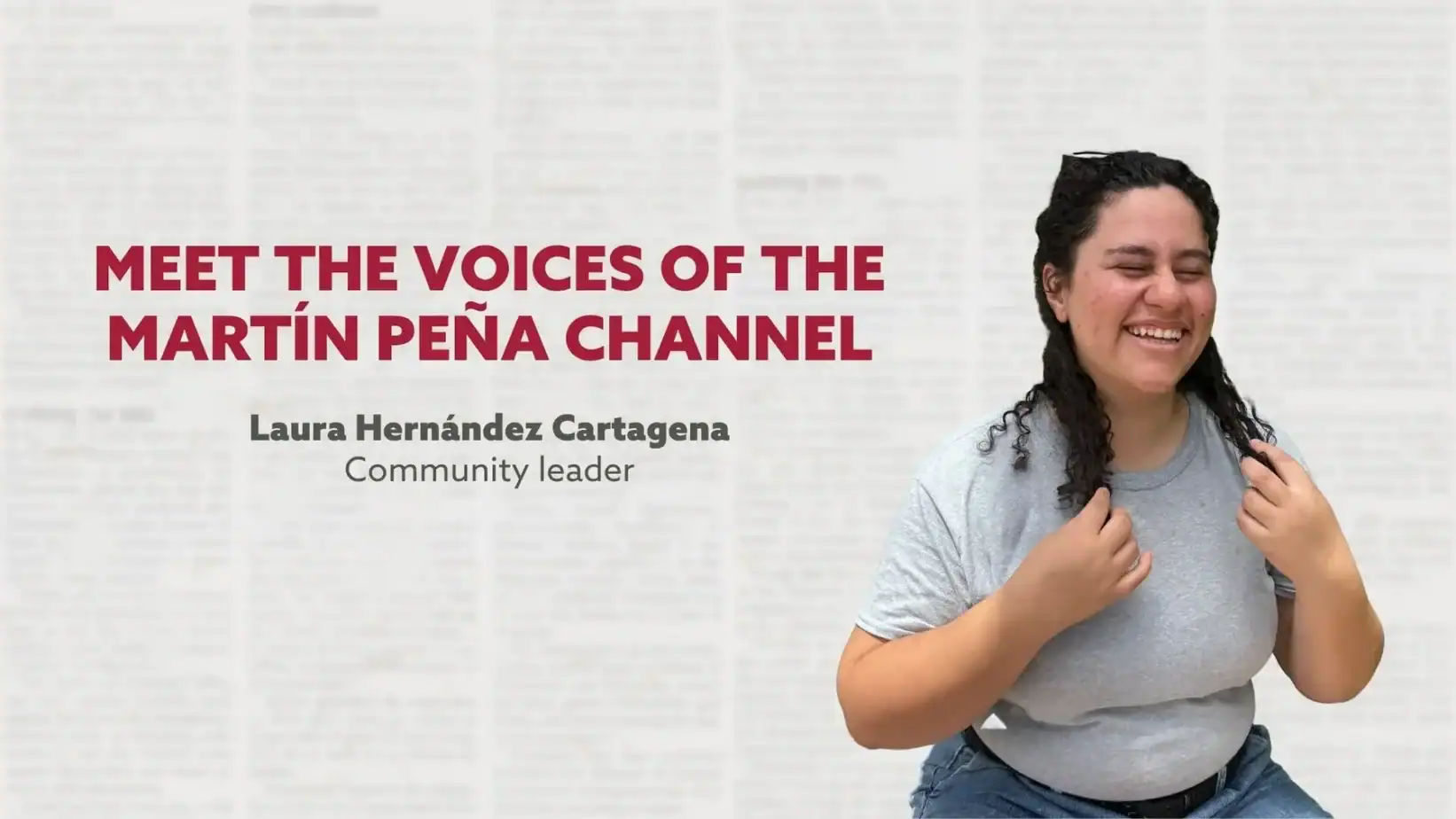
In Barrio Obrero’s Marina sector, where the streets hold stories passed down from generation to generation, Laura Hernández Cartagena remembers her childhood through small but meaningful fragments. One of her earliest memories takes place on 15th Street, riding her bicycle through the neighborhood that watched her grow up. At times, she would also ride in her grandfather’s cart as he drove her through the streets of the community while she quietly observed the everyday life unfolding around her. These are some of the memories she holds onto from her childhood, as she describes herself as a reserved and observant child.
Laura has lived her entire life in Barrio Obrero alongside her family. Her family roots are split between two towns on the island: her mother’s family comes from Ciales, Puerto Rico, while her father’s family is from Morovis, Puerto Rico. However, both of her parents grew up in Barrio Obrero, strengthening their bond with the community long before starting their own family. It was there that they met, at the family business, a convenience store called La Copa del Chévere on 16th Street. The store also serves as a gathering place where residents come together to talk, share stories, and buy everyday essentials.
Laura’s life has also been shaped by an uncommon challenge. Since childhood, she has lived with Gaucher syndrome type 1, a rare genetic condition that has become part of her personal story. Rather than holding her back, the experience has strengthened her sensitivity toward others and deepened her empathy for people facing hardships.
When describing what it meant to grow up in Barrio Obrero, Laura uses a word that might seem surprising: chaos. Yet in her voice, that chaos transforms into something positive. “Growing up in Barrio Obrero has been a chaotic experience, but it is also my essence,” she said. For her, every day brought something different. “Every day was different. We were always going on new adventures,” she recalled. It was also in the neighborhood where she studied and formed the friendships that accompanied her throughout her upbringing.
Despite the challenges often associated with underserved communities, Laura speaks about her neighborhood with pride. “I loved growing up in the community. If I could live it all over again, I wouldn’t change a thing,” she expressed. When asked what she feels when speaking about Barrio Obrero, her answer reflects a deep connection to the place where she grew up. “I feel happiness and excellence. When people talk about an impoverished neighborhood, they always think of negative things. But when you begin to see what you can create from the experience of living in a neighborhood and from the experiences you have every day navigating your community and developing different skills, it becomes enriching,” she said. For Laura, those experiences and abilities are part of something she has cultivated over time. “I feel like it’s something I created, something I nurtured, and something I can carry with me wherever I go.”
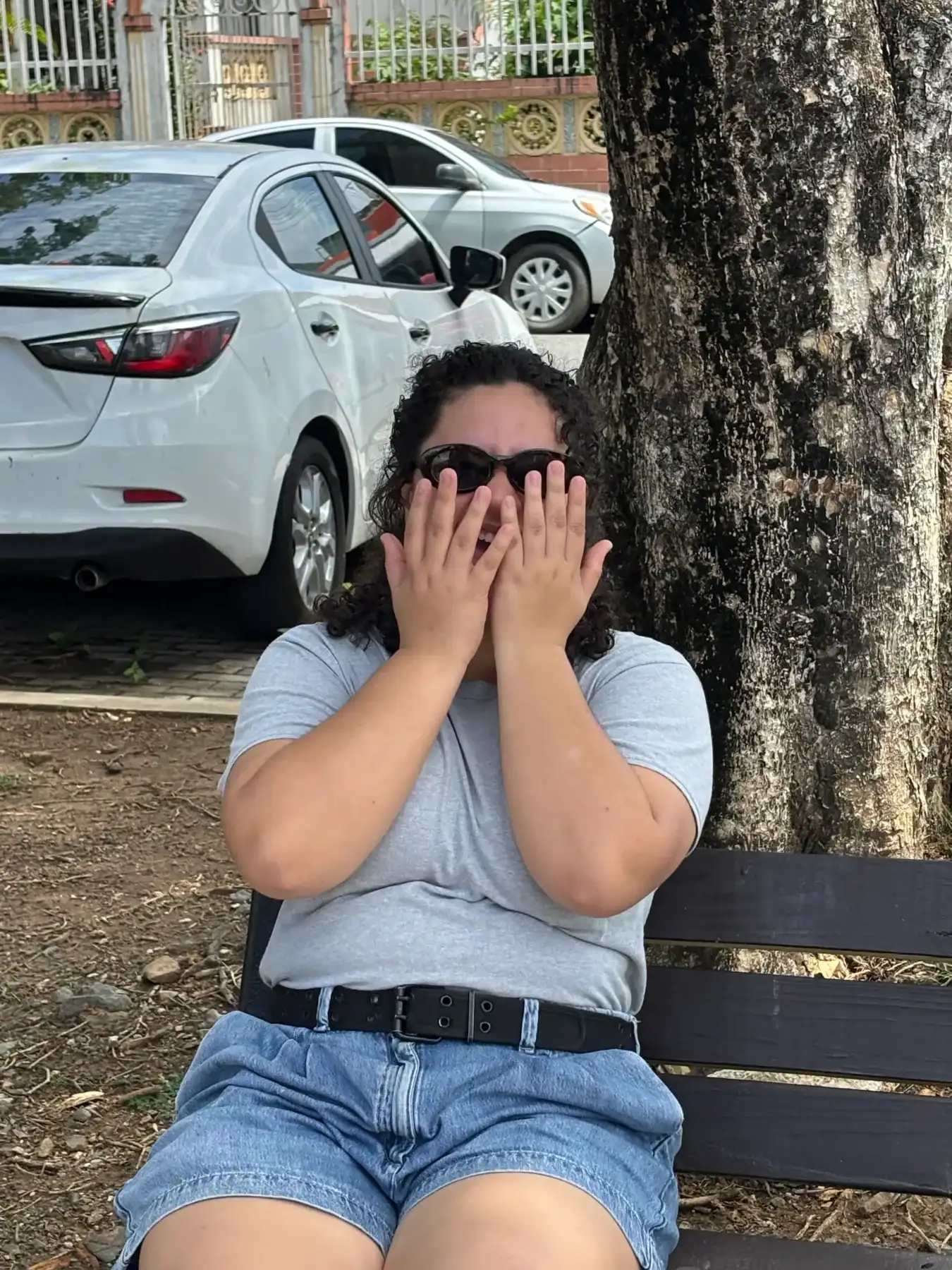
Now 23 years old, Laura serves as president of her community, a role she accepted with pride but also with an awareness of the challenges it carries. Being a young leader in her own neighborhood has not always been easy. “Being so young brings complications because sometimes people doubt your ability to lead,” she explained. However, her journey toward leadership began years before assuming the presidency.
During her years at Albert Einstein High School, located in the same neighborhood, Laura became involved in community initiatives. There, she joined an environmental group where she began developing leadership skills, learned public speaking, and discovered the importance of teamwork. That experience would profoundly shape her life.
Later, she was invited to participate in a community assembly where new board members would be elected. At that moment, she decided to run for a board position. From then on, she became increasingly involved in community processes, actively participating in initiatives and activities aimed at improving the neighborhood’s well-being. It was also through that experience that she discovered the calling that guides her life today: social work.
Currently, Laura studies Social Work at Universidad del Sagrado Corazón, a decision born directly from her experience in community advocacy. “I won’t say it’s easy, because it’s not, but I feel a passion for it. I enjoy learning something new in class and knowing I have a team of professors and classmates who are always there for me,” she said.
Still, leading a community in today’s context has brought complex challenges. For Laura, one of the most difficult changes has been the loss of community connection among residents. “I think the hardest part has been watching that sense of unity among neighbors disappear,” she explained. According to Laura, fear and distrust have begun affecting how people interact with one another and participate in community activities.
The situation has intensified with the presence of U.S. Immigration and Customs Enforcement in the area. Laura says the atmosphere in the neighborhood has changed significantly. “The way people interact with their neighbors has changed. People no longer go out into the streets the same way or participate in community activities because they’re afraid ICE might show up,” she noted. That atmosphere of uncertainty has made it more difficult to organize activities and strengthen community ties.
Even so, Laura continues to believe in the power of collective work and the importance of continuing to build community. Her professional aspirations reflect that commitment. She dreams of working as a social worker for a nonprofit organization in Washington, D.C., where she hopes to continue helping vulnerable communities. If that path does not materialize, she is also considering pursuing a master’s degree in Puerto Rico, possibly at the University of Puerto Rico, in administration or community work.
Beyond her academic and community responsibilities, Laura also finds joy in life’s small moments. She loves animals and enjoys quiet moments that allow her to reconnect with herself. Yet even in those moments, her commitment to others remains the driving force behind her decisions. For Laura Hernández Cartagena, Barrio Obrero is not simply the place where she lives. It is the place where she learned to observe the world, understand the struggles of others, and discover her purpose. The streets she once rode through on her bicycle and the rides with her grandfather are part of the story that now drives her to continue fighting for her community. And although the path of leadership is filled with challenges, Laura continues to believe in the hope that, even amid uncertainty, community can find itself again.
Editor’s Note
This journalistic profile is the result of in-service learning experiences carried out as part of the course PER 223: Narrative Journalism, taught by Professor Mariliana Torres Pagán in collaboration with Sagrado’s Community Engagement Program, the Barrio Obrero Oeste se Reinventa Foundation, and the Caño Martín Peña Enlace Project.