
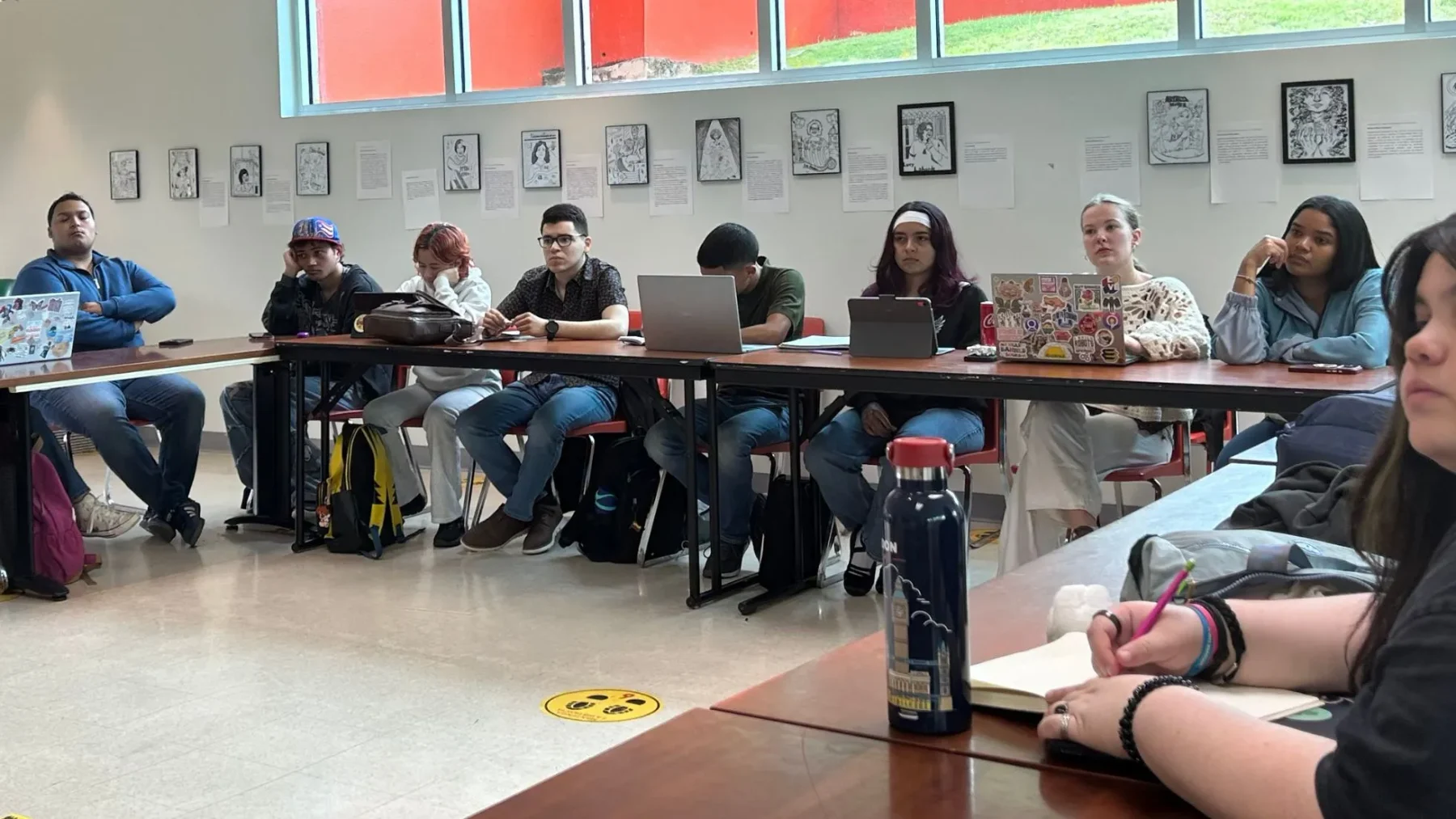
Students at Sagrado participated in a virtual discussion on the political and social conflicts surrounding the Fujimori family.
By Deyaneira L. Negrón
Journalism student with a minor in International Studies and Global Communication
In October, the International Studies and Global Communication Program hosted a videoconference titled “Peru Under Keiko Fujimori: Challenges and Opportunities,” led by attorney and panelist Raúl A. Bravo Sender, who joined the call from the Republic of Peru.
The videoconference addressed the political conflict surrounding the Fujimori family, one of the most influential and controversial political dynasties in contemporary Peru. It also examined the crises that have shaped relations among political parties and affected the country’s political system throughout recent electoral cycles.
One of the main topics was Fujimorismo, a political movement associated with the legacy of former President Alberto Fujimori and the political career of his daughter, Keiko Fujimori, who has also become a prominent figure in Peruvian politics. The discussion provided an opportunity to explore the movement in greater depth, examine the controversies surrounding it, and analyze its influence on Peru’s political landscape.
Bravo Sender discussed the distrust felt among segments of the Peruvian population towards the Fujimori family and the continued influence of the family name on national politics. He also analyzed Keiko Fujimori’s role in Peruvian politics and the challenges she faces in a climate shaped by political tensions and the legacy of previous administrations.
“Rather than opportunities, Keiko Fujimori’s government faces more challenges,” Bravo Sender stated during the videoconference, referring to Peru’s current political landscape.
The event allowed students and faculty at Universidad del Sagrado Corazón to learn more about Peru’s political development and the challenges facing its democratic system. It also encouraged the analysis of different perspectives on Fujimorismo and highlighted the importance of understanding international political history to interpret current tensions and anticipate potential conflicts in the future.
Similar stories

Expert Panel on Cybersecurity and Terrorism Addresses Contemporary Challenges to International Security