
The week-long lineup featured talks, panel discussions, and design competitions for students.
By Marcela Jiménez Ruiz
Journalism Student
Universidad del Sagrado Corazón celebrated Animation Week with a series of activities that brought together professionals from Puerto Rico’s audiovisual industry while giving students opportunities to apply their skills through character design and 3D prop creation competitions.
Organized by the School of Arts, Design, and Creative Industries (EADIC, per its acronym in Spanish), the initiative included the panel discussion “Haciendo animación en Pe Erre” (“Making Animation in PR”) on October 27 and a student competition whose awards ceremony took place on October 29 in the Barat Sur Grand Hall.
During the discussion, animation professionals shared their experiences in the industry, the production processes behind their studios, and the challenges of developing audiovisual projects from Puerto Rico. Featured guests included Elena Montijo and Tommy González of Manatí Studios; Niki López, who has worked as a director and showrunner for Nickelodeon and Disney; Yamil Medina of Grand Studios; and Quique Rivera of H Studios.
Panelists emphasized that animation is a multidisciplinary field that draws on knowledge from areas such as music, storytelling, anatomy, and design. They also discussed challenges related to budgets, client expectations, team communication, and the importance of setting boundaries to prevent professional burnout.
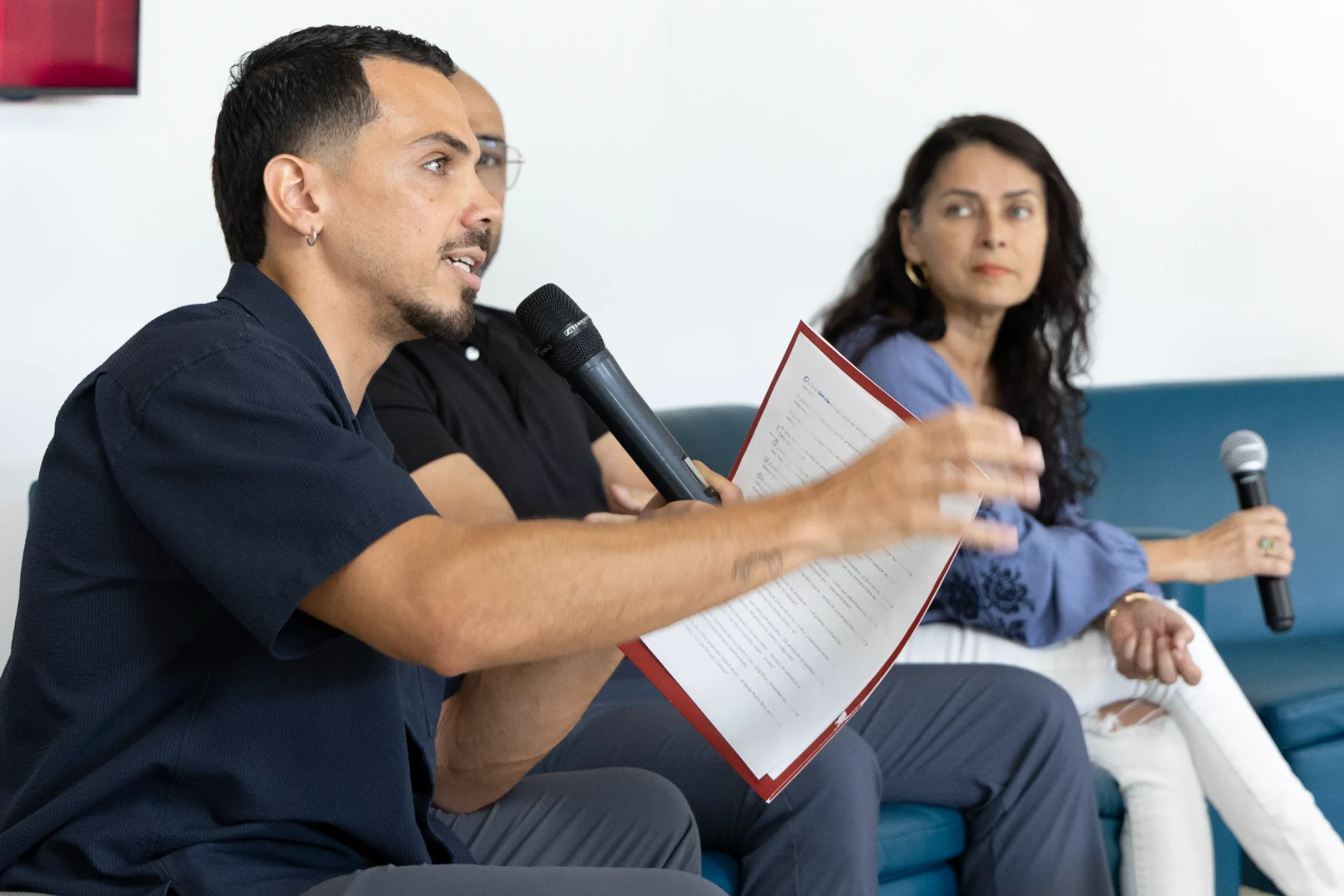
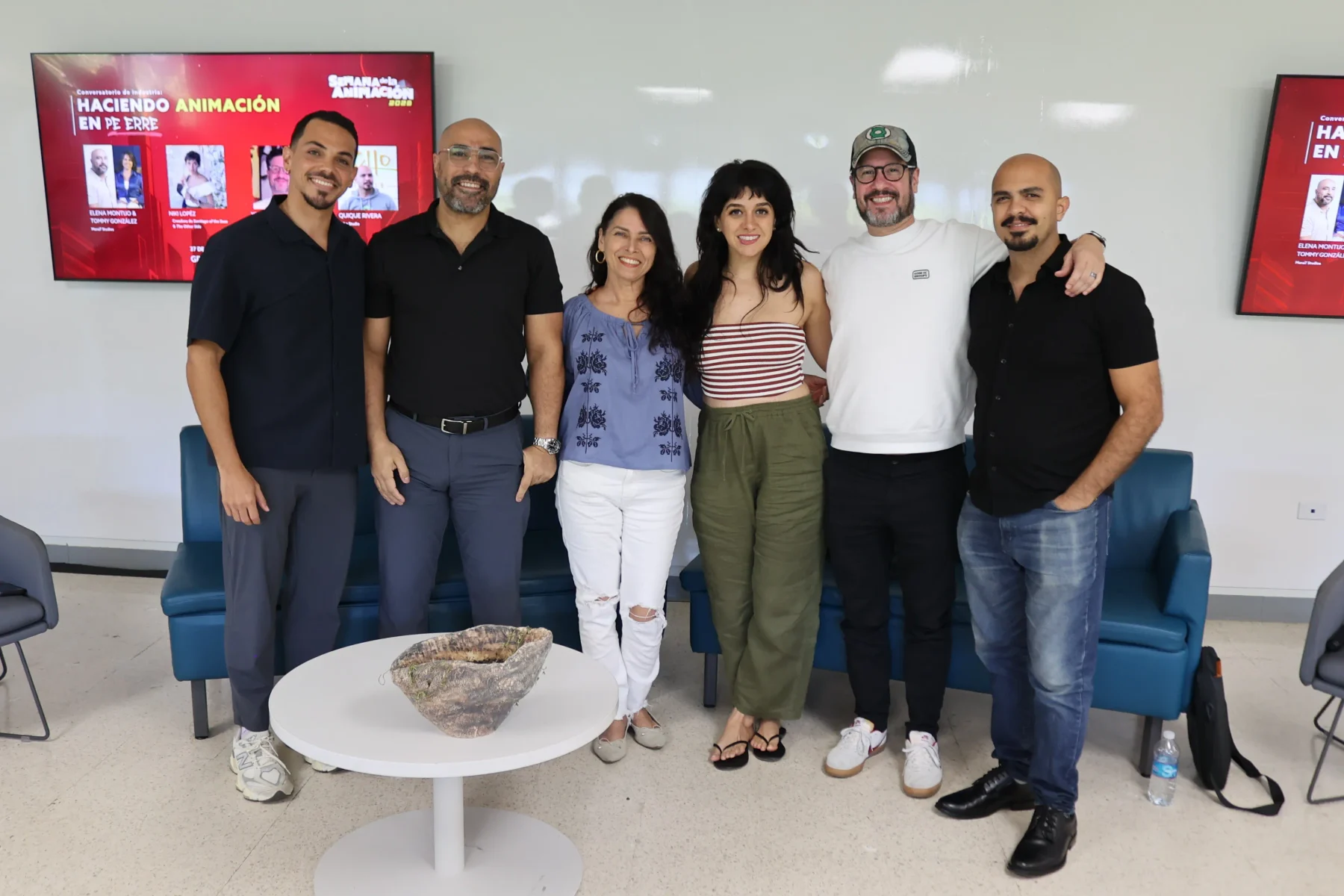
(Photos by by Ashley M. Font Correa, student of Dance, Theater, and Education)
One of the central themes of the discussion was the need to recognize animation as an industry capable of telling meaningful stories while creating economic opportunities. Guests encouraged students to use their university years to experiment, collaborate across disciplines, and develop independent projects that strengthen their portfolios.
They also recommended developing strong communication skills, learning how to receive and implement feedback, and maintaining the flexibility required to adapt to different creative and production workflows.
Building the Cyberriqueño universe
As part of Animation Week, students participated in a competition featuring two categories: Character Design and 3D Prop Creation. Both challenges were inspired by the concept of “Cyberriqueño”, a creative vision of a futuristic Puerto Rico set in the year 2077.
In this imagined future, the population lives under the control of P.A.I., an artificial intelligence system that dominates production and daily life. In response, the “Ciberponkos”, a group of young rebels, use technology to resist and defend their cultural identity.
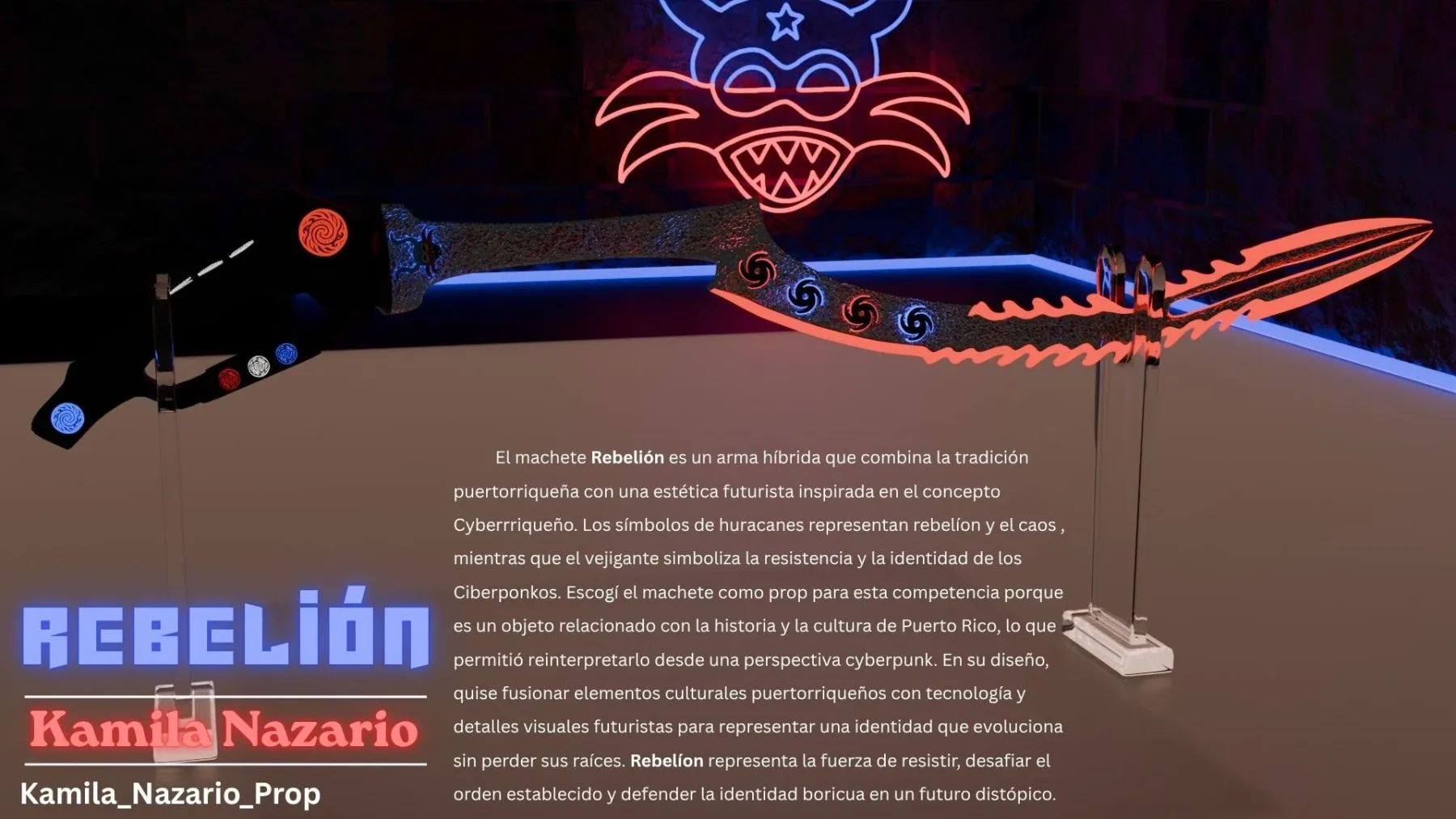
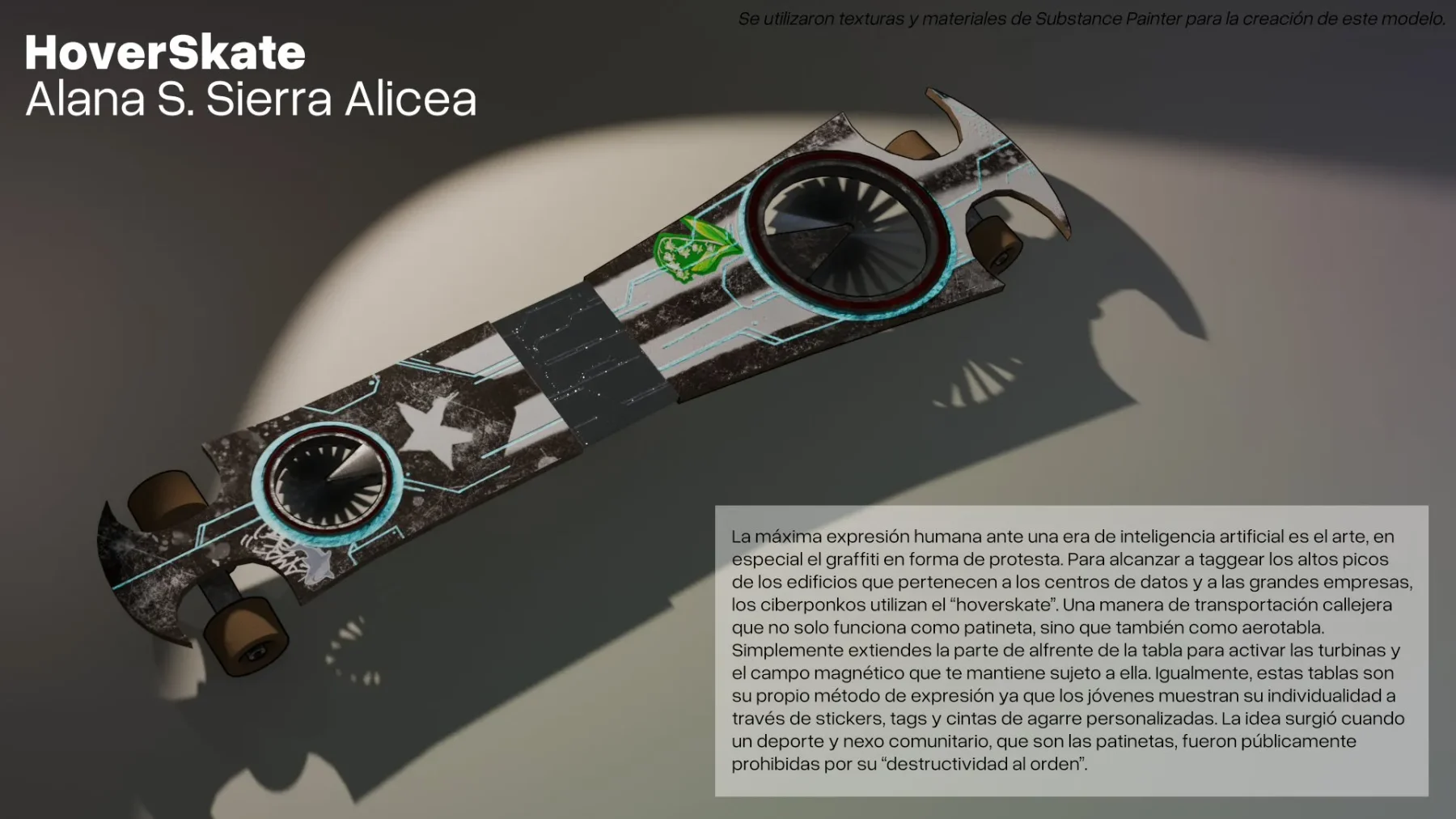
In the 3D Props category, participants created objects that blended elements of Puerto Rican culture with futuristic design. Among the entries was “Rebelión”, by Kamila Nazario, a machete-inspired piece that referenced Puerto Rican traditions and resistance.
The first-place award in this category went to “HoverSkate”, created by Alana S. Sierra Alicea. The project imagined a levitating skateboard that functions both as a means of transportation and a form of personal expression.
Meanwhile, the Character Design Competition featured 16 submissions that explored different interpretations of the Cyberriqueño universe. Each project presented characters with distinct backstories, abilities, and conflicts while incorporating Puerto Rican cultural references alongside science fiction elements.
First place was awarded to Onix Adrián Morales for “El Gigante del Sur” (The Giant of the South), also known as Bocetrón. The character is depicted as a mysterious figure who roams the streets of southern Puerto Rico, surrounded by echoes of past eras and connected to the Ciberponkos and cybernetic implant experiments.
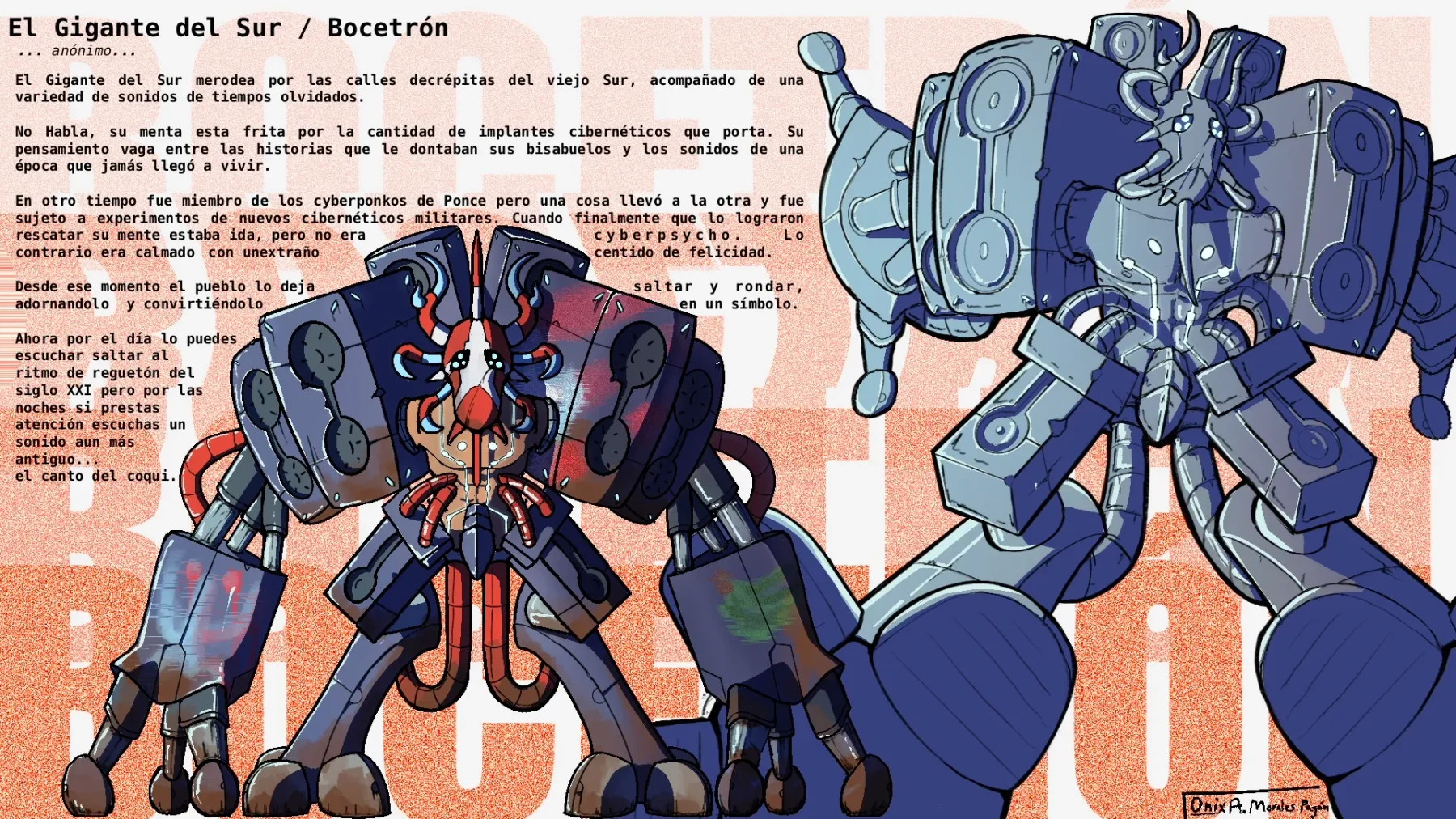
For Morales, participating in initiatives such as this provides an opportunity to grow as an artist and explore new creative perspectives.
“You have to think carefully about what you’re designing. It shouldn’t just look good, it should look good and have meaning,” he said. The student also highlighted the value of seeing his peers’ work and observing how different participants interpret the same concept through unique styles and ideas.
Second place went to fourth-year student Kelly Vélez Bosque, whose character was inspired by the idea of representing hope within a dystopian setting. Vélez explained that the project allowed her to create a piece that could also become part of her professional portfolio.
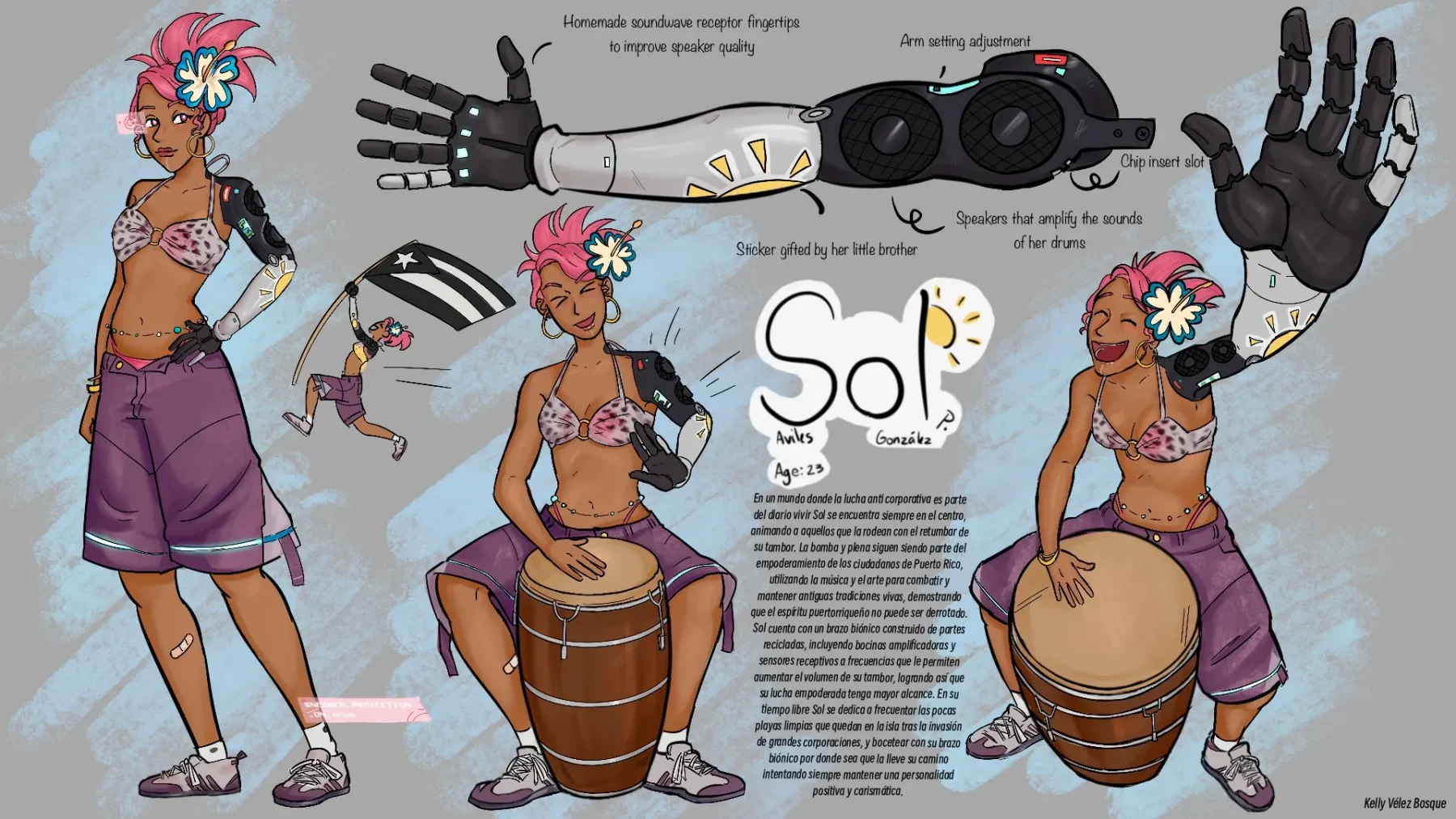
“I felt inspired instantly, so I already had a very clear vision of what I wanted to create and the message I wanted to convey, which was a ray of light within something so dark,” she said.
Evaluating the final designs proved challenging due to the creativity and quality of the submissions, many of which demonstrated strong narrative and visual potential for development into standalone worlds or larger productions.
An Experience That Extends Learning Beyond the Classroom
According to Professor Gerardo A. Pomales Ríos, initiatives such as these directly support the purpose of higher education: preparing artists to contribute to society and the creative industries.
“We are preparing artists for society and for the industry. Giving them opportunities to apply what they have practiced and learned outside the four walls of the classroom is precisely why we do what we do,” he explained.
Through these competitions, students were able to apply their technical and artistic knowledge, develop original concepts, and receive valuable feedback on their work.
Animation Week reaffirmed the importance of creating spaces where students can experiment with their ideas, strengthen their portfolios, and gain experiences that bring them closer to the realities of professional creative practice.
Related stories
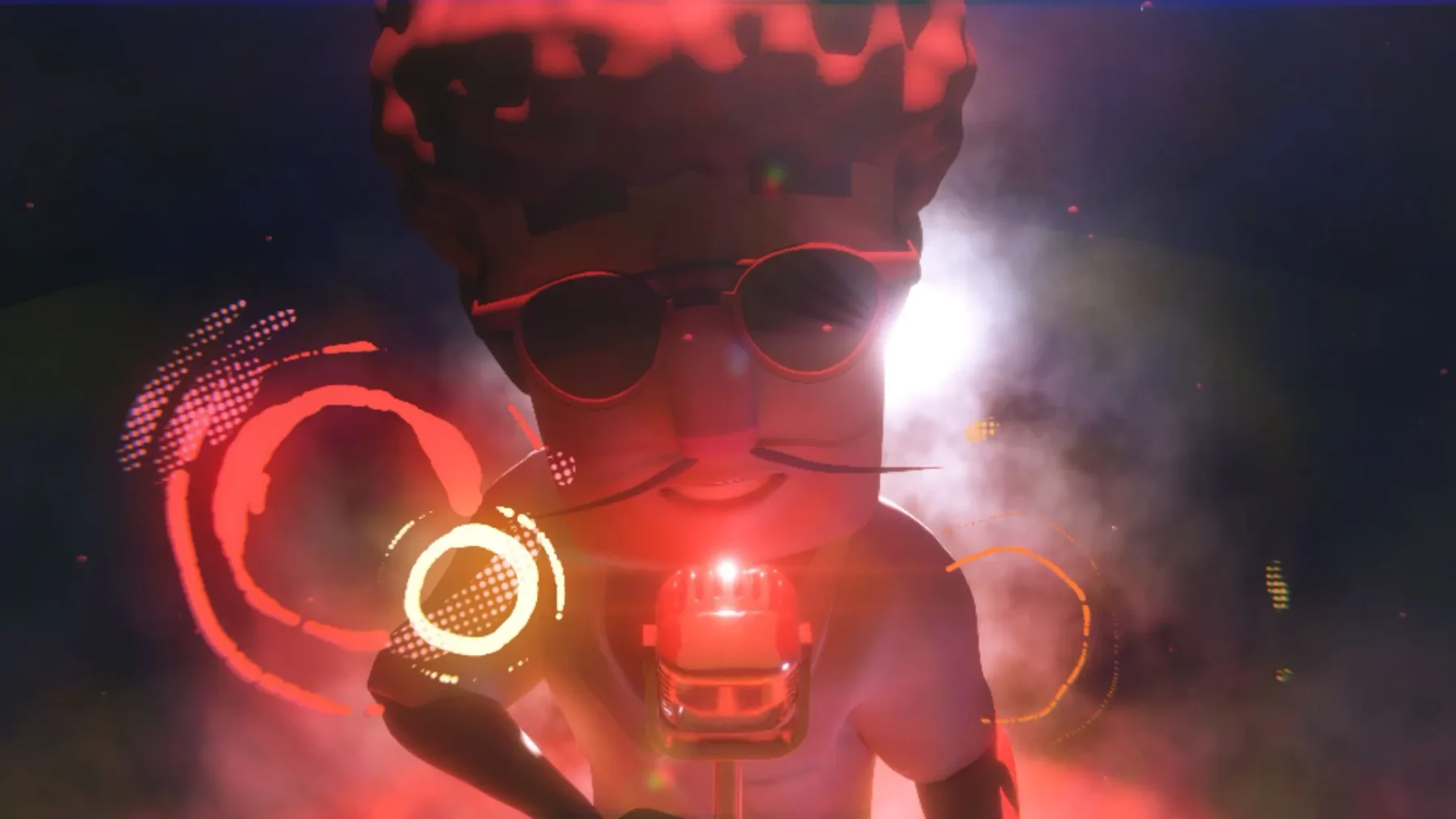
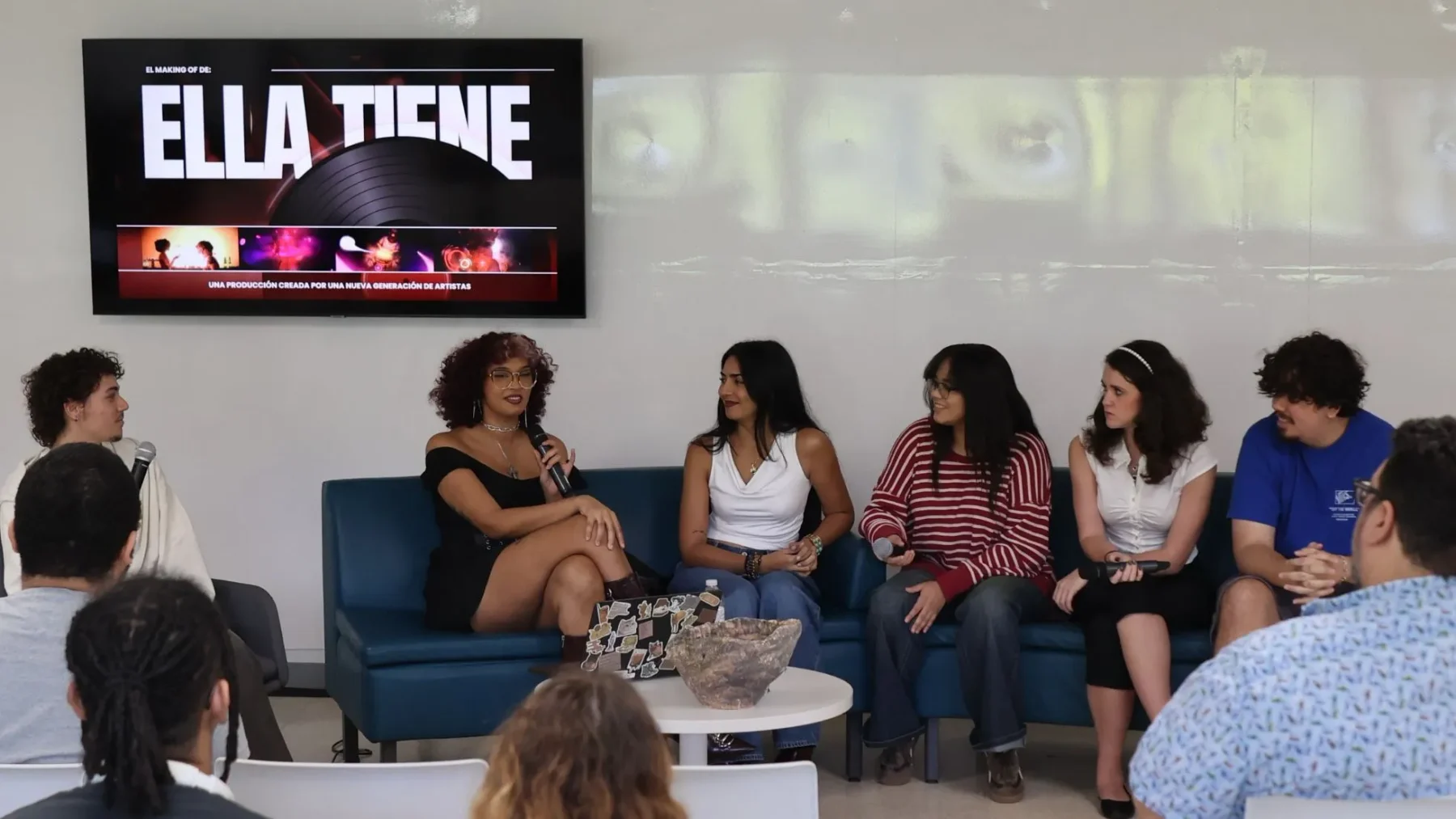
3D Animation Students Create Music Video in Collaboration with Plena Libre