
The event featured a three-day program of lectures and presentations on literature, contemporary writing, and history.
(Photos by the Communications Center)
By Institutional Communications
Universidad del Sagrado Corazón celebrated Library Week from April 19 to 22 under the theme “Find your joy at the library.” In alignment with the national observance led by the American Library Association (ALA), the series of events extended an open invitation to people of all backgrounds to explore and discover what brings them joy within the library.
Over the course of three days, the initiative brought together members of the university community through a range of activities designed to promote reading, writing, and critical thinking, while reaffirming the library’s role as a hub for discovery and collective reflection.
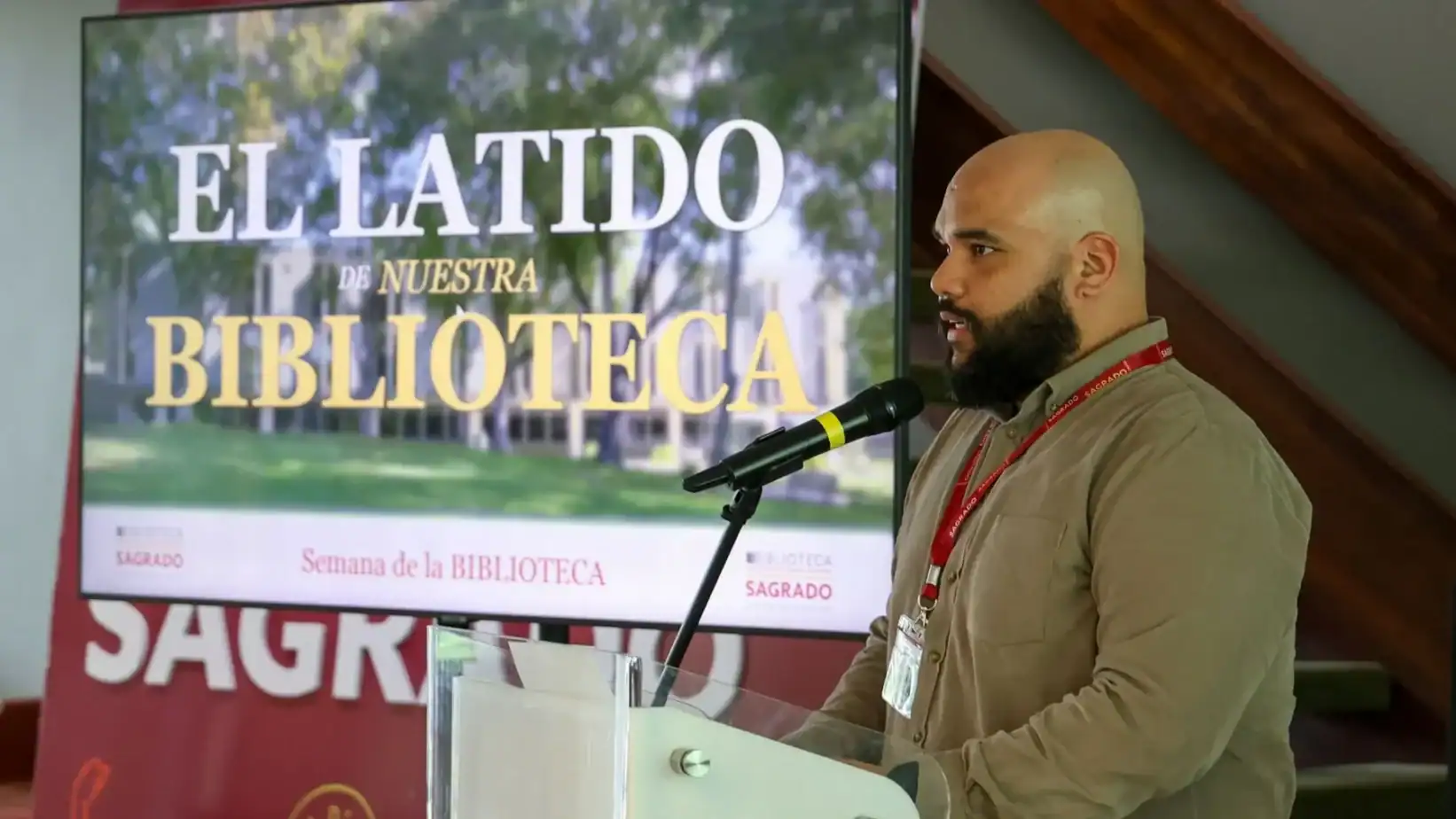
According to Alejandro Escobar Nieves, director of the Madre María Teresa Guevara Library, the library aspires to be “an oasis in the desert of uncertainty” that can characterize academic life; a space accessible both for scholarly research and for leisure and enjoyment.
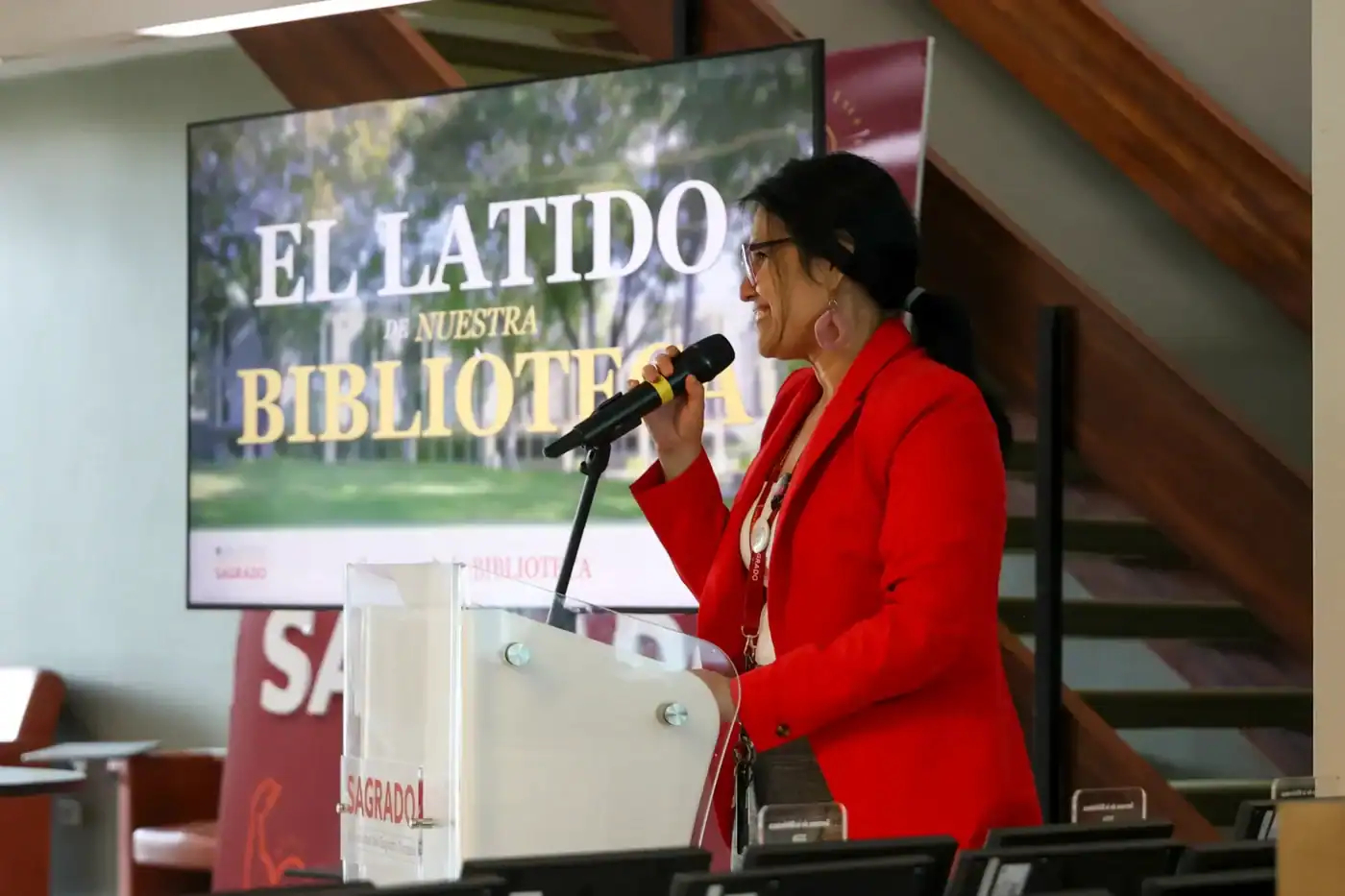
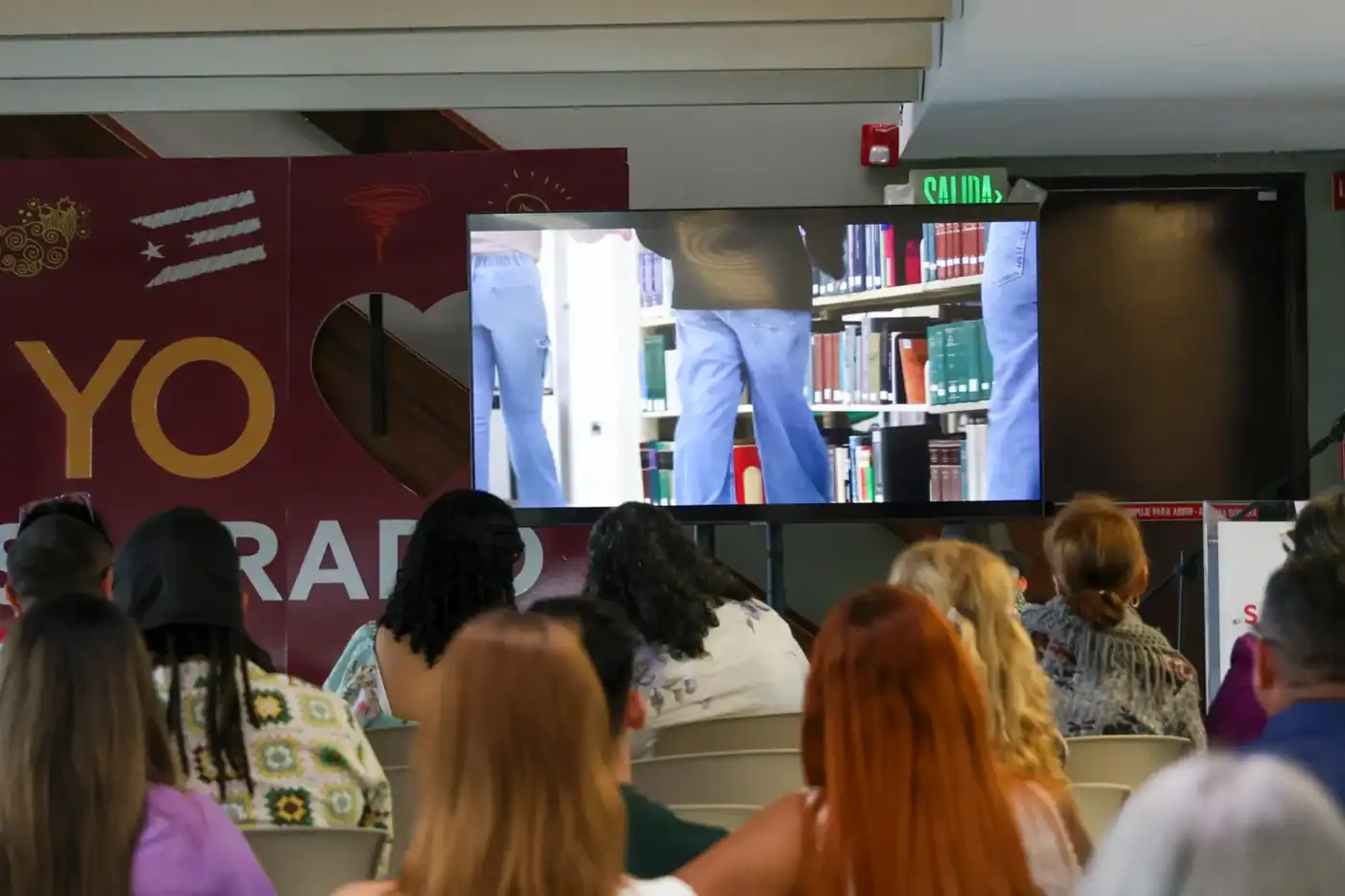
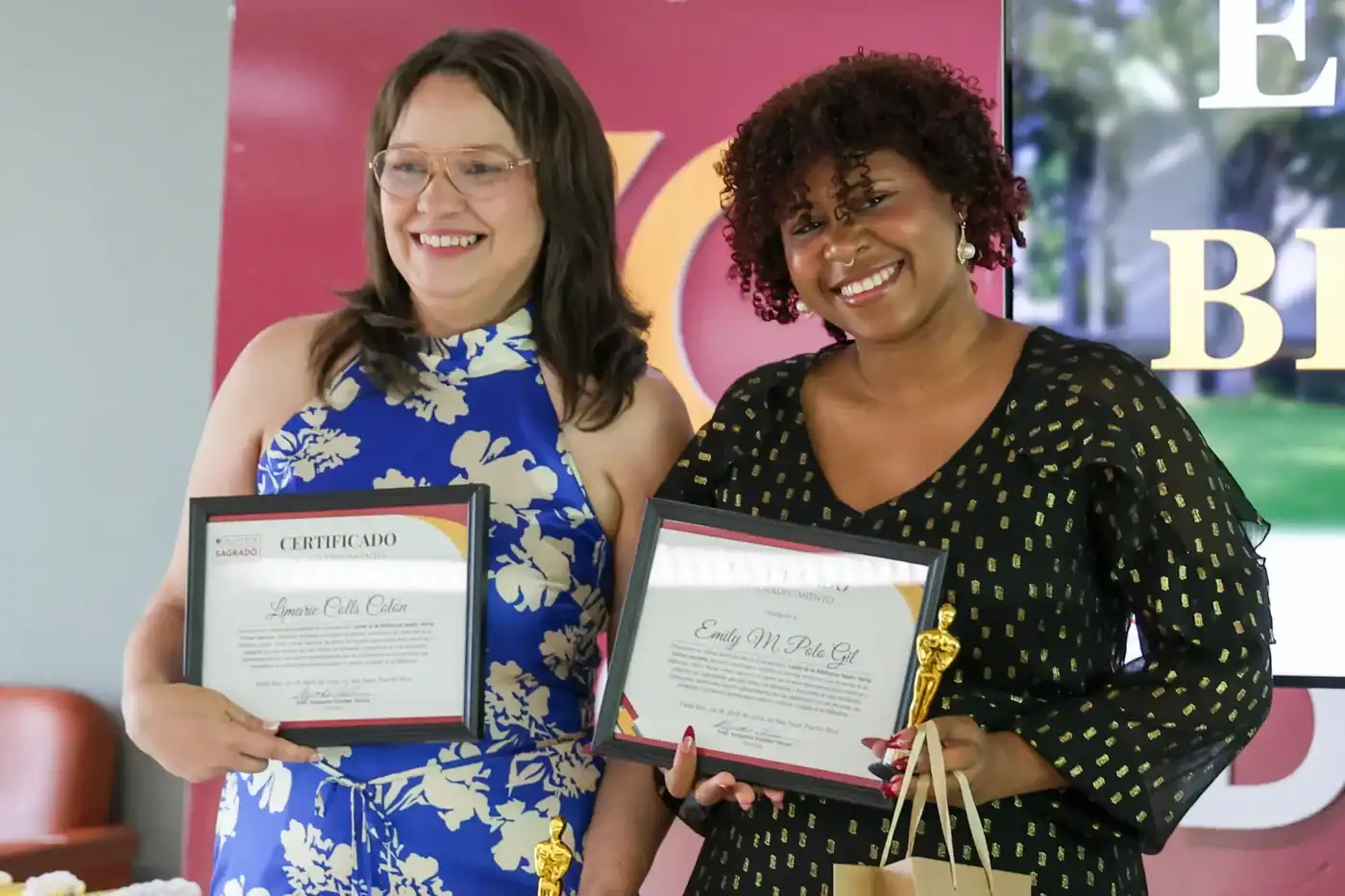
The week opened with the screening of the documentary Latido de la Biblioteca Madre María Teresa Guevara, produced by Professor Limarie Colls Colón. The film highlights several initiatives developed with the library, including Voces de papel, the Children’s Reading Room, and the library’s integration into the 21st Century Skills component of the School of General Education. These initiatives demonstrate the library’s impact across different stages of student development. The documentary will be available soon in the university’s digital repository.

Dean of the School of General Education
Photos by the Communications Center
Among the literary activities was a participatory reading of the novel La perra by Pilar Quintana, which is part of the Spanish curriculum at Sagrado, as well as the presentation of the book El muerto parao: velorios, marginalidad y performance en el Puerto Rico contemporáneo by Dr. Luis J. Cintrón Gutiérrez.
Additionally, the discussion “Medios y modos: Escribir en digital,” featuring writer and producer Alexandra Román and professor Yanabel Faris Acevedo, offered insight into writing practices in digital environments, a key topic for today’s communicators and creators.
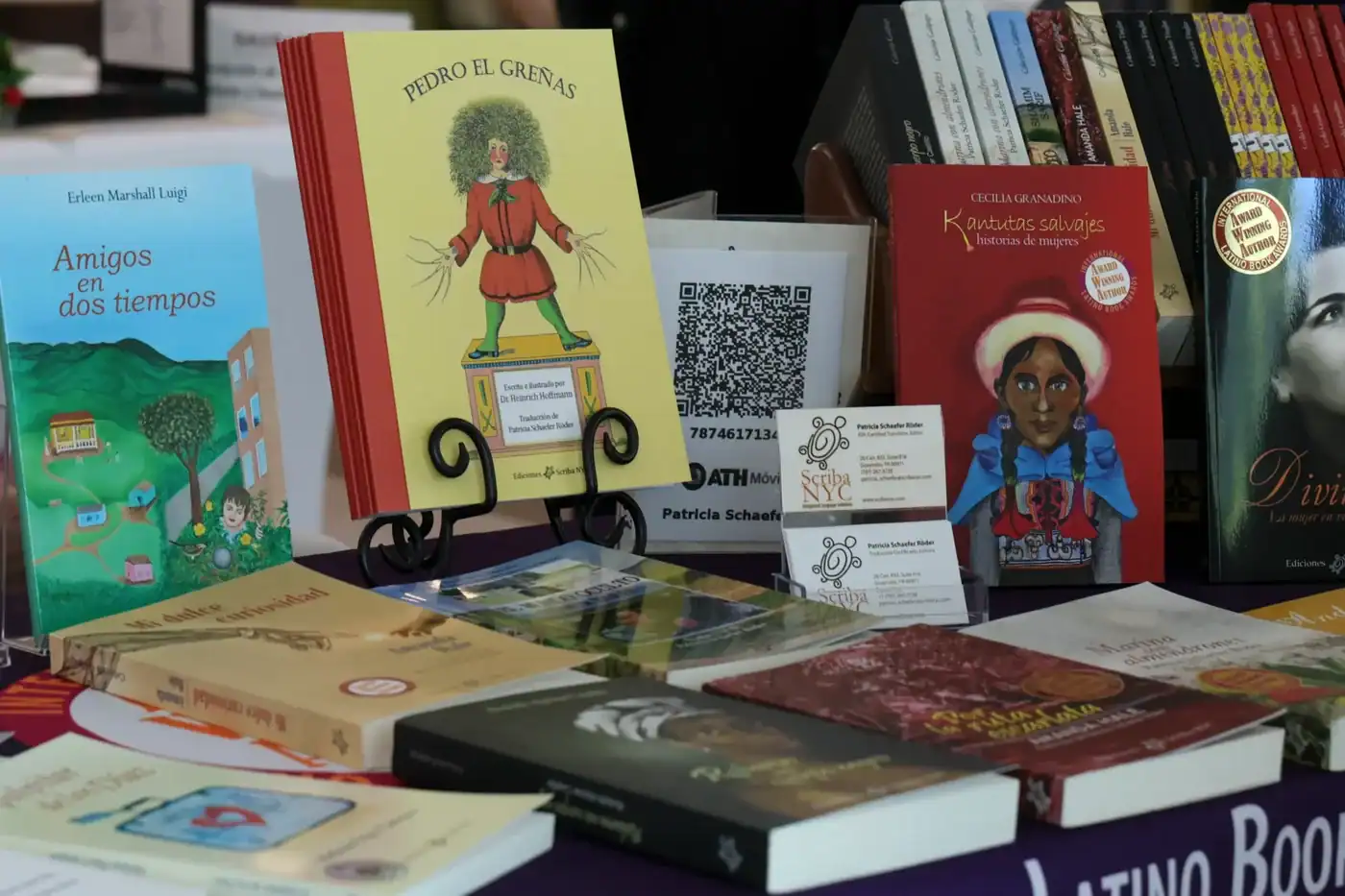
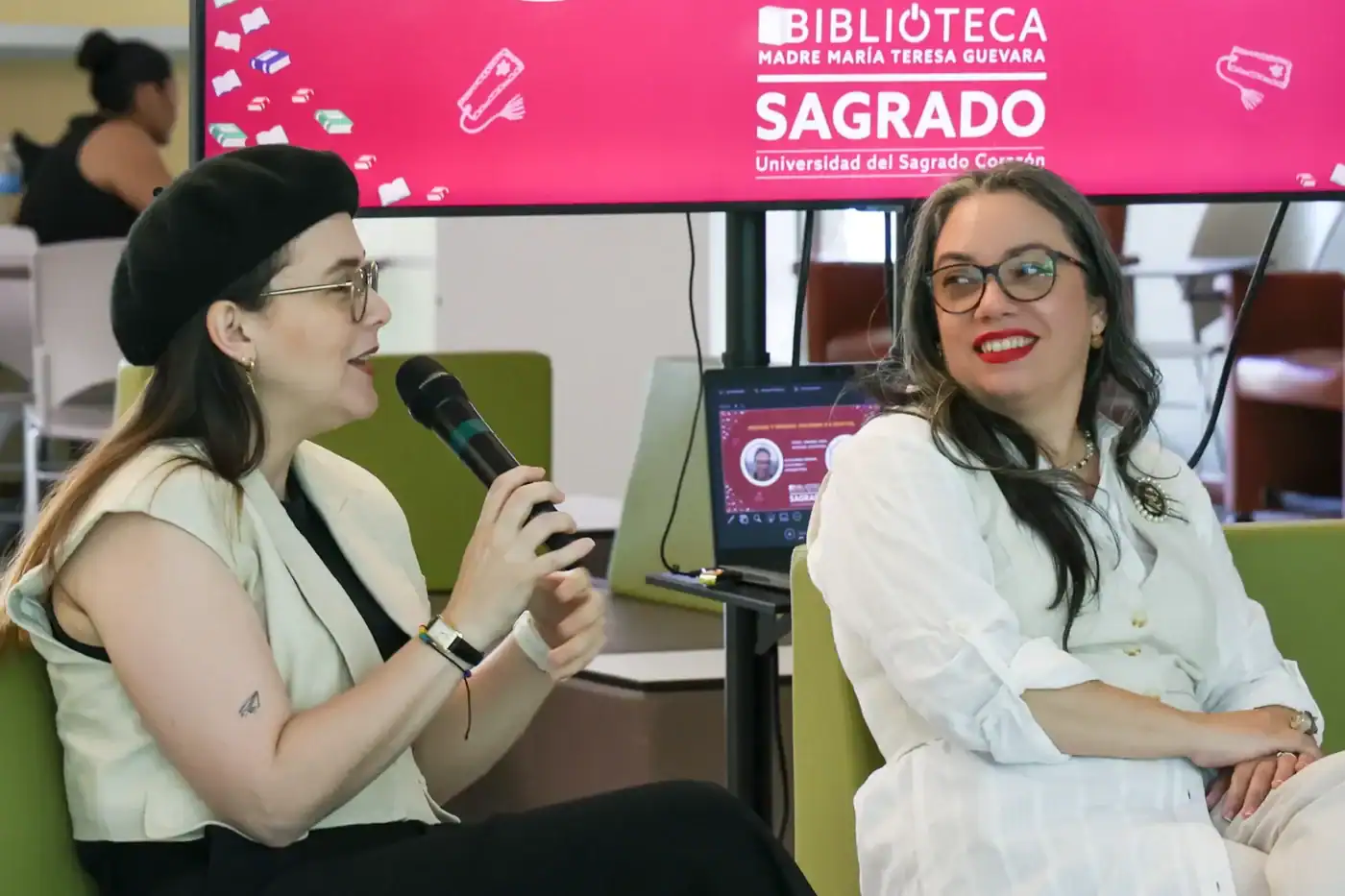
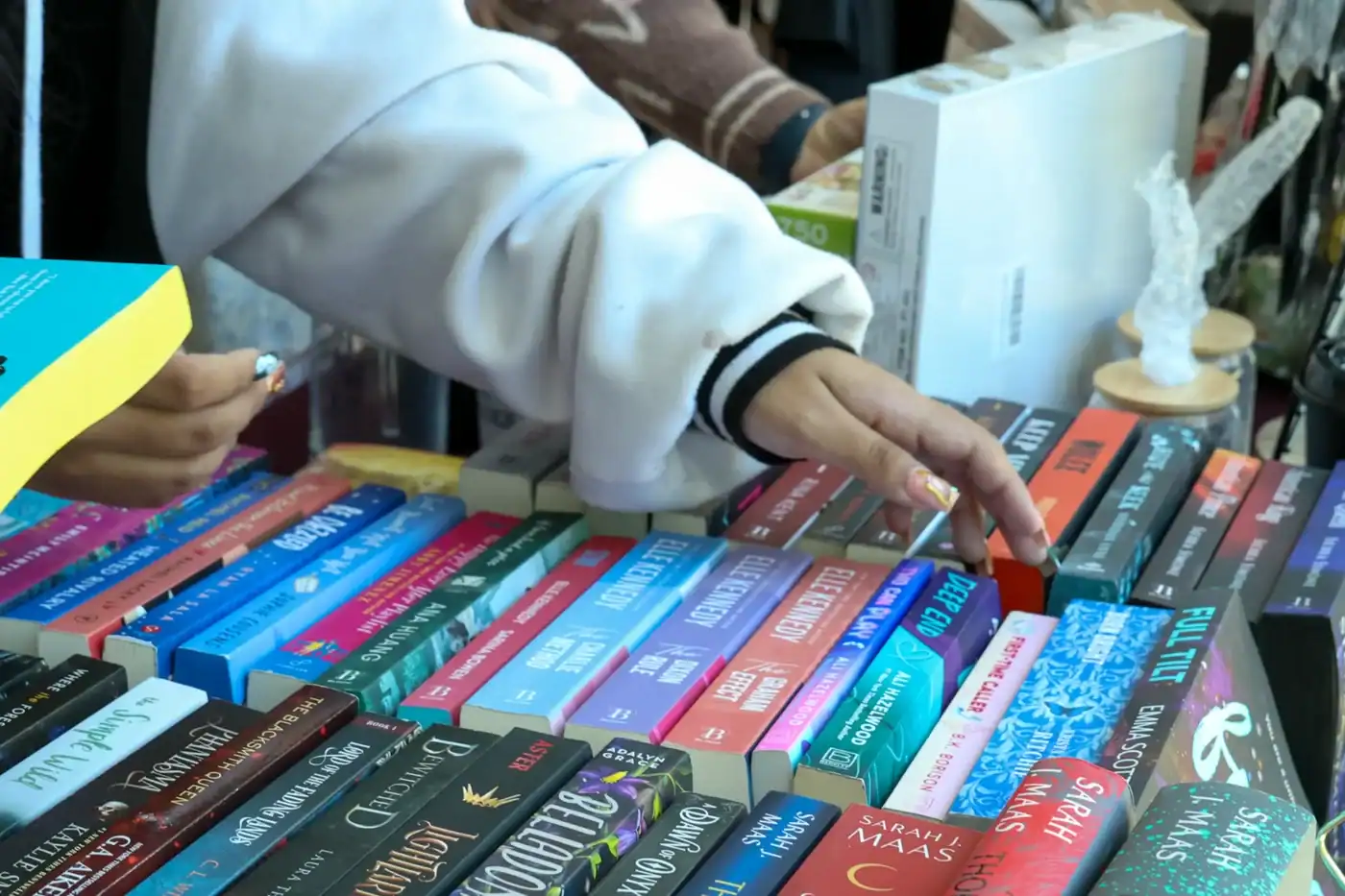
Photos by the Communications Center
One of the highlights was the lecture “Celestina Cordero: Afro-Descendancy Dialogues,” led by writer and professor Yolanda Arroyo Pizarro. The talk emphasized the importance of fostering anti-racist spaces within universities and presented writing as a tool of resistance, particularly for Black and queer communities. As part of the session, participants engaged in a writing exercise directed toward their ancestors, encouraging introspection and historical memory.
Additional resources were shared, including a database on slave ships and a 2026 literary call for submissions aimed at encouraging writing on this topic, which remains underexplored in Puerto Rican literature. The initiative is part of a broader effort to expand conversations on Afro-descendancy within Puerto Rico’s academic sphere.
Looking ahead, the library envisions positioning itself as a leading space for contemporary Puerto Rican literature, a goal reflected in the growth of its collection from 200 to 1,000 titles over the past five years. In this way, the library continues to establish itself as a vital component of the university experience, where learning, culture, and community converge to shape students’ academic journeys.