
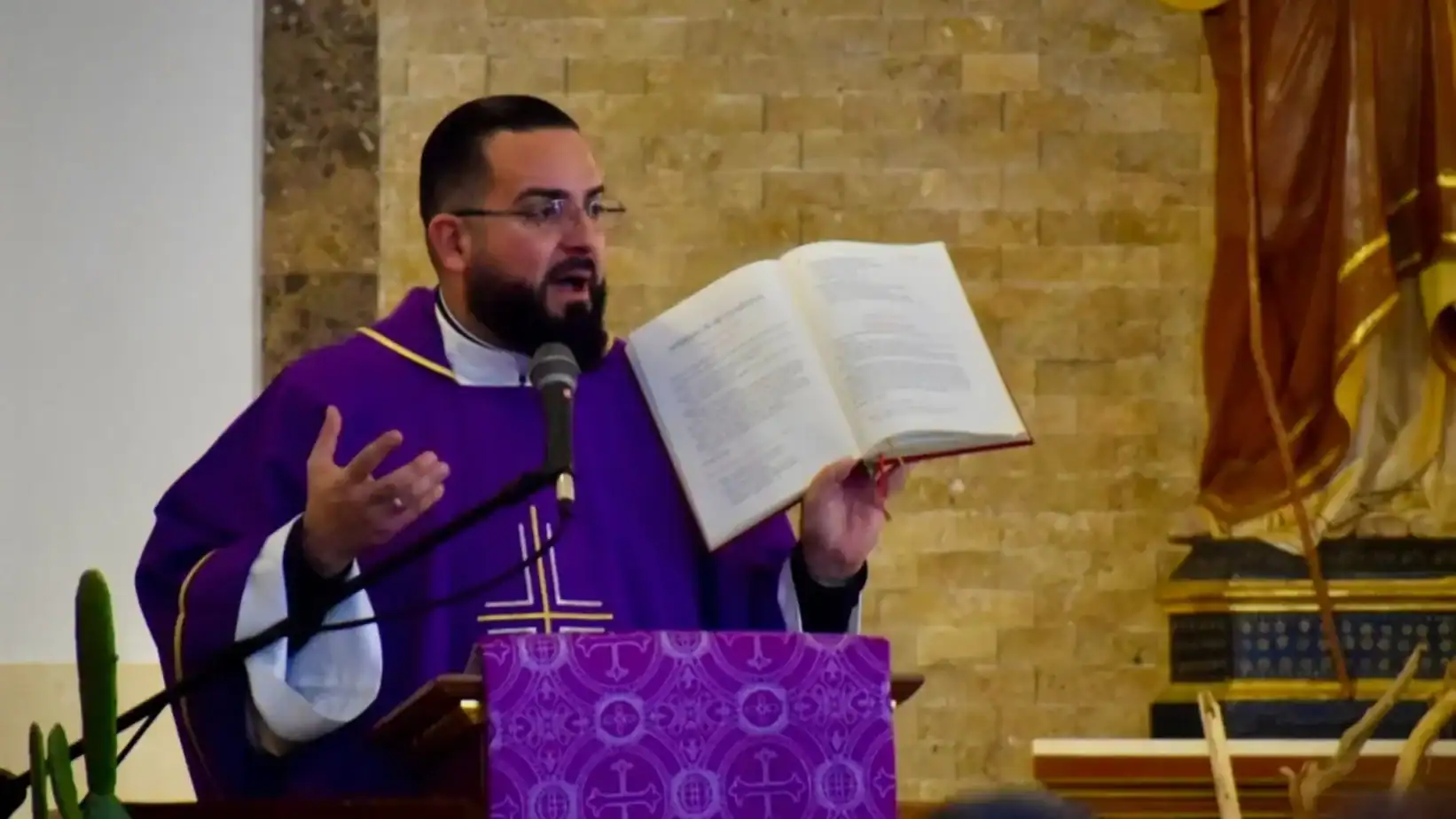
The priest has witnessed firsthand the changes within the Barrio Obrero community.
By Alanis Cartagena Burgos
Journalism Student
“We are fathers because we feel the pain of others and we feel their frustration,” said the priest, who, through empathy, is facing one of his greatest challenges: serving as parish priest in Barrio Obrero.
Five years ago, he began working in the community, which is largely populated by migrants living in fear of operations and raids conducted by U.S. Immigration and Customs Enforcement (ICE).
Every Sunday after Mass, parishioners approach Father Cedeño asking for help, sometimes with tears in their eyes as a final cry for hope. The priest welcomes them with an embrace within the sacred walls of Nuestra Señora del Carmen Parish, listening to their situations. “It’s not only that they fear deportation; they come because they have an immigration issue or because they’ve been fitted with an ankle monitor,” he explained.
The priest said the greatest challenge has been witnessing the effects of ICE operations on the community: “seeing broken families, seeing children separated from their parents. There are people who have died in their homes out of fear of going to a hospital.”
Listening to the stories of Barrio Obrero residents makes him share in their suffering and experience firsthand the pain felt by his brothers and sisters, who, according to him, “are being treated unjustly by this system.”
During this period of uncertainty, he has focused on strengthening the faith of parishioners, who have expressed to him that “although they may logically feel or experience fear in this situation, it will not weaken their faith,” he said.
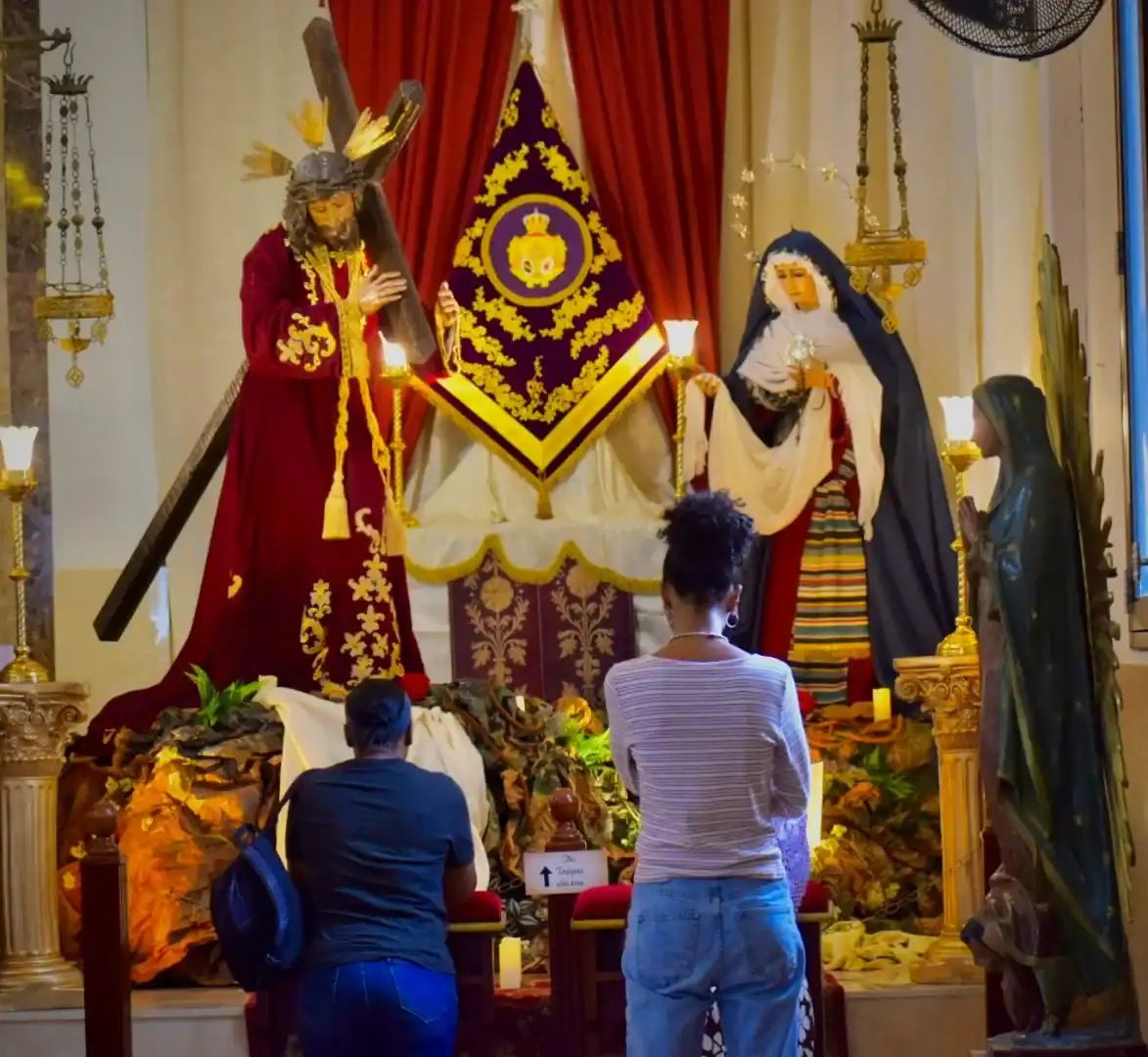
Father Cedeño has dedicated his life to helping the community through the church. However, his future once looked very different during his youth.
He began studying pre-med at the University of Puerto Rico at Mayagüez, but along the way discovered new interests that led him to change course. He graduated with a degree in Humanities in Art History. It was then that he made what he described as a “radical” decision in his life and began following a calling.
At the Pontifical Catholic University of Puerto Rico, he entered the Regina Cleri Major Seminary and later pursued studies in canon law at the University of Salamanca.
As someone trained in law, the immigration situation has deeply impacted him, and as a priest, it leaves him with a sense of helplessness because he cannot help people as much as he wishes. The priest spoke with frustration and desperation when thinking about those who have spent decades building their lives in Barrio Obrero. “People who have been here for thirty years, whose only act, their only crime, their only offense, has been wanting to come here to work,” he said.
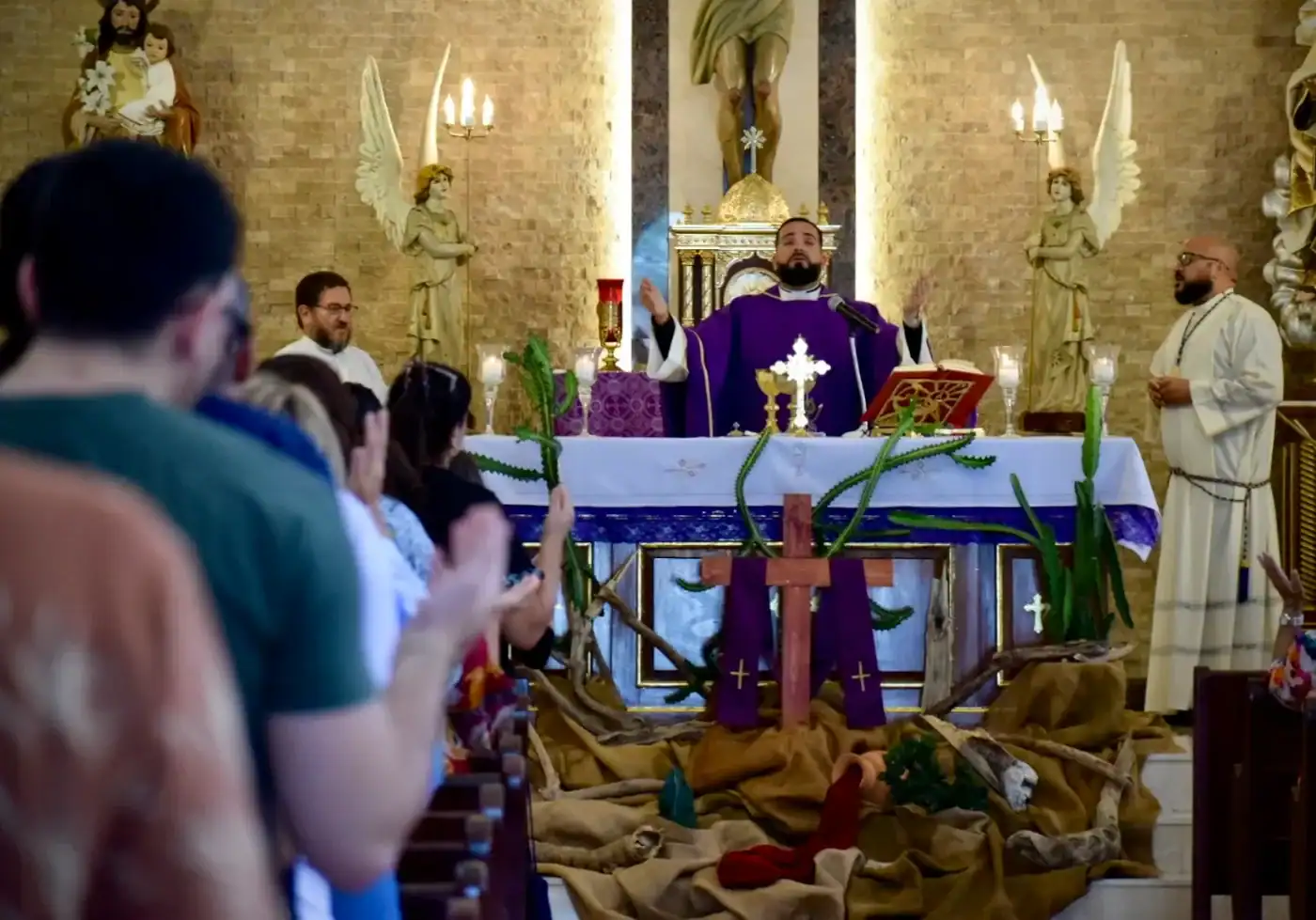
When the final hymn of the liturgy ends and the priest gives the blessing, some parishioners head out to buy fritters, receive assistance, or shop for clothing at the bazaar located on church grounds.
At the bazaar is José Ramírez, who organizes the sale and collection of donated items.
Ramírez is the son of migrants and understands the pain of residents who left their homes in search of a better quality of life. “I am the son of immigrants… I know families who came here with nothing, and now they have built lives for themselves because they got to work and did what they had to do,” he shared.
Ramírez considers the parish his extended family because it is where he grew up and received support during the most difficult moments of his life. Throughout his 46 years, he has participated in various church initiatives, eventually becoming manager of the bazaar and soon-to-be deacon.
“The current parish priest said to me, ‘Why don’t you study to become a deacon?’ And I said yes. I realized this was my time. Sometimes I think maybe I’m already too old for this, but God’s timing is perfect,” the future deacon said about the encouragement Father Cedeño gave him to follow God’s calling.
Transformation of the Church
Since ICE operations and raids began, Father Cedeño has noticed a decrease in parishioners attending Mass, although he acknowledged that “attendance has declined, but I must admit many brothers and sisters with irregular immigration status have come closer to me.”
For Ramírez, “it’s not easy” to witness the changes the parish has gone through over the years. “Many people here have been affected by the raids… when there are raids, you notice it. When you drive down the streets and they’re empty, you know they’re around, because of the fear,” Ramírez added.
Both men have worked together on different initiatives to help the community, and Ramírez recognizes the priest’s efforts. “The priest, with the support of the archbishop, has been very proactive with the immigrant community… Father Cedeño has raised his voice and speaks up for anyone who needs it,” he affirmed.
For Father Cedeño, the immigration situation “is part of the reality we must face here in Barrio Obrero; perhaps it is not the same reality another priest has to experience in a different parish community.”
Services for the Community
The church operates the Cáritas project, a worldwide initiative that the parish priest described as “the arm of the Church extended to every person in need.”
As part of the project, they provide weekly food assistance, connections to healthcare professionals, and immigration support personnel for parishioners.
Those working at the church found themselves needing to adapt the services offered to the community in order to provide assistance during times of uncertainty and serve as a point of connection.
“Immigration attorneys have approached us; they coordinate support when specific situations arise and provide completely free assistance,” Cedeño added regarding the adjustments the church has implemented.
However, beyond representing a challenge for the parish priest, the situation has also caused him outrage and deeply affected him. “To me, it’s shocking… Who would have told me I would have to serve as a liaison between a pregnant woman and a doctor? We have women who are afraid to go to a hospital because they fear their information will somehow be taken. How can a woman not have access to such essential healthcare?” he questioned.
Although the church has worked to educate the community about their rights, Cedeño believes that amid uncertainty, many people surrender to fear.
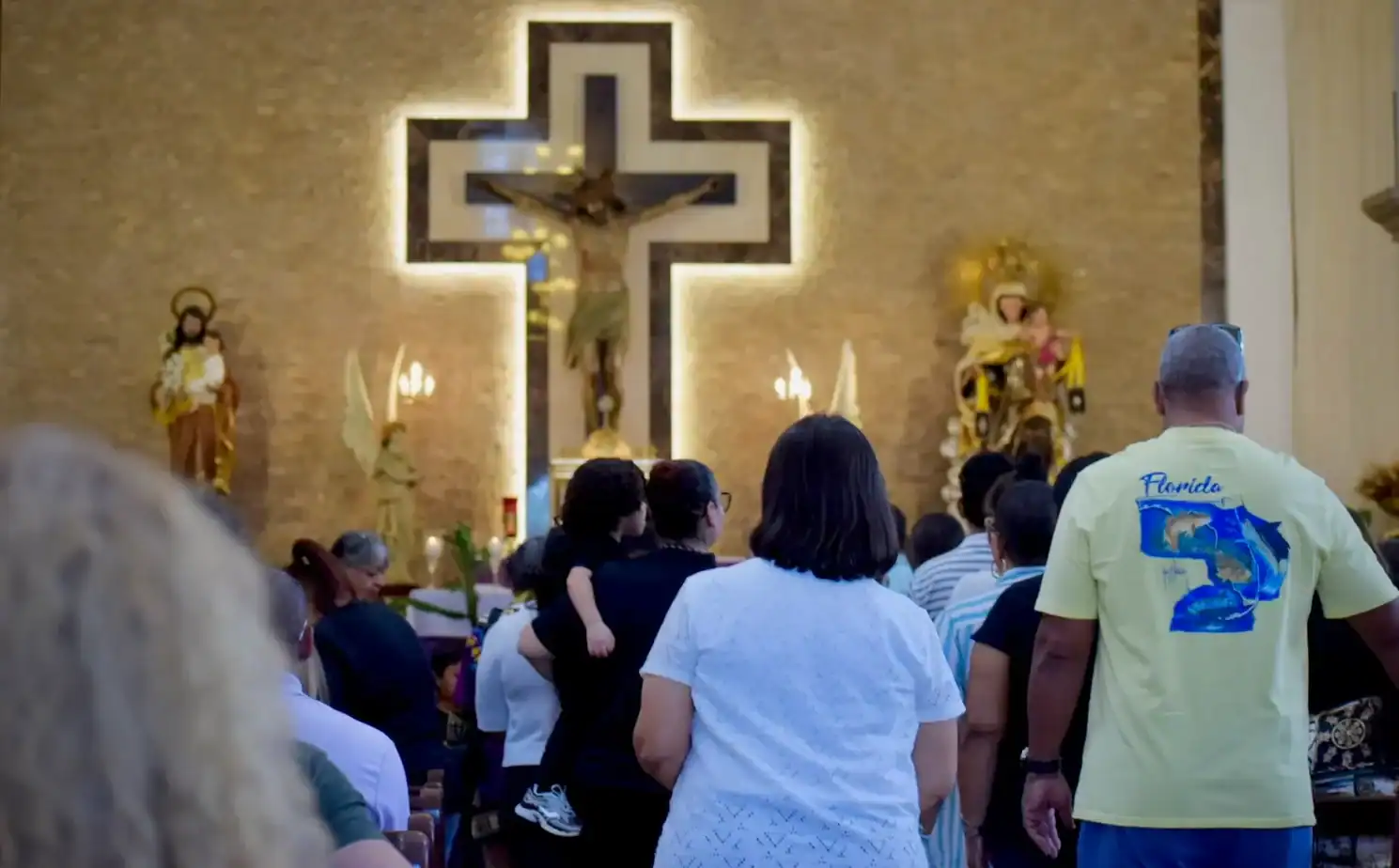
Even so, despite the anxiety facing the community, some have expressed to the parish priest that they will continue holding tightly to their faith and that the neighborhood’s heart will continue beating strongly.
Father Cedeño’s greatest hope is to see Barrio Obrero shine. “Barrio Obrero has beautiful people, hardworking people, resilient people, people with strong values who strive every day to give the best to their families and contribute to society,” he affirmed.
Editor’s Note
This journalistic profile is the result of in-service learning experiences carried out as part of the course PER 223: Narrative Journalism, taught by Professor Mariliana Torres Pagán in collaboration with Sagrado’s Community Engagement Program, the Barrio Obrero Oeste se Reinventa Foundation, and the Caño Martín Peña Enlace Project.