
The Sagrado faculty members were the only representatives from a Puerto Rican institution participating in the Academic Forum.
By Institutional Communications
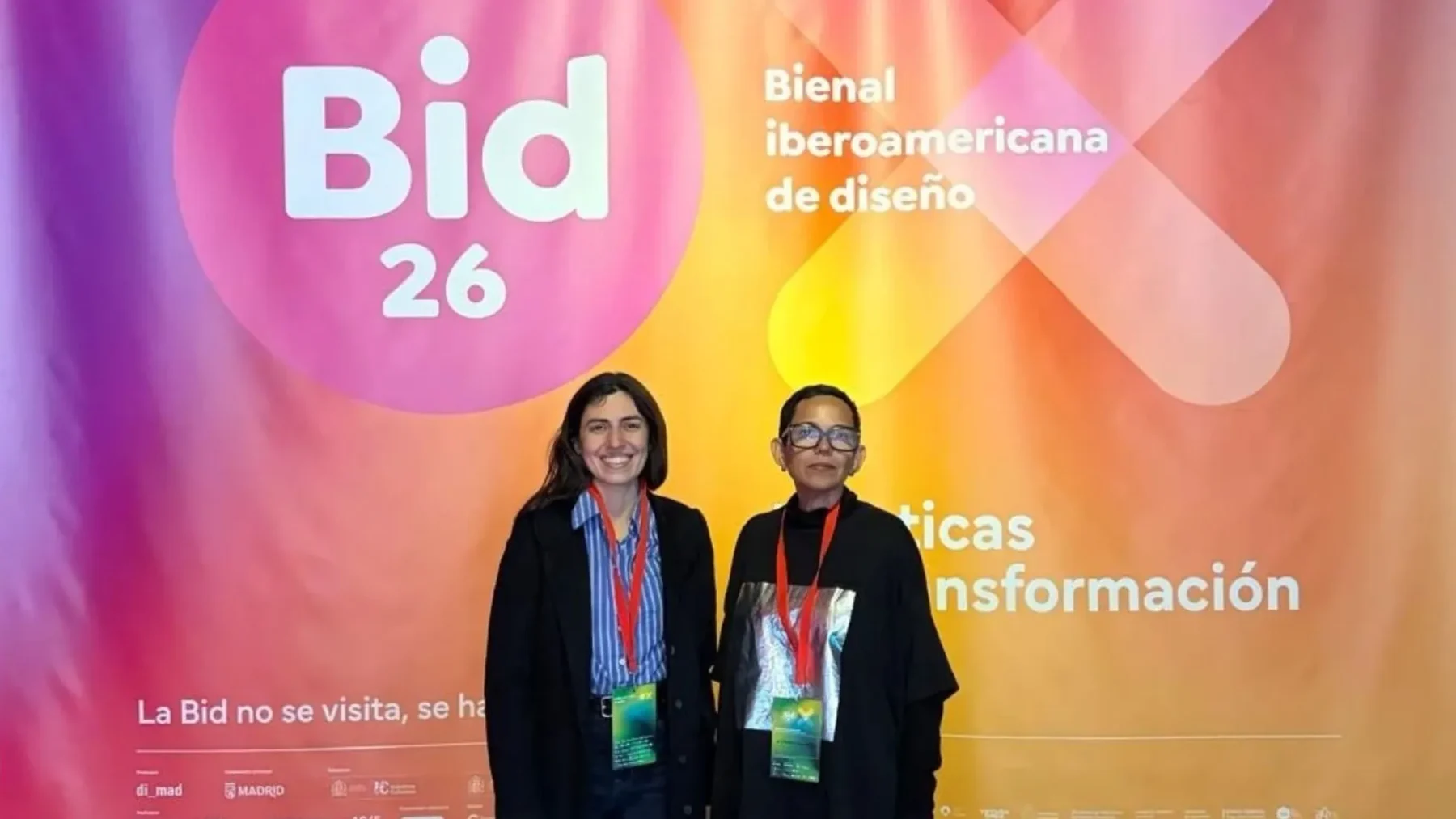
The School of Arts, Design, and Creative Industries (EADIC) represented Universidad del Sagrado Corazón (Sagrado) with the presentation of five research projects at the Academic Forum of the 10th Ibero-American Design Biennial (FABid26), held November 2-7, 2026, at Matadero Madrid’s Design Center.
The Academic Forum brings together researchers and faculty members from higher education institutions to exchange perspectives on the role of design in addressing contemporary challenges. Representing Sagrado’s Design program were Aurorisa Mateo Rodríguez, Academic Leader of Design and Visual Culture; Ana Rebecca Campos, Assistant Professor; and professors Sally Torres Vega and Karina Defelippe. The presentations by Mateo Rodríguez and Campos were featured under the thematic axis of Design from the Territory.
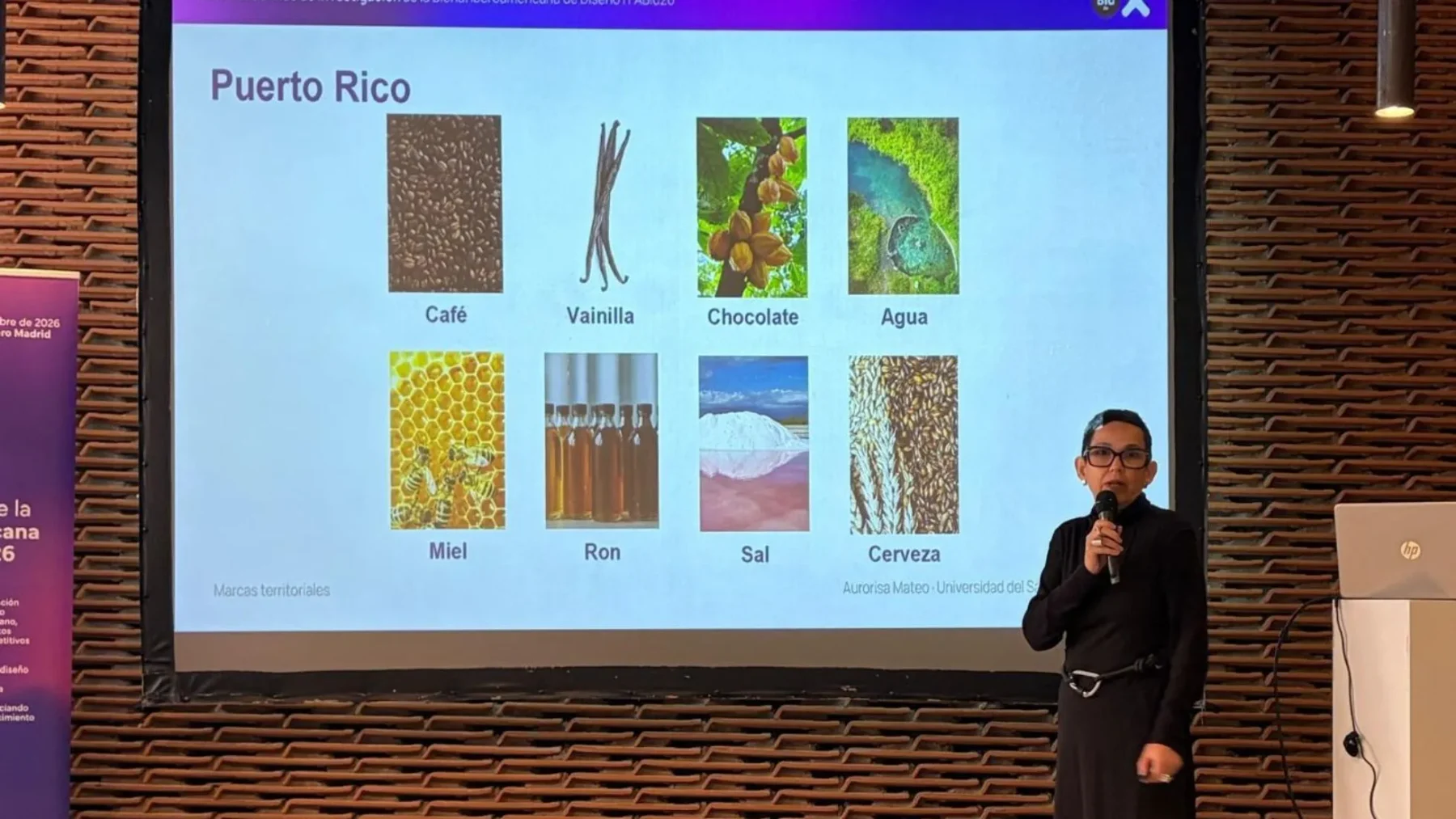
In her project, Territorial Brands: Design, Identity, and Value of Origin from Puerto Rico, Mateo Rodríguez examines how design constructs and communicates the value of origin of Puerto Rican products. The research draws on the European system of Protected Designation of Origin (PDO), which links a product’s characteristics to its territory and production conditions. Because Puerto Rico operates under the legal framework of the United States, which relies on different mechanisms for protecting geographical indications, the study centers on a key question: How can what is uniquely Puerto Rican be recognized, communicated, and protected within Puerto Rico’s colonial condition?
Through the cases of local brands Del Oeste, Café El Mesón, and Palma Coyor, the research explores how history, graphic culture, landscape, and natural resources are translated into packaging and brand identities that make a product’s origin visible.
Mateo Rodríguez also presented Scents of Memory: Olfactory Design and Learning in the Intertropical Context, a study that explores scent as a design material and a learning resource. Developed within a materials design course in the Industrial Design program, the project invited students to create an “olfactory memory diary” as a means of recovering meaningful experiences, researching raw materials, and developing formulations that were later prototyped and assessed through sensory testing.
According to Mateo Rodríguez, the projects reconstructed memories associated with El Yunque, the grass from a childhood lawn, and a cleaning product linked to experiences of illness.
“Its contribution lies in incorporating into the design process a material that disperses, occupies space, and reaches the body, while its interpretation varies from person to person,” explained Mateo Rodríguez, describing smell as a source of knowledge for understanding and designing relationships among body, emotion, place, and object.
For her part, Professor Ana Rebecca Campos presented the project Toward a History of Design in Puerto Rico: Indigenous Material Culture, which seeks to expand the history of design in the Puerto Rican archipelago through the study of Indigenous material culture. The research examines artifacts, materials, and manufacturing processes to recognize the design knowledge and practices developed by the archipelago’s original communities.
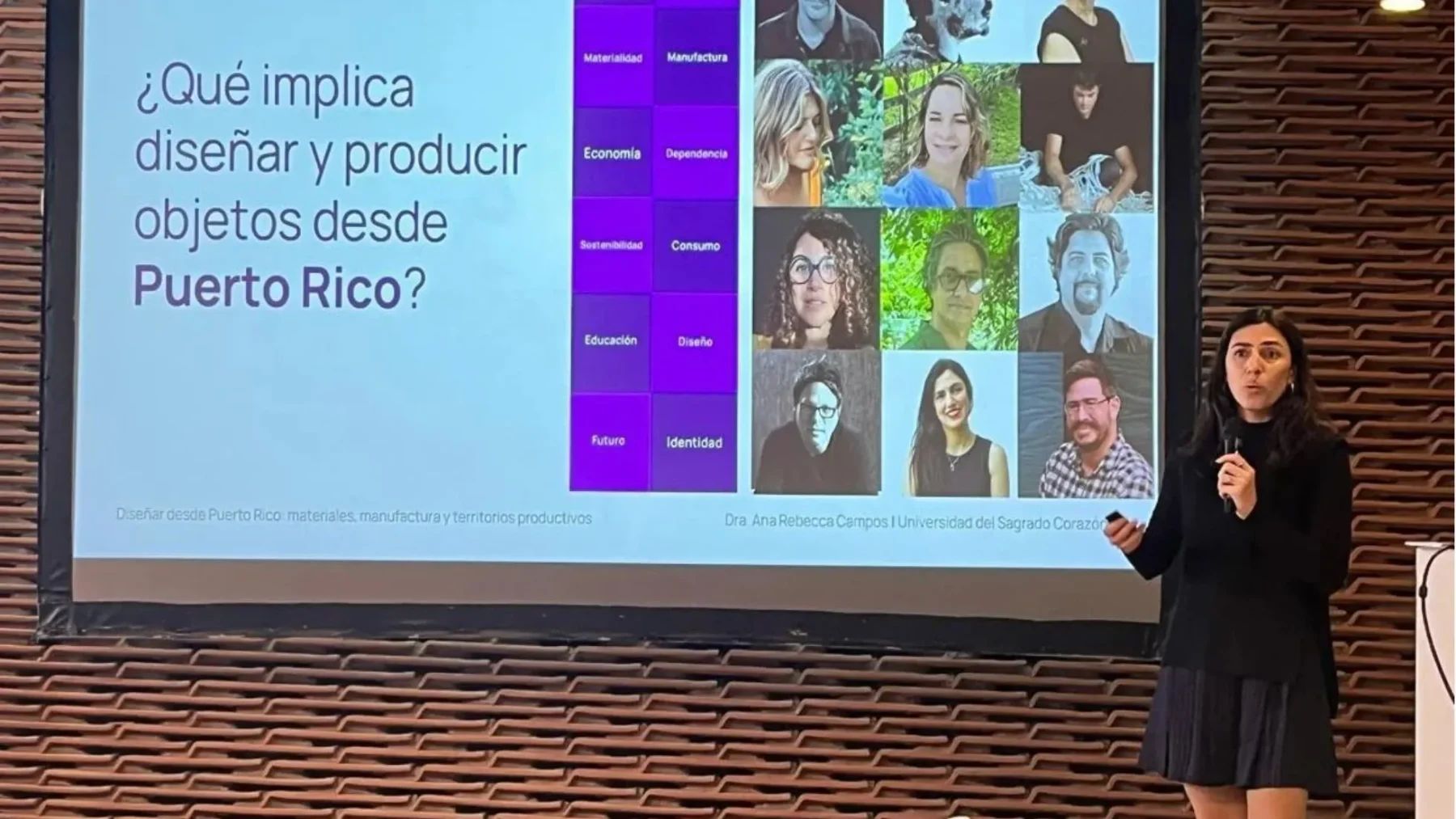
Campos’s second research presentation, Designing from Puerto Rico: Materials, Manufacturing, and Productive Territories, documents the challenges, strategies, and opportunities that emerge when developing products from an island territory. Drawing on interviews with Puerto Rican industrial designers, the project examines how Puerto Rico’s material, productive, and territorial conditions influence design and manufacturing processes.
Meanwhile, professors Sally Torres Vega and Karina Defelippe presented the academic poster BEFORE FORM: Textile Practices Between Research, Error, and Repetition. The project emerged from the artistic residency component of STARS (Strengthening Teaching of the Arts for Students), whose outcomes were presented as part of the 2026-2027 Creative Residencies at Sagrado. The work explored textiles as both a narrative medium and a production system, addressing processes ranging from fiber preparation and spinning to experimentation with indigo and indigo vat dyeing.
“This participation affirms Sagrado as a space where design knowledge with international relevance is produced. The research projects place the Puerto Rican experience at the center of the discussion: our territory, our memory, and our ways of producing and inhabiting the world constitute sources of knowledge that contribute a distinctive perspective to the discipline. Their significance lies in exercising our own voice in debates about what is recognized as design, which forms of knowledge gain legitimacy, and who participates in shaping its future,” said Mateo Rodríguez.
The Sagrado faculty members were the only representatives from a Puerto Rican higher education institution participating in FABid26. Their participation through five peer-reviewed research projects represents a significant achievement for both the School of Arts, Design, and Creative Industries and for Puerto Rican design.
More stories from the School of Arts, Design, and Creative Industries
A Futuristic Puerto Rico Comes to Life During Animation Week
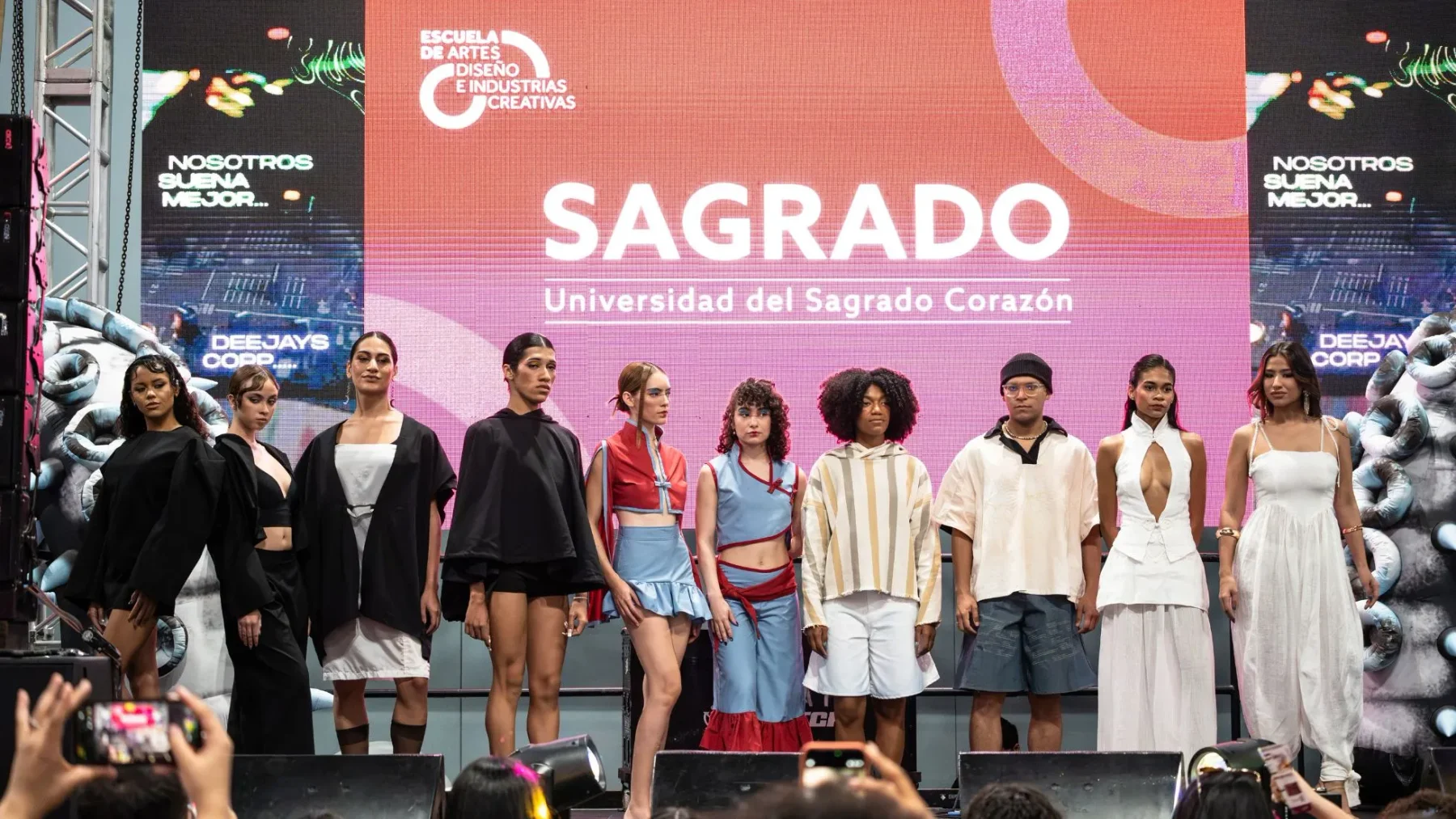
Fashion Design and Management Students Explore Identity, Tradition, and Functionality on the Runway

3D Animation Students Create Music Video in Collaboration with Plena Libre