
Workshops and presentations emphasized writing as a tool for reflection, creation, and academic development at Sagrado.
Por Brenda Figueroa Gómez
Student of Journalism
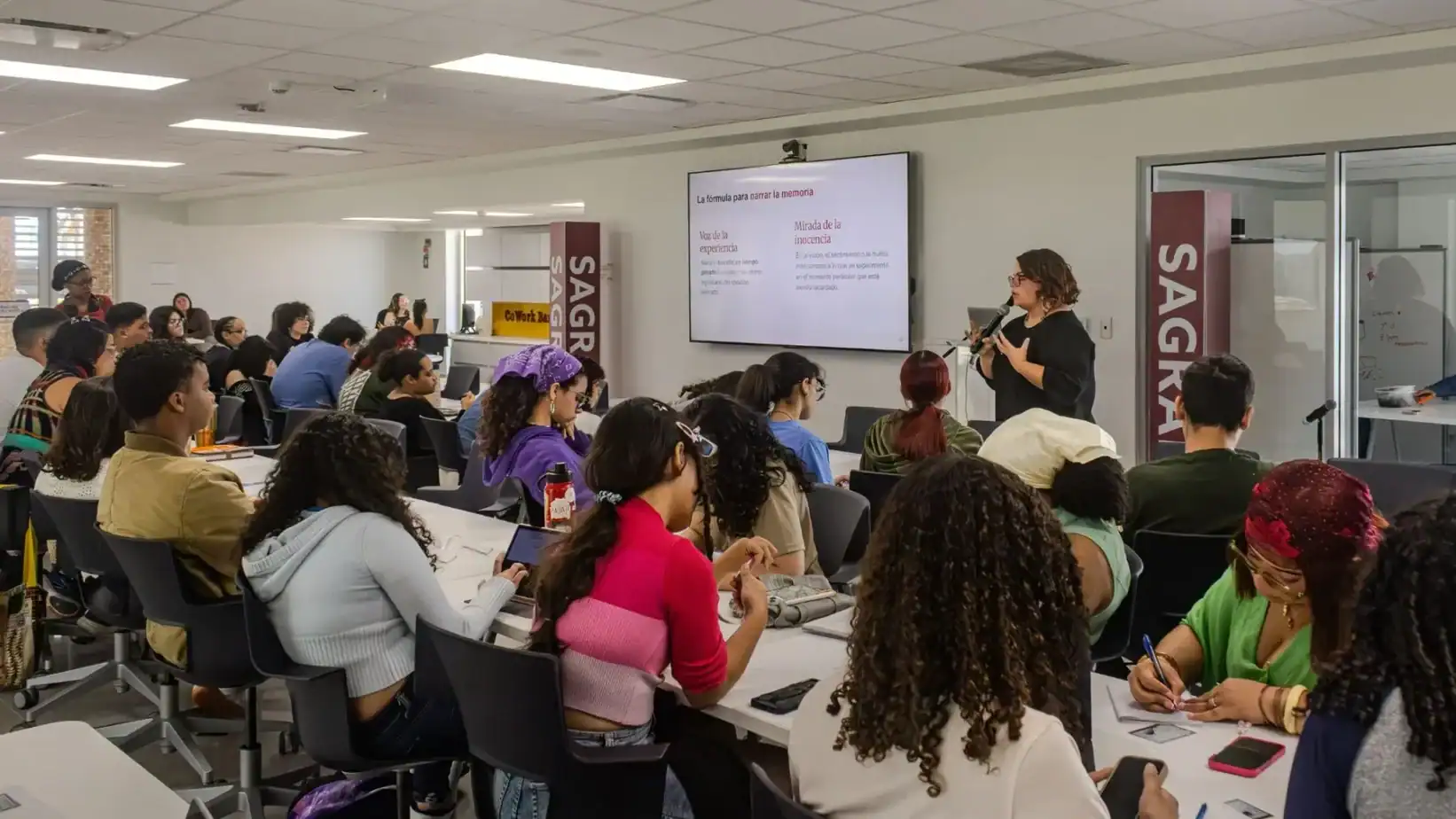
The School of Arts, Design, and Creative Industries at Universidad del Sagrado Corazón hosted the Creative Writing Conference, a two-day academic space in which students, faculty, and guests participated in workshops and presentations focused on memoir writing and on the concept of writing as a communal practice.
The initiative, led by the Creative Writing and Literature program, reinforces the institution’s commitment to critical thinking and reflective learning in the humanities by promoting writing as a tool for personal exploration and academic development.
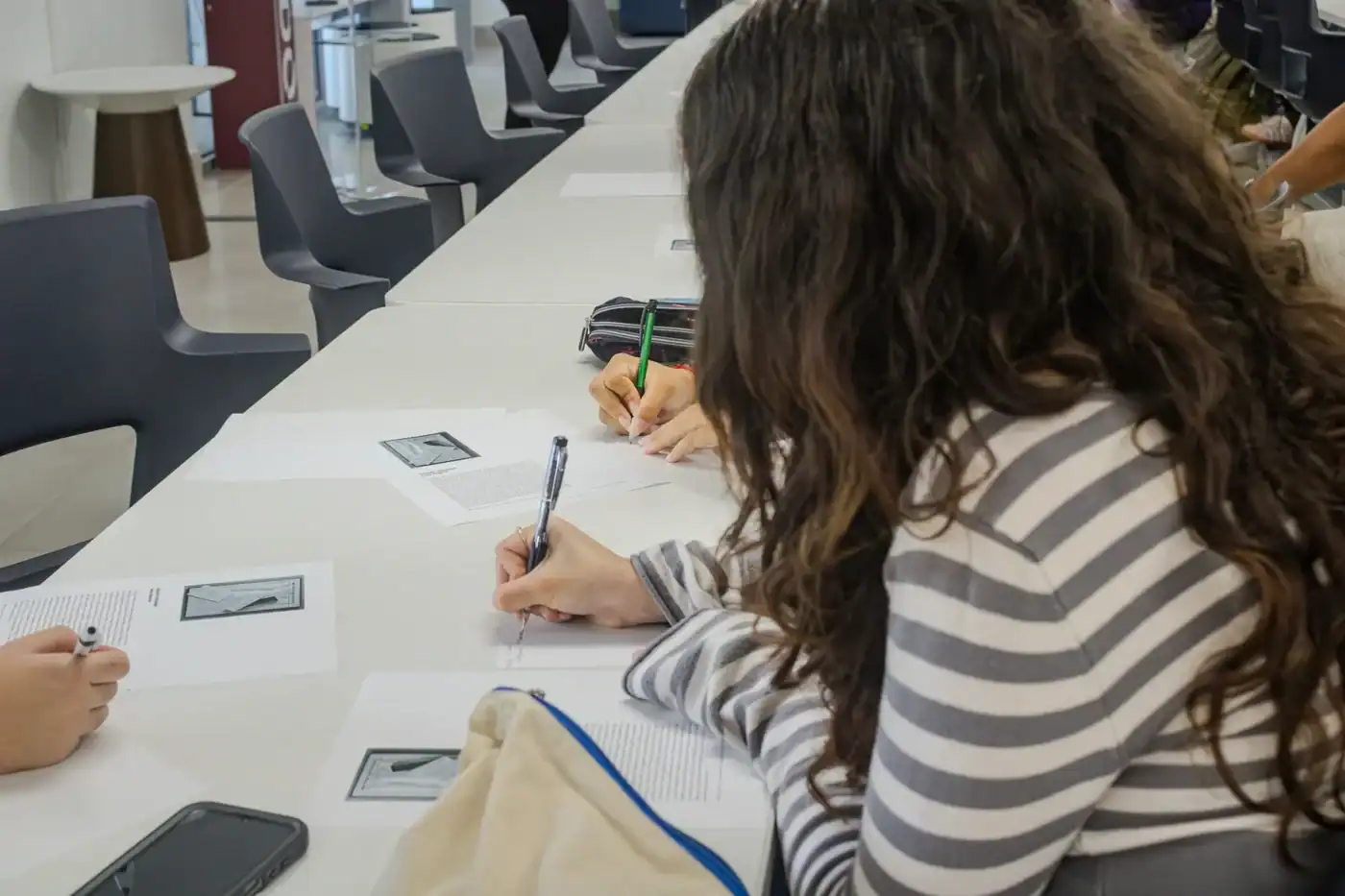
Throughout the event, training sessions and discussion spaces were held, allowing students to explore a variety of narrative techniques. Among the topics addressed was memoir writing, understood as a nonfiction genre that draws from lived experiences to construct narratives with personal and social meaning.
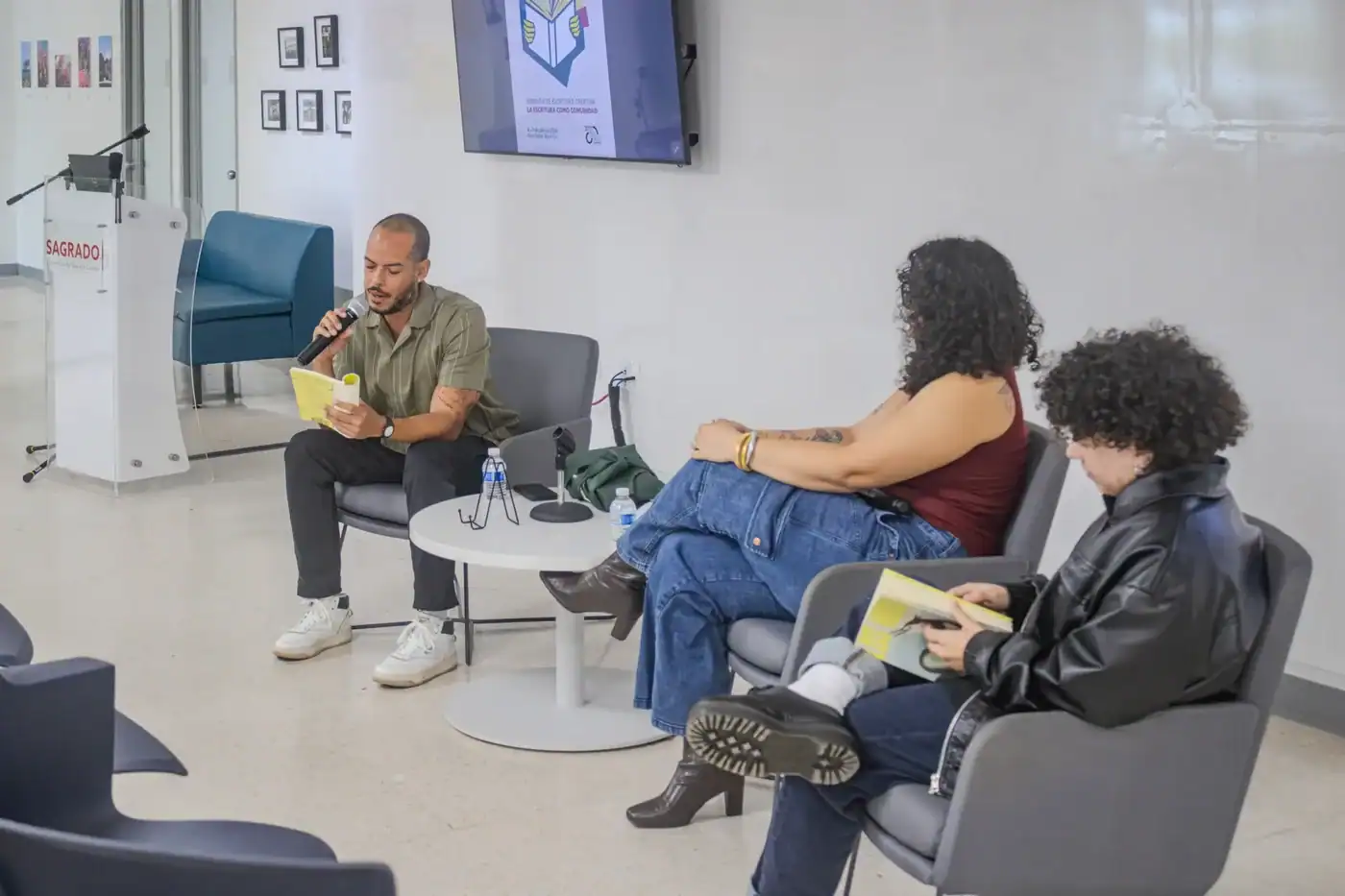
Dr. Mara Pastor Rodríguez highlighted the theme of this year’s edition: writing as community. She explained that this perspective recognizes writing not as an isolated act, but as a process that takes place in dialogue with others.
“We write with others, from others, and toward others,” she said, adding that the event has become a well-established interdisciplinary gathering within the university.
Photos by Edwin Romero Castro | Student of Photography
Dr. Anuchka Ramos Ruiz explained that her workshop, Remembrar, reparar, recordar, focused on the structures of memoir writing and on how authors select and organize lived experiences into narrative form.
“Memoir writing allows us to take stock of what we have lived and, in that process, better understand our experiences,” she noted. She also emphasized that this practice fosters a more conscious, critical, and reflective perspective among those who engage in it.
From an academic standpoint, Ramos Ruiz added that it is essential to distinguish between fiction and nonfiction writing, since although they share narrative elements, they serve different purposes within university education.
Professor Alejandro Medina Colón highlighted that these workshops also allow students to develop skills related to editing and editorial design, directly contributing to their professional preparation.
“They provide tools that strengthen their abilities and prepare them to enter the creative industries,” he said.
Likewise, Professor José Colón Lavoy emphasized that memory is a fundamental resource in all forms of writing. “A writer is nourished by what they live, experience, and observe,” he said, underscoring the connection between personal experience and literary creation.
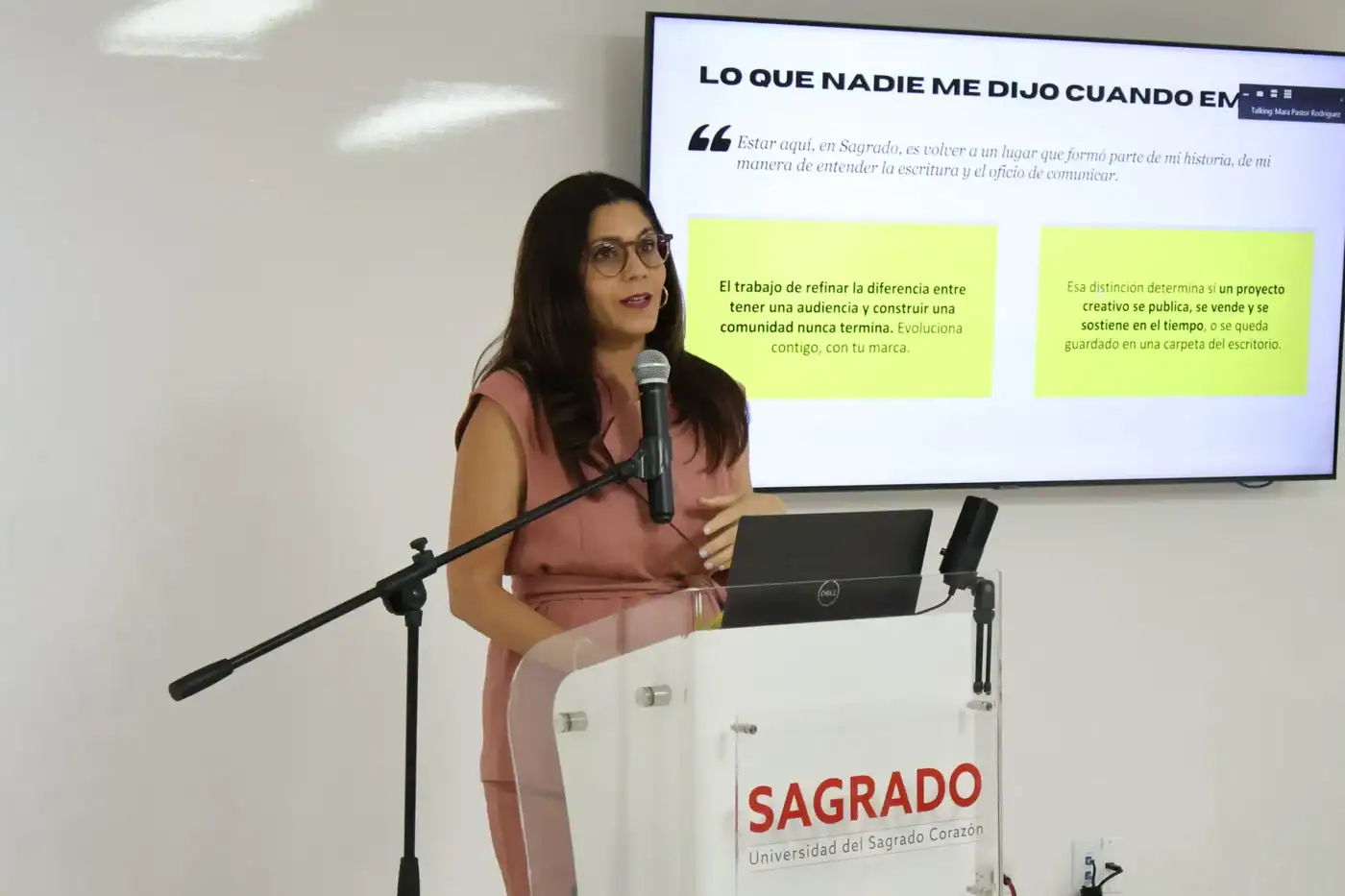
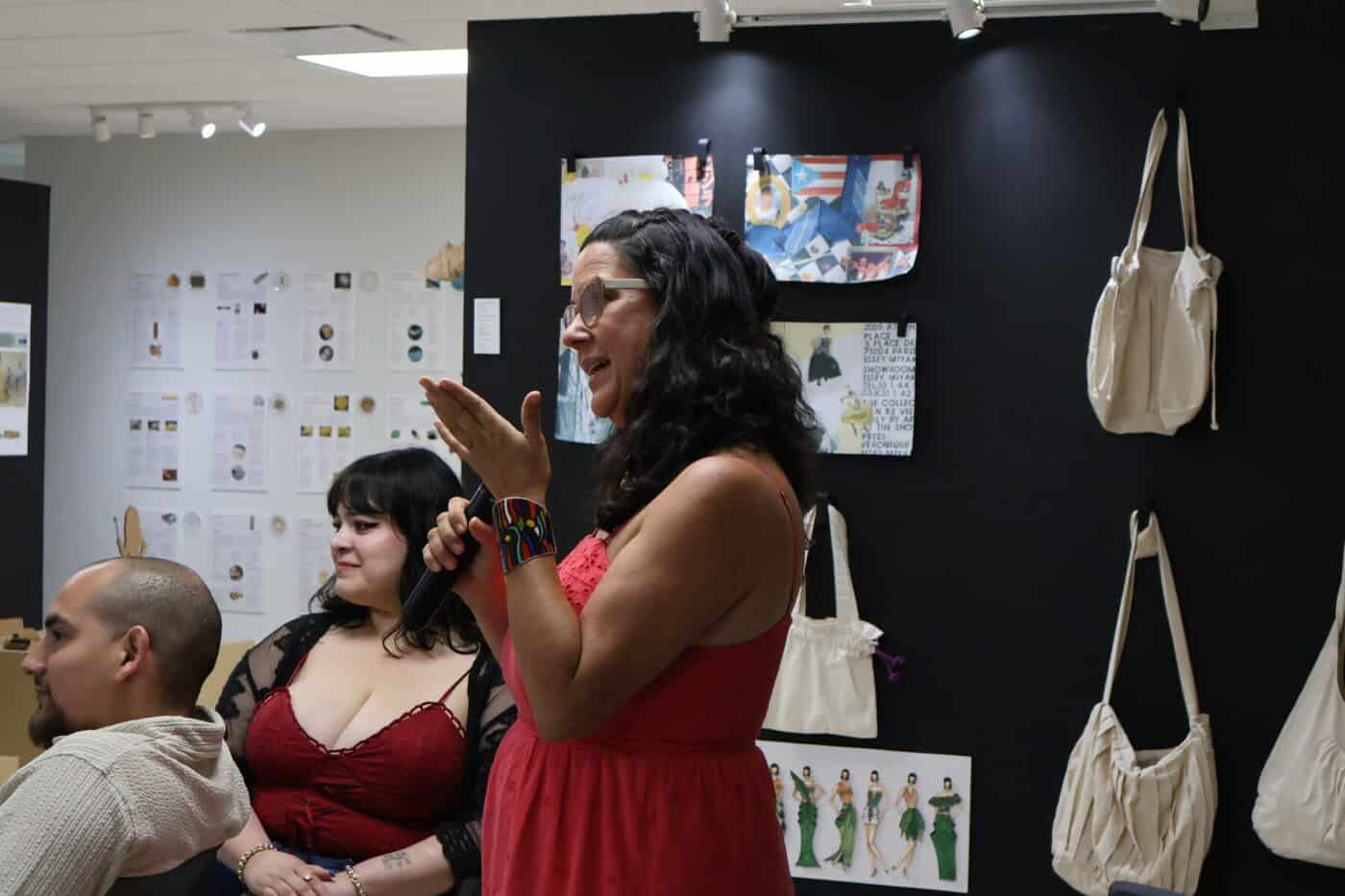
Author, media executive, and brand strategist Cristy Marrero offered a master class titled “Audience vs. Community: How to Create Publishable and Marketable Projects?”. (Photos by Chantal Arce | Student of Audiovisual Production and Film)
From the student perspective, the activities were described as enriching experiences. Alis Feliciano Calderón, a student of the School of Arts, Design, and Creative Industries, noted that the workshops helped her better understand the balance between an author’s personal intent and external feedback. She also highlighted that these gatherings foster interest in writing by bringing students closer to real creative processes.
In its fourth edition, the Creative Writing Conference reaffirms the role of creative writing as a key tool for humanistic development at Universidad del Sagrado Corazón. Through these collective initiatives, the institution continues to strengthen an academic community committed to reflection, creativity, and the exchange of ideas as drivers of social transformation.