
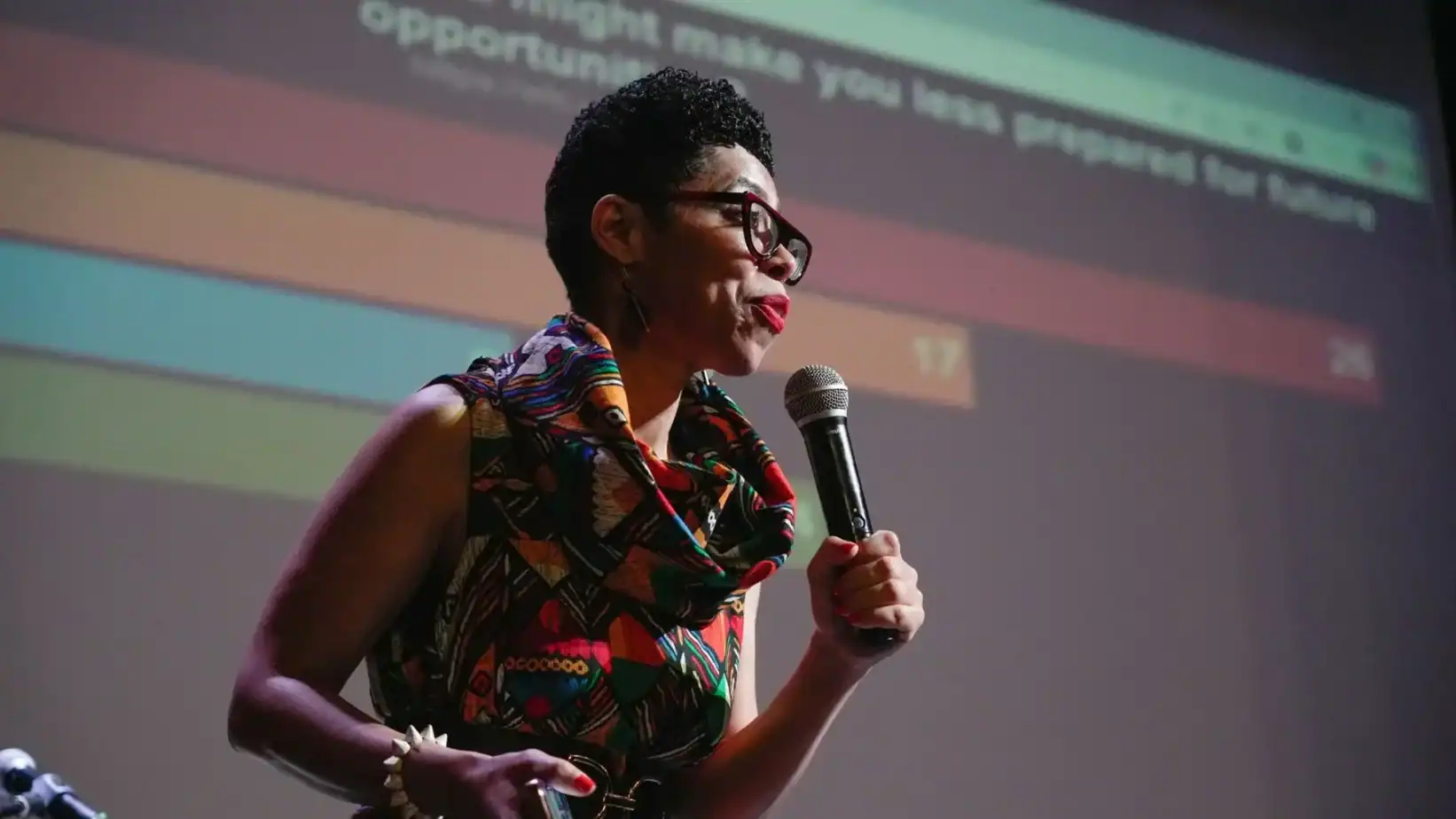
Scientist Knatokie Ford inaugurated the event with a lecture on uncertainty and self-perception in the field of scientific research.
By Institutional Communications
The fourth edition of the Multidisciplinary Research Symposium of the School of Health and Sciences began with the keynote lecture Overcoming Imposter Syndrome in an Age of Uncertainty by Dr. Knatokie Ford, a researcher, science communicator, and Harvard University graduate. The lecture addressed how imposter syndrome impacts individuals in scientific and professional contexts.
During her presentation at the Emilio S. Belaval Theater, Ford explained that this phenomenon can be triggered by factors such as environment, formal evaluations, life transitions, and the perception of being an “exception” within a group. She also noted that the rise of artificial intelligence is creating new forms of professional insecurity by raising concerns about technological dependence in academic work.
As part of her talk, she shared the Futures Alchemy method, a strategy to navigate these experiences that includes anticipating challenges, listening to internal narratives, building support systems, redefining success, envisioning the future, and taking action even before feeling ready.
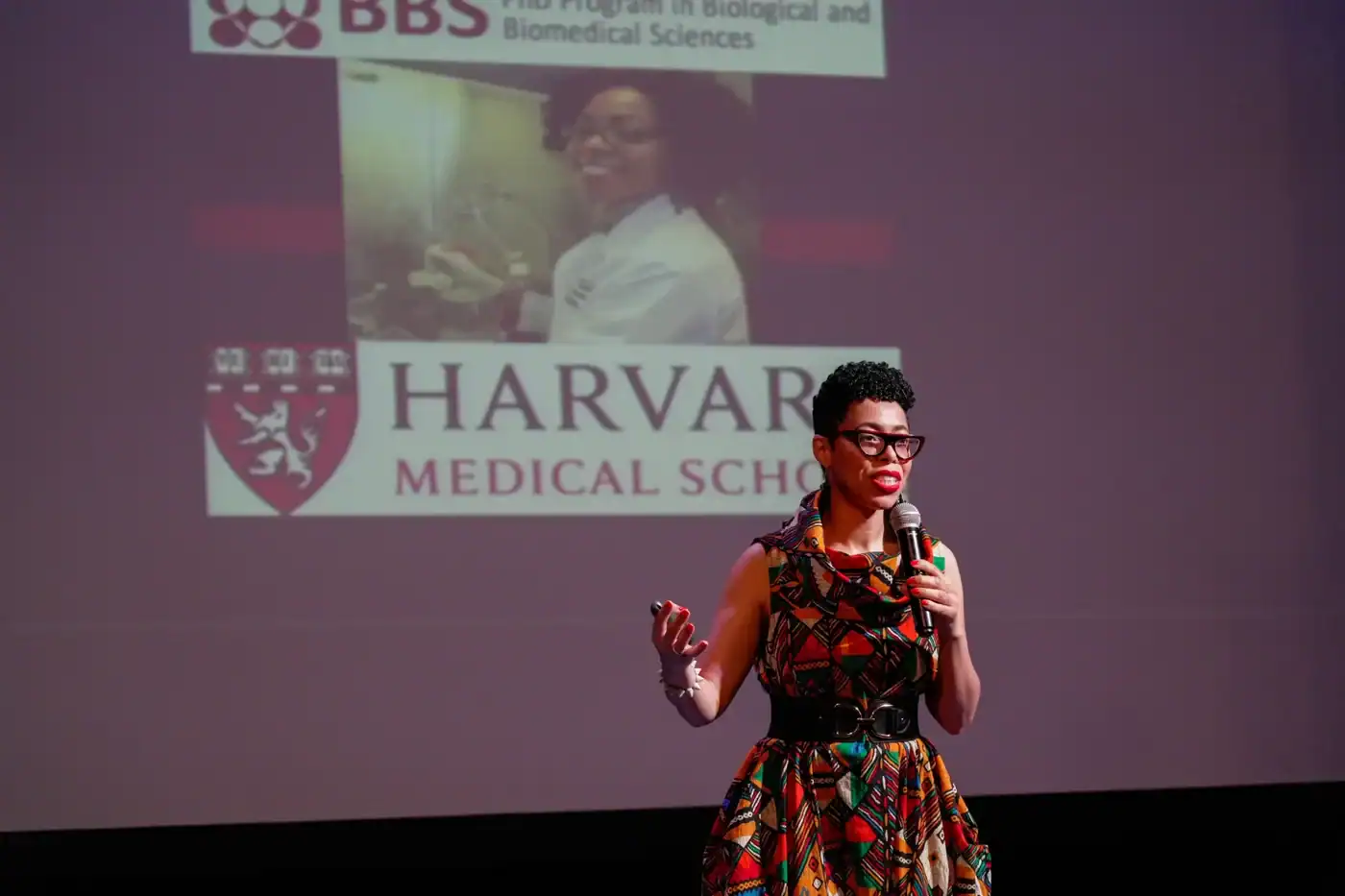
Ford also emphasized the importance of communication in science, noting that “you can have the best research, but if you can’t communicate it, it loses impact.” In this regard, she highlighted the connection between the arts and sciences as key tools for bringing knowledge closer to communities.
Following the keynote session, the symposium continued under the theme “Breaking barriers through research,” bringing together high school, undergraduate, and graduate students in a shared academic space.
The dean of the School of Health and Sciences, Dr. Bianca Valdés, explained that this edition expands participation by integrating different educational levels for the first time, with the goal of fostering interest in research from early stages.
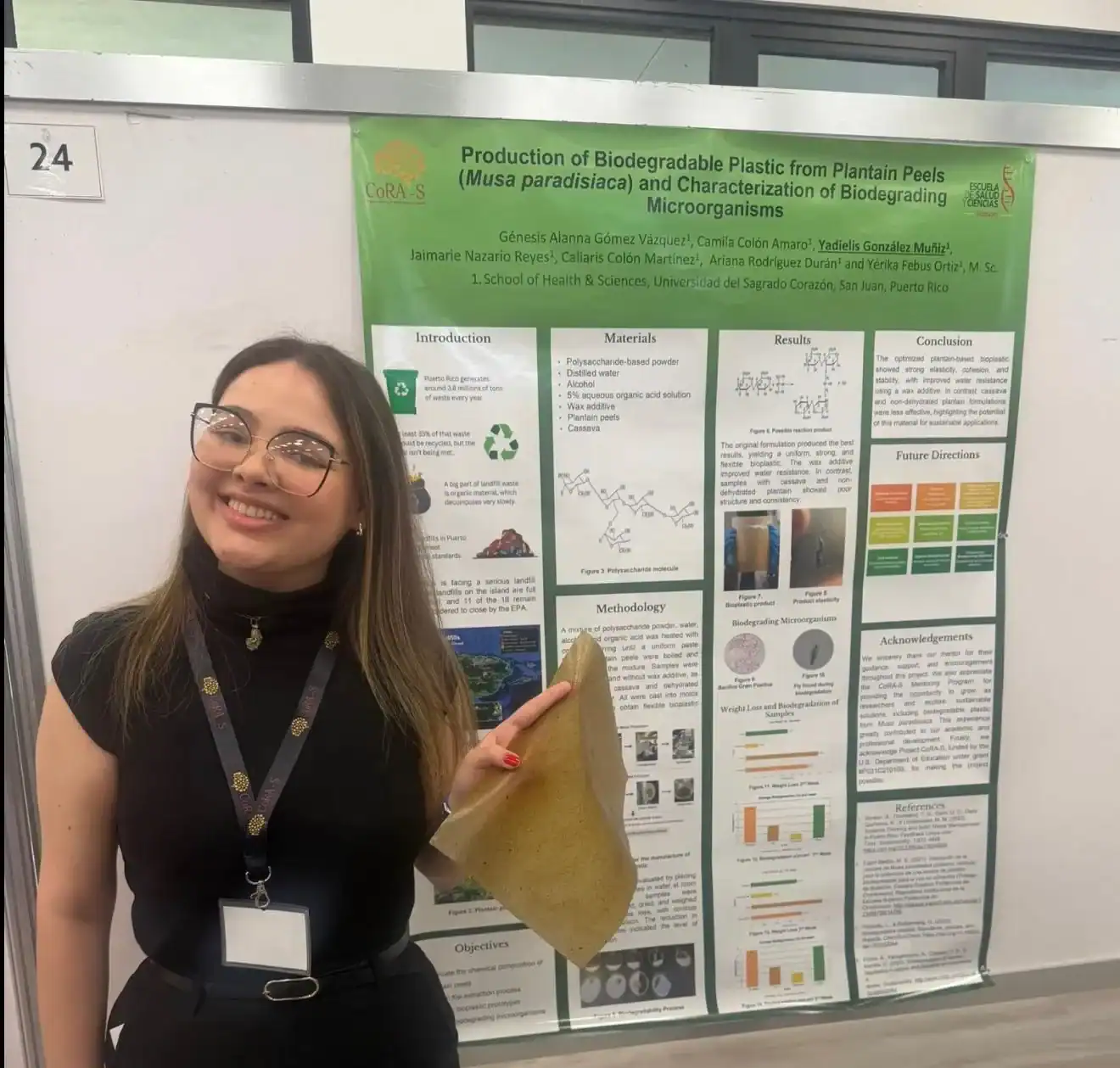
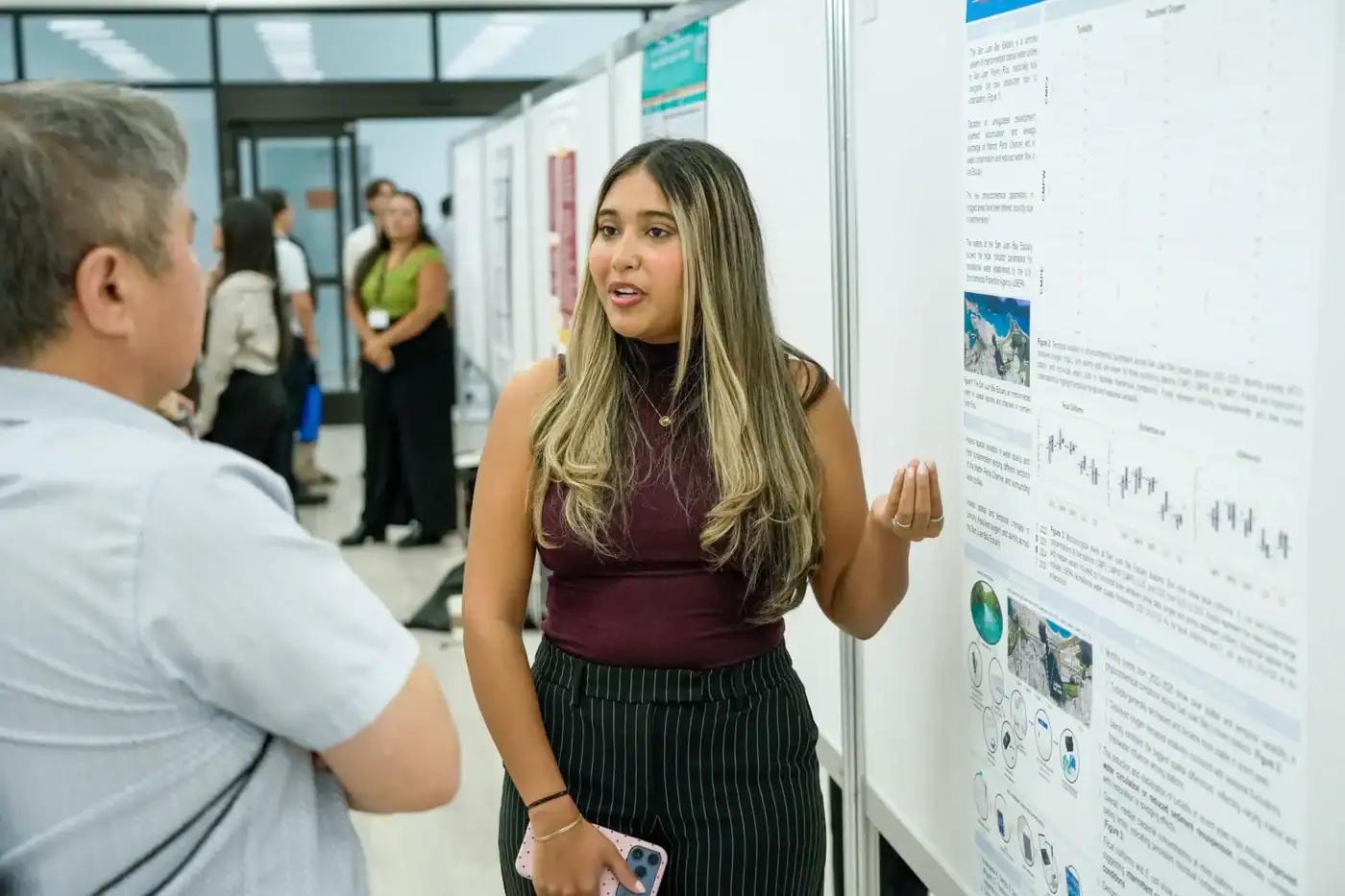
The event included the presentation of more than 40 research projects, as well as panels and workshops aimed at the academic and professional development of students. Among these, the panel “How Research Influences Different Stages of Professional Growth” stood out, featuring Itzel Palacio Jara, an undergraduate student in Biomedical Sciences; Patricia Cruz Soto, a student from University Gardens; and Luis González Sanabria.
Photos by the Communications Center and the School of Health and Sciences
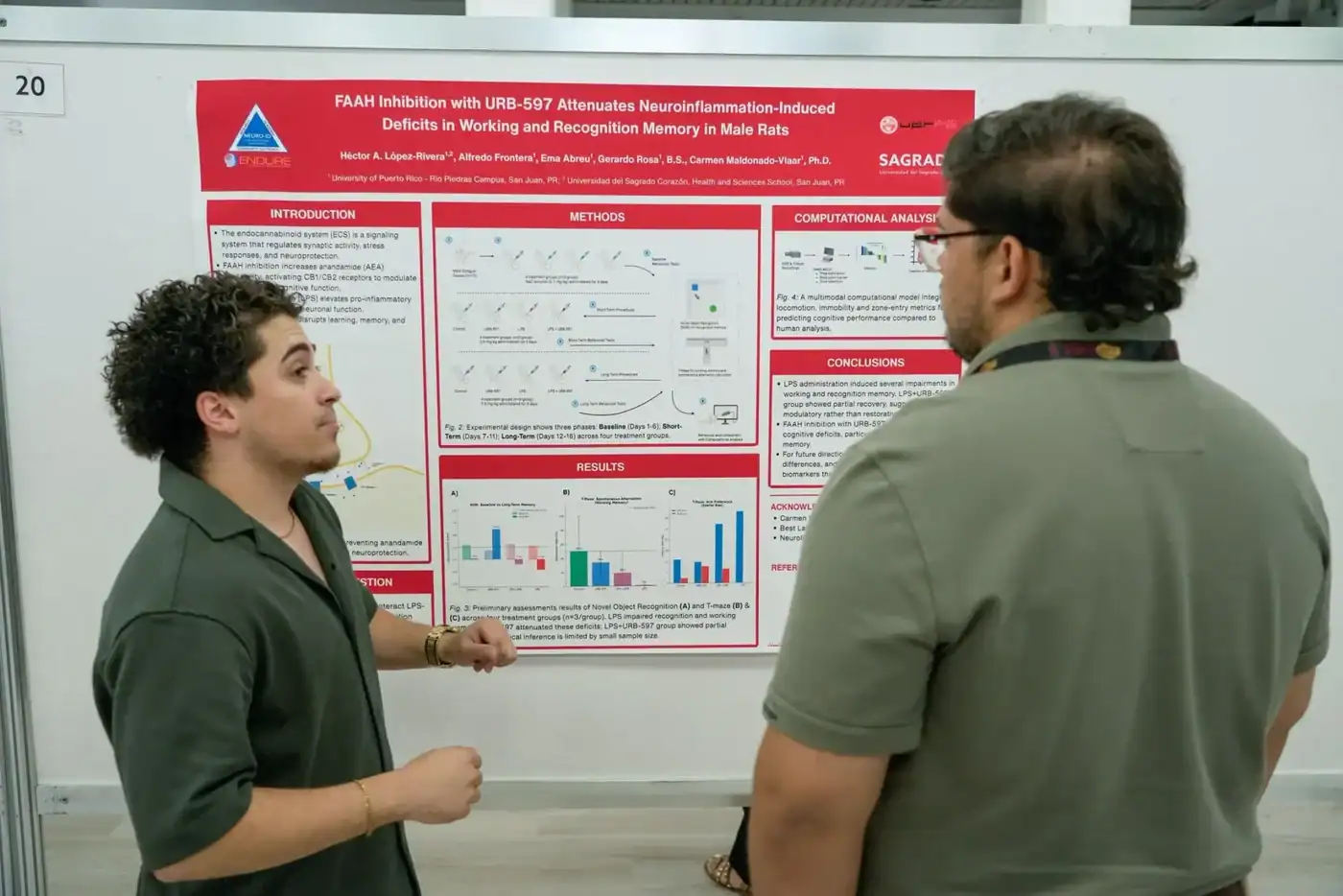
At the undergraduate level, presentations included investigations by Sagrado students Yamilette Román Rodríguez, Yadielis González Muñiz, and Héctor López Rivera, as well as Perla Rivera Soto from Universidad Central del Caribe. At the graduate level, notable research was presented by Chrys Marie Cuencas Alamo and Roberto Vaquero Orellano, students from the University of Puerto Rico, Medical Sciences Campus.
Valdés also highlighted the impact of the CoRA-S (Culture of Research Achievement at Sagrado) project, an institutional initiative that promotes a research culture and facilitates interdisciplinary collaboration.
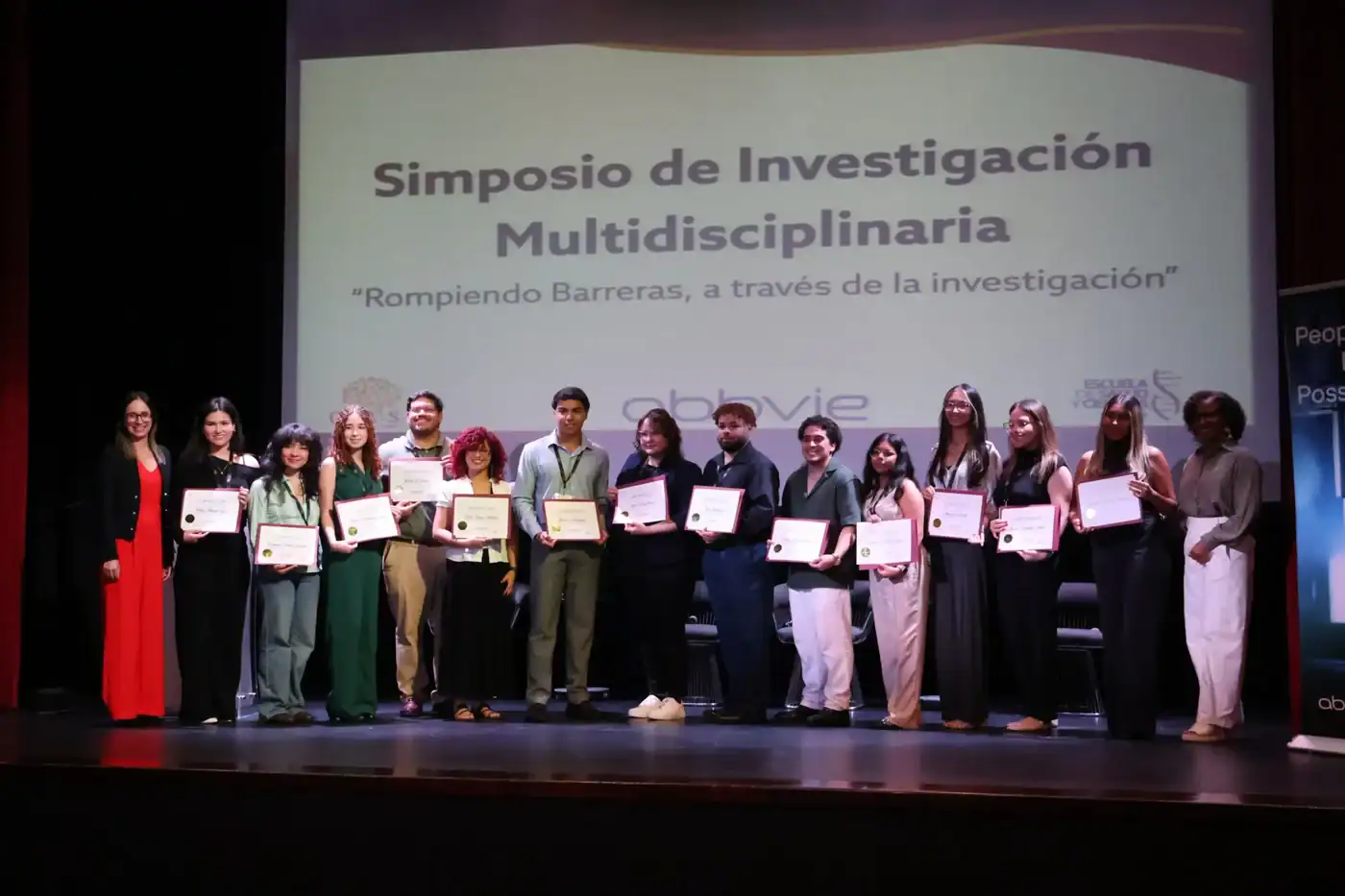
Photo by Chantal Arce | Student of Audiovisual Production and Film
Students also emphasized the value of the symposium as a platform for growth. Patricia Camila Arroyo, a student of the School of Health and Sciences, presented a study on physical activity among university students, focusing on academic performance and the promotion of healthy habits.
“Research begins with curiosity and the desire to create change,” said Arroyo, who also noted that these spaces strengthen essential skills such as communication and professional confidence.
In this way, the symposium promotes research while also contributing to the development of more confident students in their academic journeys, within a context shaped by uncertainty and challenges that, as Dr. Ford noted, are part of the process of growth in science.