
The research examines the economic and political transformations that made the archipelago a key setting for the development of neoliberal policies in the 1970s.
By Institutional Communication
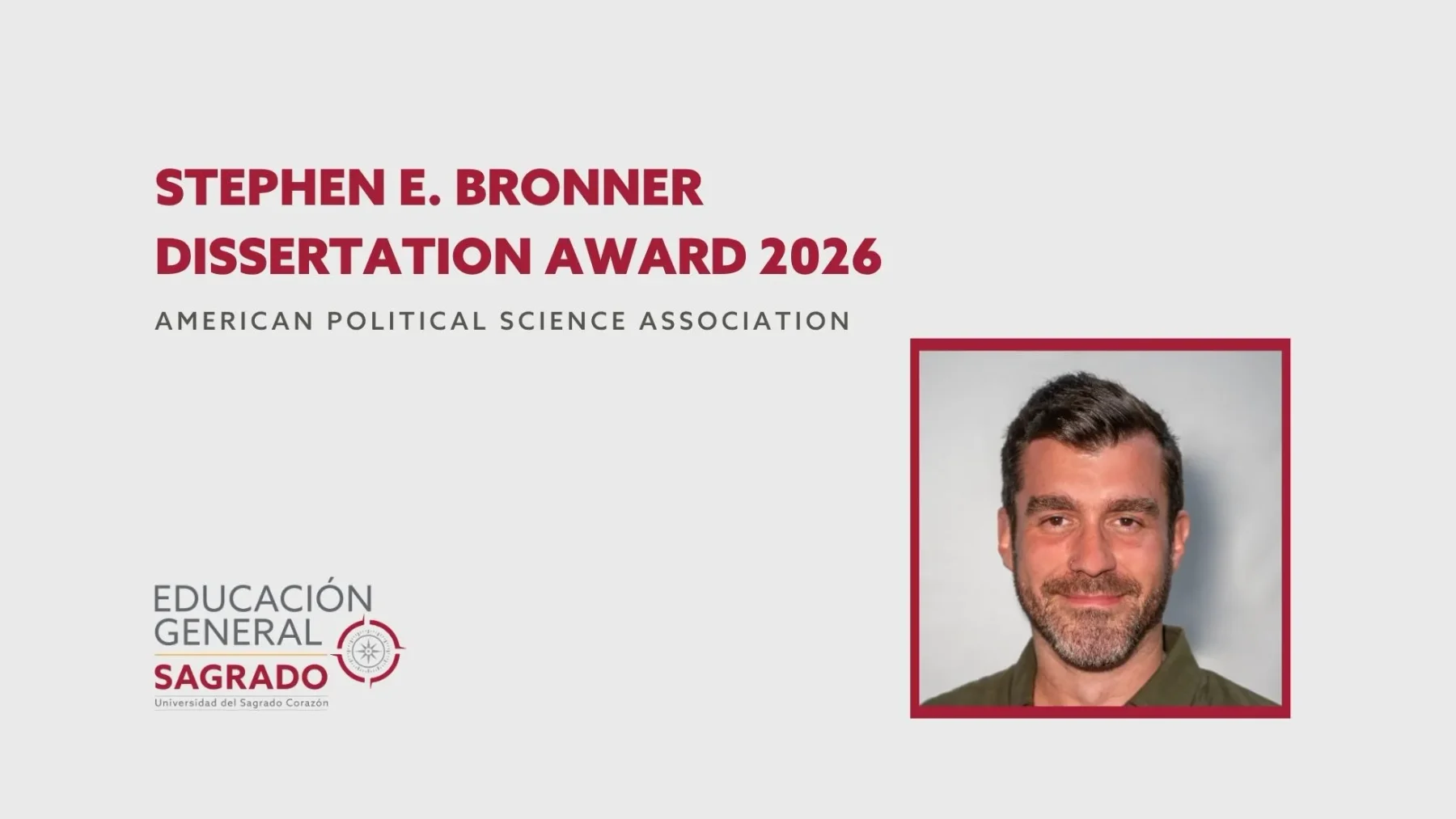
Dr. John Paul Belk, an adjunct professor in the School of General Education at Universidad del Sagrado Corazón (Sagrado), received the 2026 Stephen E. Bronner Dissertation Award from the Caucus for a Critical Political Science of the American Political Science Association (APSA), the largest professional association for political science in the United States.
The award recognizes outstanding doctoral dissertations that exemplify a commitment to using rigorous academic research to build a more democratic and egalitarian social, economic, and political order.
Dr. Belk’s dissertation, titled Puerto Rico’s Neoliberal Turn: The Crisis of Developmentalism, Hegemonic Ideas, and Colonial Politics, and completed at Goldsmiths, University of London, examines the rise of neoliberalism in the 1970s and how Puerto Rico served as one of its laboratories, marking a significant contribution to the study of public policy and international political economy. His work documents this shift through abrupt changes in economic development strategies across the Puerto Rican archipelago, driven by both local figures and U.S. economists and politicians. In this context, the research examines how certain economic ideas—including austerity policies, cuts, privatization, lower tax rates for high-income individuals, and what the researcher describes as a “hyper-focus on economic performance”—became the norm in the management of the economy and public policy.
For the researcher, the work not only sheds light on how neoliberal ideas were implemented in Puerto Rican society, but also provides a foundation for citizens and students to better understand current economic policies. “Understanding where the political ideas of the past came from and how they were shaped allows us to see the ideological foundations upon which public policy was built, and how those foundations remain firmly in place in the present,” Belk explained. “Understanding that dynamic, together with knowledge of the past, serves as a tool for citizens to challenge, rather than simply accept, official narratives about economic policy,” he added.
In addition to highlighting the significance of the recognition for his professional and academic career, Dr. Belk emphasized the importance of ensuring that Puerto Rico’s economic history is part of international academic conversations.
“[This recognition] represents something beyond me and my work: Puerto Rico has a fascinating history that we must continue to discover, develop, appreciate, and, above all, challenge. This recognition motivates me to continue working on this and other projects for a broader audience, so that we can better understand Puerto Rico’s complex political dynamics,” the scholar said.
Belk, who teaches courses on social analysis and contemporary political issues at Sagrado, is also an Honorary Graduate Fellow at Goldsmiths and has collaborated with Puerto Rican nonprofit organizations on public policy issues. This recognition adds to the growing research profile of the Universidad del Sagrado Corazón faculty in the areas of governance and Puerto Rican public policy, with research aimed at generating knowledge with both local and international impact.
Similar stories
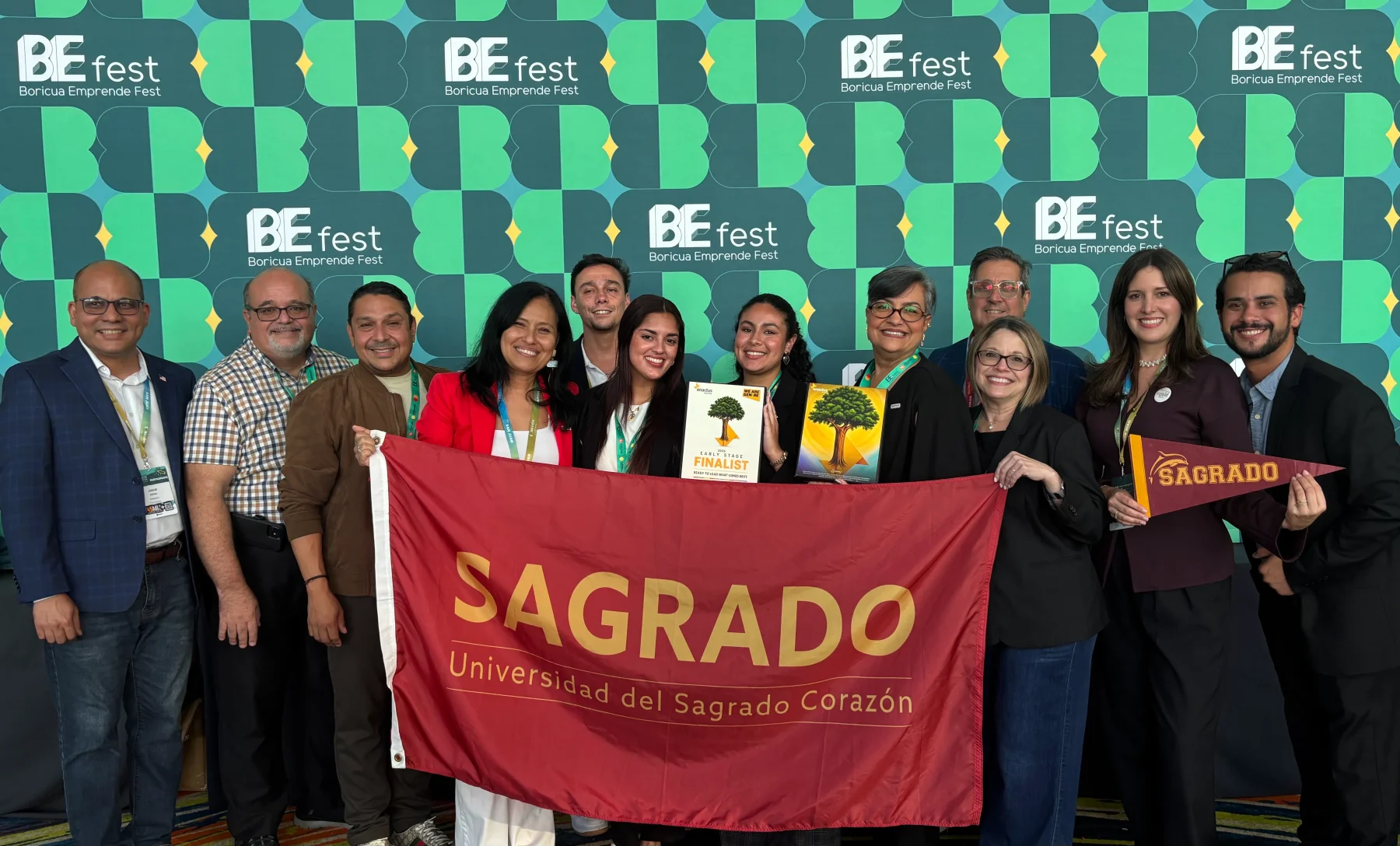
Sagrado Recognized at Boricua Emprende Fest, with Faculty Honors and Student Finalist in Enactus Early Stage Competition

Dr. Francisco Arencibia-Albite Offers New Perspectives on Models Explaining Body Weight and Metabolism