
By Gonzalo A. García Torres
Journalism Student
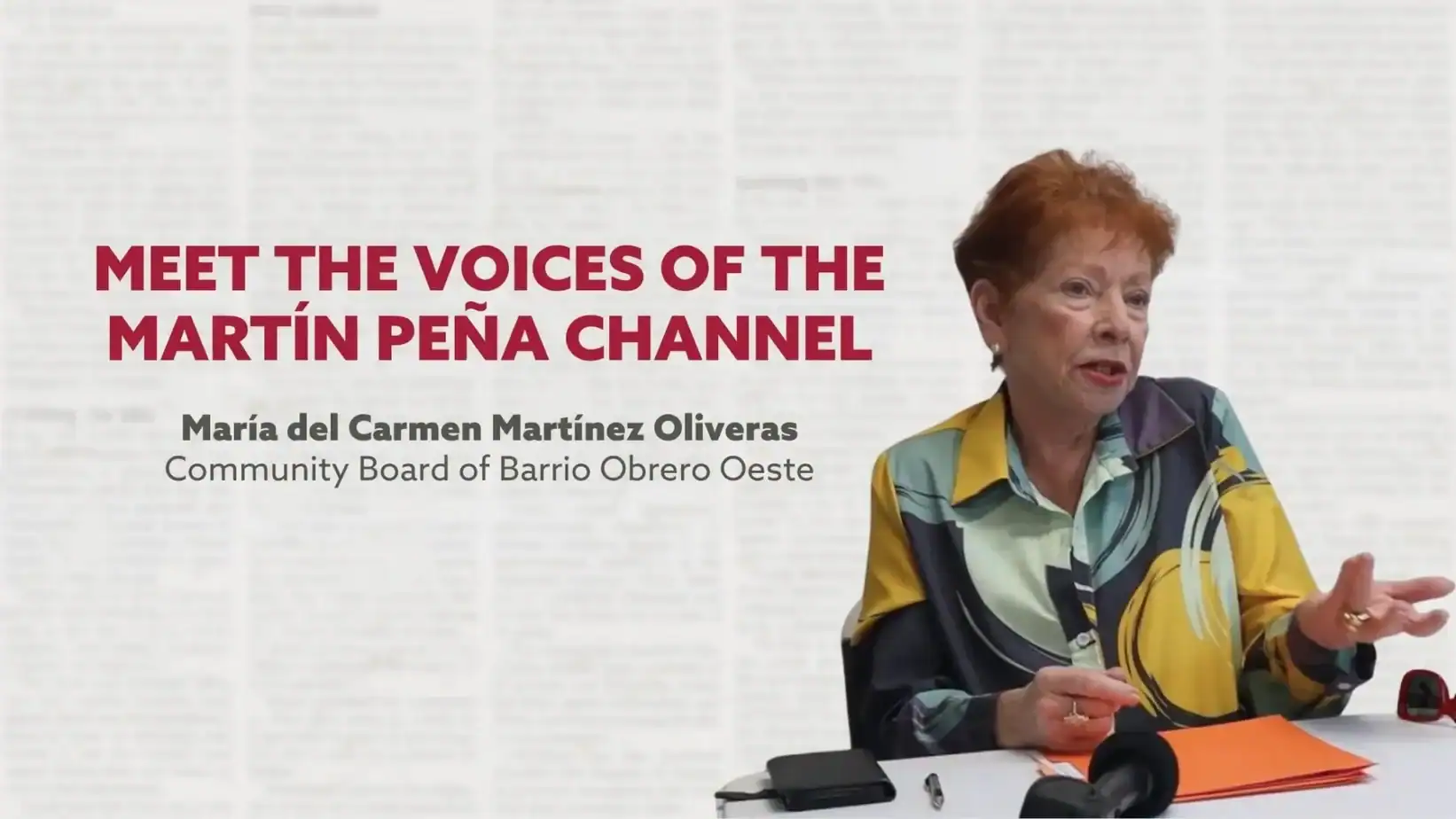
María del Carmen Martínez Oliveras is a woman committed to community service, whose work in Barrio Obrero reflects leadership, dedication, and a strong sense of social responsibility. Her integration into the community began after moving to the area during her second marriage, when she attended a meeting at the community center, initially motivated by a desire to learn about the neighborhood’s situation. However, that first encounter marked the beginning of an active involvement that would transform her role within the community.
During that same meeting, she was unexpectedly nominated to be part of the Barrio Obrero Oeste Community Board. Although she did not live directly in that specific area, her connection to the community through the church was enough for her to be accepted. As she recalls, “I came for what I first told you, but I stayed,” a decision that would change the course of her relationship with the neighborhood. From then on, she took on responsibilities as secretary, standing out for her commitment to administrative work and her participation in various community activities. Over time, her leadership continued to grow as she was nominated vice president, even taking on multiple roles within the board simultaneously due to the lack of participation from other members.
Her experience on the board has allowed her to closely observe both the strengths and the needs of the community. María del Carmen describes Barrio Obrero as a place composed mostly of low-income residents, but with strong values and a deep-rooted faith. According to her, “this community is mostly made up of people with limited resources… they are good people,” also highlighting the cultural diversity present, including residents from the Dominican Republic. This mix of social and cultural realities creates a complex environment, yet one full of human potential.
Despite that potential, she acknowledges that there are significant challenges affecting the community’s quality of life. Among them, she mentions the lack of education in everyday matters such as waste management and abandoned vehicles. In her words, “this needs to be worked on much more,” emphasizing the need to raise awareness and promote collective responsibility. Indirectly, her perspective reveals an ongoing concern for education as a tool for social transformation, suggesting that many of these issues could be addressed with greater guidance and civic participation.
From her role on the board, she has actively worked to identify these problems and seek solutions through partnerships with other institutions. She explains that one of her main approaches has been to “find people… who are interested in the issues, in cooperating, helping the community,” including collaborations with universities and external organizations. This effort demonstrates her ability to connect resources and create opportunities that benefit residents in the area.
However, one of the greatest challenges she faces, as she acknowledges, is the lack of community participation. Although some people get involved and collaborate, it is not at the level the board would like. As she notes, people “do get involved, but not in the numbers we would want,” reflecting a disconnect between the community and spaces for collective organization. Even so, she highlights that there are committed individuals who contribute and motivate others to get involved, creating small support networks that strengthen community work.
Among the most meaningful moments of her experience, María del Carmen highlights community activities, especially the festivals organized in the neighborhood plaza. These events, which bring together families, children, and young people, represent a sign of hope for her. “People are active… there is hope,” she says, showing how these initiatives manage to spark interest and participation within the community, even if only temporarily. These experiences allow her to envision the potential of Barrio Obrero as a more united and dynamic space.
For María del Carmen, change in the community begins at the individual level. She insists that education and the desire for personal growth are essential to achieving collective transformation. She emphasizes, “we have to educate ourselves… seek help, participate,” underlining the importance of taking responsibility both personally and as a community. Her vision goes beyond solving immediate problems; she seeks to foster a mindset of growth and social awareness among residents.
On a personal level, her experience in the community has also been a learning process. She acknowledges that she is still in the process of fully integrating and building closer relationships with residents. “I would like to have that relationship… so that if someone has a situation, they feel confident approaching me,” she says, reflecting her desire to become an accessible and supportive figure within the community. This openness also shows self-awareness, as she recognizes that part of that process depends on her own willingness to become more involved.
Ultimately, the story of María del Carmen Martínez Oliveras is an example of how community leadership does not necessarily arise from careful planning, but from the willingness to act when the opportunity presents itself. Her journey demonstrates that commitment, empathy, and perseverance can create a meaningful impact, even in contexts where resources are limited and participation is scarce.
Her voice represents those who believe in the power of community as a driver of change. Through her work in Barrio Obrero, María del Carmen not only contributes to collective well-being but also builds a legacy grounded in service, education, and the hope for a better future.
Editor’s Note
This journalistic profile is the result of in-service learning experiences carried out as part of the course PER 223: Narrative Journalism, taught by Professor Mariliana Torres Pagán in collaboration with Sagrado’s Community Engagement Program, the Barrio Obrero Oeste se Reinventa Foundation, and the Caño Martín Peña Enlace Project.